Master Tajweed Rules for Perfect Quran Recitation
Tajweed Rules, My Personal Journey to Beautiful Recitation of the Quran
I never considered Tajweed just a book of rules. I truly understood it when I sat in front of a teacher for the first time. There was dim light in the room, the air was completely still, and the respected teacher recited the opening verses of Surah Yaseen. As soon as the sound resonated, I felt that every letter had a soul. Every sound has its own weight, a beauty, and a soul. At that moment, I understood why Tajweed is important.
Tajweed is not just a way of reading, it is a respect for the word of Allah. It is to recite every word with its right. It is a path to a deep connection of the heart with the Quran. That is why in this article I want to share not only the rules but also the feeling that I felt while learning it myself.
What is Tajweed and why is it important
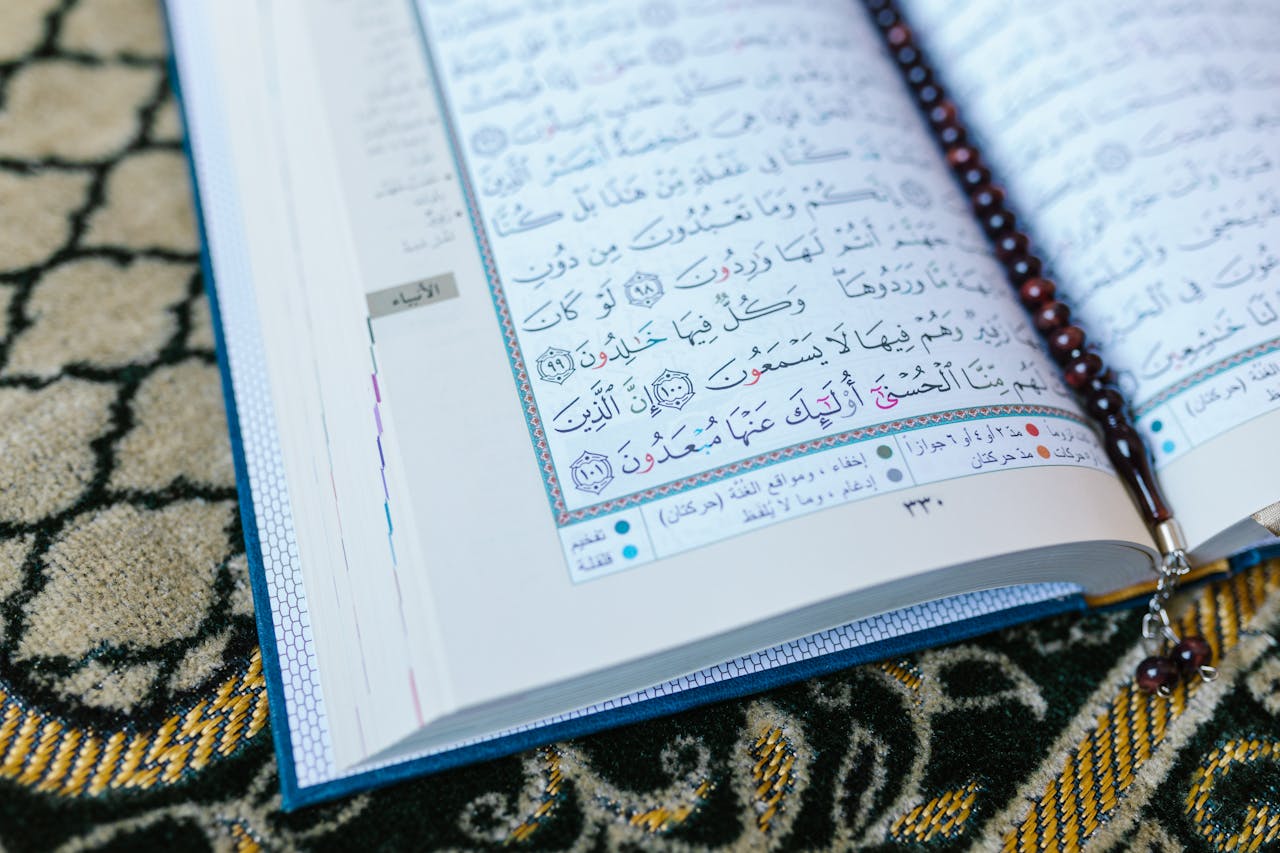
Tajweed means reading the Quran correctly. My teacher used to say that every letter has a place from which it emerges. The movement of the tongue, the position of the lips, and the use of breath, all combine to make the correct recitation of the Quran.
If recited without Tajweed, the words are recited but their true beauty is lost. But when recited with Tajweed, each sound shows its full effect. One day, I recited the letter “ع” correctly, and it felt as if a new world of the Quran had opened up to me.
The Basics of Tajweed
My teacher always said that Tajweed starts before the rules. First, learn to understand the sounds, then the rules themselves will become easy.
These are the basics that solidified my foundation for learning.
1. Makhar, i.e. where the letters come from
Makhhar are the places from which each letter is pronounced. When I first read Makhar, I was amazed at how subtle and precise the Arabic language is. Even a slight change in the language changes the entire letter.
Throat letters
Hamza, ha, ayn, ha, ghin, kha.
I learned to pronounce the Ayn correctly by practicing in front of the mirror for several days.
Letters pronounced with the tongue
These are the most numerous. Letters like Sin and Sad are changed by a slight movement of the tongue.
Letters pronounced with the lips
B, M, W and F.
These seemed easiest to me because their movement is clear.
Nasal sound
This is the ghana. At first, I touched my nose to see how much vibration there was in the sound.
Empty space of the mouth
Long drawn letters, i.e. Mad, come out from here.
2. Attributes, i.e. the characteristics of the letters
Each letter has certain attributes. Some letters are heavy, some are light, some are soft and some are loud.
Tafkhim, heavy letters
Saad, Zaad, Ta, Za, Ghin and Kha.
My teacher used to say, make the sound so that it fills the room.
Tarqiq, light letters
These are pronounced softly.
Qalqala, a shuddering sound
Q, T, B, C, D.
I found it very interesting, especially when the letter was silent at the end.
Hums, a hissing sound
The breath is exhaled when reciting letters like Sain, F, Shein.
Important Tajweed Rules
Once the foundations were solidified, I started learning the real rules. That was when I really felt the fluidity and musicality of the recitation.
1. Ghannah, a nasal sound
Occurs in Noon and Meem. The sound is soft and drawn out.
The teacher got into the habit of drawing it out to two meters. After a few days, the sound became clear on its own.
2. Idgham, that is, reading two letters together
In Idgham, one letter merges into the next letter.
Idgham occurs in Baghnah
Y, N, M, and W.
Idgham without Ghannah
Occurs in L and R.
This was the most difficult for me because the nasal sound does not have to be made.
3. Akhfa, i.e. reciting by hiding the voice
I like this rule the most. The sound of the Noon is neither completely visible nor completely absent, but remains softly hidden.
This makes the recitation very beautiful.
4. Iqlab, changing the voice
If the Noon is followed by a Saqib or Tanween, the voice becomes like a Meem.
At first, I used to increase the volume, but later I understood the balance.
5. Mudd, stretching the voice
The most beauty in the recitation of the Quran comes from mudd.
Natural mudd
Two meters.
Obligatory mudd
Four or five meters.
Allowed mudd
According to the end and the situation.
Mudd taught me the correct use of breathing.
The spiritual effect of Tajweed
While learning Tajweed, I saw not only the letters changing, but also my own heart changing. When the recitation is correct, a peace descends in the heart. The mind becomes single minded and the impact of the Quran on the heart increases many times.
Once I was practicing concealment and was making mistakes again and again. When one day the voice suddenly came out correctly, I felt as if a burden had been lifted from my heart.
How Tajweed changes recitation
Earlier, my recitation was straightforward. The meaning was understandable but there was no deep impact on the heart.
When I started reciting with Tajweed, I realized that recitation is an act of worship that demands politeness, attention, and beauty.
From then on, new points began to emerge even while listening to the Quran because now I recognized every letter and rule.
Also Read: What Does the Quran Say About Christians
A few tips for anyone who wants to learn Tajweed
Listen to good reciters daily
The ear gets used to the correct voice.
Read slowly
There are mistakes in reciting quickly.
Record your voice
You can quickly find out the mistake by listening to yourself.
Learn each rule separately
Hastily learned knowledge is not mature.
Take guidance from a good teacher
Reciting a good recitation is one thing, but only a teacher can catch mistakes.
One last thing
Tajweed turned my recitation into an act of worship. Every letter seems to appear with its own light. If you want to learn Tajweed, learn it with your heart because it is the path to love for the Quran, and when the heart connects with the Quran, the whole life changes.
FAQs
What are the 7 rules of tajweed?
The seven well known rules include Ghunnah, Ikhfa, Idgham, Iqlab, Qalqalah, Madd, and the rules of Noon and Meem. These rules help maintain clarity, beauty, and correctness in Quranic recitation.
What are the 4 rules of Tajweed?
The four basic rules often taught first are Ikhfa, Idgham, Iqlab, and Izhar. These rules mainly guide how Noon Saakin and Tanween should be pronounced.
What is meant by Tajweed?
Tajweed means to recite the Quran with correct pronunciation, giving every letter its right, its place of articulation, and its proper characteristics.
What are the 7 heavy letters in Tajweed?
The seven heavy letters are Saad, Daad, Ta, Za, Ghayn, Kha, and Qaf. These letters are pronounced with a deeper, heavier tone.
If you wish to learn the Quran online or enroll in one of our Quran courses, click below and start your learning journey today. Explore Our Courses →
