Best Eid el Hajj Complete Guide for a Blessed 2026
Best Eid el Hajj Complete Guide 2026: Dates, Rituals, Qurbani & How Muslims Celebrate
Eid el Hajj, widely known as Eid al-Adha or the Festival of Sacrifice, is one of the most sacred and spiritually significant celebrations in the Islamic calendar. It marks the conclusion of the Hajj pilgrimage and commemorates the ultimate act of devotion by Prophet Ibrahim (AS). For over 1.8 billion Muslims across the globe, this occasion carries deep religious meaning, connecting believers to centuries of faith, sacrifice, and surrender to the will of Allah.
This best Eid el Hajj complete guide covers everything you need to know: the 2026 dates, the step-by-step Hajj rituals, Qurbani rules, Eid prayer etiquette, and how Muslims celebrate this occasion around the world.
What Is Eid el Hajj? Understanding the Greater Eid
Eid el Hajj, also referred to as Eid ul-Adha, Bakr Eid (in South Asia), or Kurban Bayrami (in Turkey), is the second and greater of the two major Islamic festivals. The name “Adha” literally means sacrifice, which reflects the central act of this celebration: the Qurbani, or ritual slaughter of livestock in the name of Allah.
The occasion commemorates Prophet Ibrahim’s (AS) readiness to sacrifice his beloved son, Ismail (AS), in complete obedience to Allah’s command. At the final moment, Allah replaced Ismail with a ram, rewarding Ibrahim’s unwavering faith and devotion. This powerful narrative forms the spiritual foundation of Eid el Hajj, reminding every Muslim that sincere submission to Allah is the highest form of worship.
Unlike Eid al-Fitr, which marks the end of Ramadan, Eid el Hajj is directly connected to the Hajj pilgrimage performed in Mecca. It falls on the 10th of Dhul Hijjah, the final and holiest month of the Islamic lunar calendar, immediately following the Day of Arafah, considered the pinnacle of the entire pilgrimage.
Eid el Hajj 2026: Official Dates and Islamic Calendar
Because the Islamic calendar is lunar rather than solar, Eid el Hajj shifts approximately 10 to 12 days earlier each year on the Gregorian calendar. The exact date is always confirmed after the official moon sighting of Dhul Hijjah.
| Event | Islamic Date | Gregorian Date (2026) |
|---|---|---|
| First Day of Dhul Hijjah | 1 Dhul Hijjah 1447 | May 18, 2026 |
| Day of Tarwiyah | 8 Dhul Hijjah | May 25, 2026 |
| Day of Arafah | 9 Dhul Hijjah | May 26, 2026 |
| Eid el Hajj (Day 1) | 10 Dhul Hijjah | May 27, 2026 |
| Days of Tashreeq | 11, 12, 13 Dhul Hijjah | May 28–30, 2026 |
The Spiritual Significance of Dhul Hijjah
Dhul Hijjah is not just the month of Hajj; it is among the holiest periods in the entire Islamic year. The Prophet Muhammad (PBUH) described the first ten days of Dhul Hijjah as the best days of the year for performing righteous deeds. These ten days carry immense spiritual weight for both pilgrims in Mecca and Muslims worldwide who are not making the journey.
Muslims are encouraged to increase worship during this time: reciting extra Dhikr (remembrance of Allah), fasting on the Day of Arafah (9 Dhul Hijjah), giving Sadaqah (voluntary charity), and engaging deeply with the Quran. Fasting on the Day of Arafah is particularly recommended for those not performing Hajj, as it is believed to expiate the sins of the previous year and the coming year.
Hajj Pilgrimage: Step-by-Step Rituals Explained
The Hajj is one of the Five Pillars of Islam, obligatory once in a lifetime for every Muslim who is physically and financially capable. It is performed between the 8th and 12th (or 13th) of Dhul Hijjah each year. In 2026, approximately 1.5 million international pilgrims are expected to converge on Mecca, Saudi Arabia.
Day 1 (8 Dhul Hijjah): Ihram and Travel to Mina
Pilgrims enter the sacred state of Ihram, wearing two white seamless garments (for men), and declare their intention to perform Hajj with the Talbiyah supplication: “Labbayk Allahumma Labbayk.” They then travel to Mina, where they spend the night in preparation for the Day of Arafah. The white garments symbolise equality and purity, as every pilgrim stands before Allah without distinction of race, wealth, or status.
Day 2 (9 Dhul Hijjah): The Day of Arafah
Standing at the plain of Arafah from midday until sunset is the single most essential rite of Hajj. No Hajj is valid without this. Pilgrims engage in heartfelt supplication, repentance, and worship. This day is considered the spiritual peak of the entire pilgrimage and indeed of the whole Islamic year. After sunset, pilgrims travel to Muzdalifah, where they perform Maghrib and Isha prayers combined, collect approximately 70 pebbles for the stoning ritual, and spend the night under the open sky.
Day 3 (10 Dhul Hijjah): Eid el Hajj Day
This is the busiest and most sacred day of the entire pilgrimage. Pilgrims return to Mina before sunrise and complete four major rituals in sequence:
- Ramy al-Jamarat: Throwing seven pebbles at the largest pillar, Jamarat al-Aqabah, reciting “Allahu Akbar” with each throw. This act symbolises the rejection of Shaytan’s temptation, as Prophet Ibrahim did.
- Qurbani: Performing the animal sacrifice in remembrance of Ibrahim’s willingness to sacrifice Ismail.
- Halq or Taqsir: Shaving the head (for men) or trimming hair (for women), marking partial exit from Ihram.
- Tawaf al-Ifadah: Circling the Kaaba seven times counter-clockwise at the Grand Mosque in Mecca, followed by Sa’i (walking seven times between the hills of Safa and Marwa).
Days of Tashreeq (11–13 Dhul Hijjah): Remaining in Mina
Pilgrims remain in Mina during these days and perform the stoning of all three Jamarat pillars each day after Dhuhr prayer. The Takbeerat al-Tashreeq are recited aloud after every obligatory prayer from Fajr on the 9th of Dhul Hijjah until Asr on the 13th. Before departing Mecca entirely, every pilgrim performs Tawaf al-Wida (the Farewell Tawaf), circling the Kaaba one final time as a spiritual farewell to the holy sanctuary.
Qurbani: Rules, Requirements, and Distribution
Qurbani (also called Udhiyah) is the ritual animal sacrifice performed during the days of Eid el Hajj. The word Qurbani comes from the Arabic root “qurba,” meaning to draw close, reflecting its purpose of drawing closer to Allah through sacrifice.
Who Must Perform Qurbani?
Qurbani is obligatory (Wajib) according to the Hanafi school of thought for every adult Muslim who possesses Nisab (the minimum threshold of wealth). According to the majority of scholars, it is a confirmed Sunnah (Sunnah Mu’akkadah) for those with the means. It is not obligatory for children who have not yet reached puberty, even if they hold personal wealth.
Eligible Animals and Conditions
Accepted animals for Qurbani include sheep and goats (one animal per household share), cows and buffaloes (shared among up to seven people), and camels (shared among up to seven people). The animal must meet the minimum age requirement: one year for sheep and goats, two years for cows, and five years for camels. The animal must be free from serious defects such as blindness, severe lameness, or extreme emaciation.
Timing of the Sacrifice
Qurbani begins after the Eid prayer on the 10th of Dhul Hijjah and continues until sunset on the 13th of Dhul Hijjah (the last day of Tashreeq). If a person misses this window due to negligence, they must donate the monetary value of an eligible animal to the poor as expiation.
Distribution of Qurbani Meat
Scholars recommend dividing the Qurbani meat into three equal parts: one third for the family, one third for relatives and friends, and one third for those in need. This tradition of sharing ensures that the blessings of Eid el Hajj reach every member of the community, regardless of economic status.
How to Perform the Eid el Hajj Prayer
The Eid prayer (Salat al-Eid) is a communal obligation and the first act of worship on the morning of Eid el Hajj. Here is how Muslims should prepare and perform it:
- Perform Ghusl (full ritual bath) before heading to the prayer ground.
- Wear clean, preferably new clothes as an expression of gratitude.
- Eat after the Eid prayer (unlike Eid al-Fitr, where eating before prayer is Sunnah).
- Recite the Takbir aloud while walking to the prayer: “Allahu Akbar, Allahu Akbar, La ilaha illallah, wa Allahu Akbar, Allahu Akbar wa Lillahi-l-Hamd.”
- The Eid prayer consists of two Rakat (units) with additional Takbirs, followed by a Khutbah (sermon). It is Sunnah to remain and listen to the full sermon.
Also Read: Prayer Time for Eid al Adha: Complete Guide for 2025 and 2026
How Muslims Around the World Celebrate Eid el Hajj
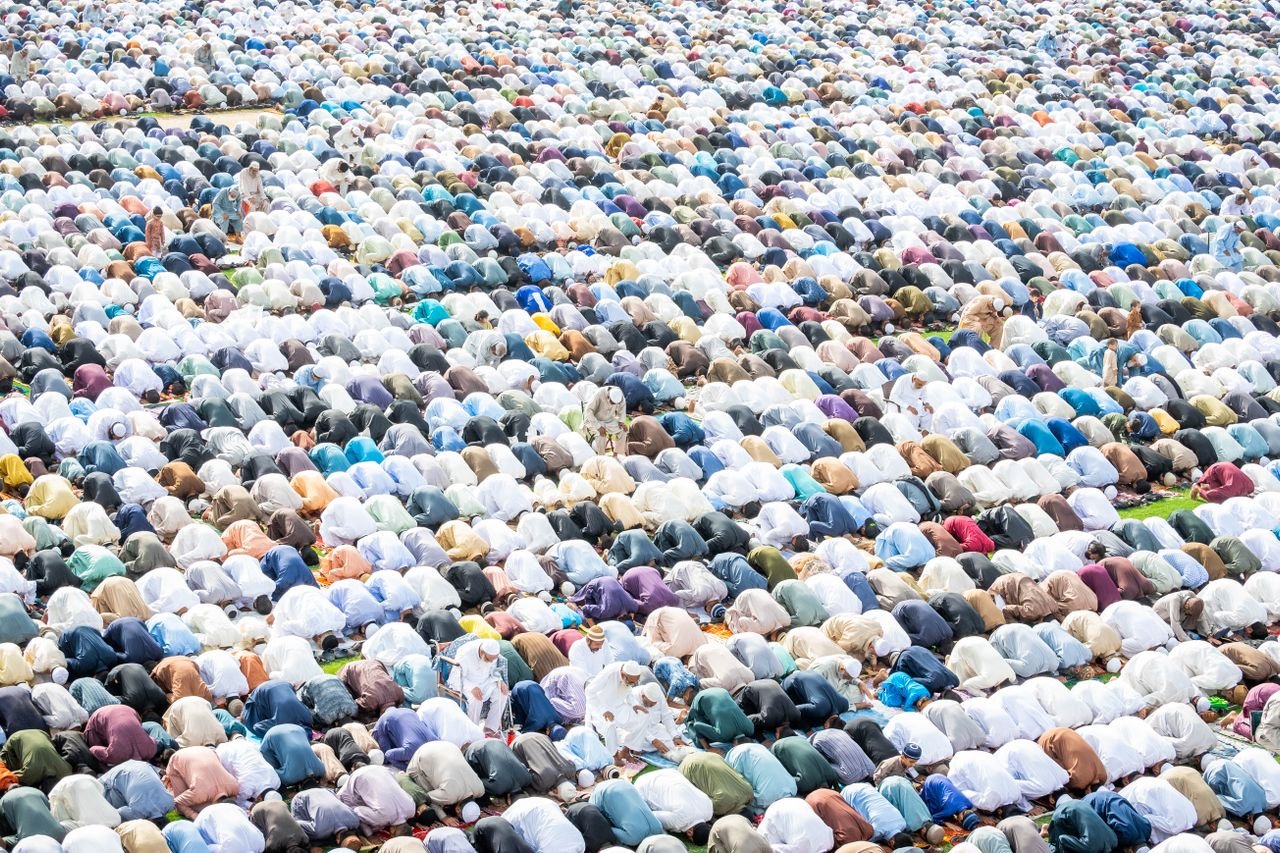
While the Hajj rituals are specific to pilgrims in Mecca, the celebration of Eid el Hajj is observed globally with tremendous warmth and communal spirit. The day begins with the Eid prayer at mosques or open prayer grounds, followed by the Qurbani sacrifice. Families gather for festive meals featuring traditional dishes, exchange gifts and greetings of “Eid Mubarak” (Blessed Eid), and visit relatives and neighbours.
In South Asia, the occasion is called Bakr Eid and is marked by large community gatherings, decorated streets, and elaborate feasts. In Turkey and Central Asia, Kurban Bayrami is a national public holiday with deep cultural traditions. In the Arab world and across the Gulf, Eid el Hajj is celebrated with special prayers, charitable activities, and extended family gatherings over three to four days.
A particularly beautiful dimension of Eid el Hajj is the global unity it creates. At the very same moment pilgrims are completing their sacred rituals in Mecca, Muslims everywhere, from Jakarta to London to Lagos, are offering prayers, performing Qurbani, and sharing meals in an extraordinary expression of the worldwide Ummah (Muslim community).
FAQs
Q1: What is the difference between Eid el Hajj and Eid al-Fitr?
Q2: When is Eid el Hajj 2026?
Q3: Is Qurbani obligatory for all Muslims?
Q4: What are the Days of Tashreeq?
Q5: Why is the Day of Arafah so important in Eid el Hajj?
Q6: How is Qurbani meat distributed?
Q7: What is Tawaf and why is it performed during Hajj?
If you wish to learn the Quran online or enroll in one of our Quran courses, click below and start your learning journey today.
Explore Our Courses →
