How to Motivate Children to Learn the Quran and Love It for Life

Motivate Children to Learn the Quran: A Complete Parent’s Guide
Every parent dreams of raising a child who grows up with a deep connection to the Quran. Yet many families struggle with the same question: how do you motivate children to learn the Quran without turning it into a chore they dread? The answer lies in combining the right teaching methods, consistent routines, and emotional encouragement that make Quranic education feel rewarding rather than forced.
Children are naturally curious, energetic, and responsive to positive reinforcement. When the learning environment is engaging and the approach matches their developmental stage, memorizing and understanding the Quran becomes a joyful part of their daily life rather than a burden. This guide explores practical, research-backed strategies that parents, teachers, and Islamic tutors can use to inspire genuine love for the Quran in young learners.
Why Motivation Matters in Quran Education
Before diving into specific techniques, it helps to understand why motivation is the foundation of successful Quran learning. Forced memorization without genuine interest often leads to resentment, poor retention, and children abandoning their studies once they are old enough to make independent choices. On the other hand, when a child is internally motivated, they retain verses longer, understand meanings more deeply, and carry that connection into adulthood.
Islamic scholars have long emphasized that the Quran should be approached with love and reverence, not fear. The Prophet Muhammad (peace be upon him) encouraged gentle and joyful teaching methods, recognizing that children absorb knowledge best in a nurturing atmosphere. This principle remains just as relevant today, whether a child is learning at home, in a local madrasa, or through an online Quran academy.
1. Start With Stories, Not Just Verses
Young children connect with narratives long before they grasp abstract concepts. Introducing Quranic stories such as the account of Prophet Yusuf, the People of the Cave, or the wisdom of Luqman gives children context and emotional engagement before they tackle memorization. Storytelling builds curiosity about the Quran’s content, which naturally fuels the desire to read and memorize it.
Parents can read simplified versions of these stories at bedtime, use illustrated children’s books, or even narrate them during car rides. This approach plants the seed of interest long before formal Quran classes begin.
2. Make Tajweed and Recitation Fun
Tajweed, the set of rules governing correct Quranic pronunciation, can feel tedious if taught mechanically. Turning recitation practice into a game changes everything. Try call-and-response recitation, where the parent or teacher recites a phrase and the child repeats it with matching tone and rhythm. Group recitation with siblings or classmates adds a social element that children enjoy.
Apps and audio resources featuring qualified reciters can also help children absorb correct pronunciation through repeated listening, almost like learning a song. This passive exposure strengthens memorization without feeling like rote study.
3. Set Small, Achievable Goals
Overwhelming a child with the goal of memorizing the entire Quran can feel impossible and discouraging. Instead, break the journey into small milestones, such as memorizing one short surah per week or mastering a single page of the Quran. Each completed goal gives the child a sense of accomplishment, which builds confidence and momentum for the next target.
Visual progress trackers, such as a chart with stickers for each completed surah, give children a tangible way to see their growth. This visual reinforcement is particularly effective for younger learners who respond well to immediate, visible rewards.
4. Use a Reward System Thoughtfully
Rewards should never replace the spiritual purpose of learning the Quran, but they can serve as helpful motivators, especially for younger children. Simple incentives like extra playtime, a favorite snack, a small toy, or a fun family outing after reaching a memorization milestone reinforce positive behavior.
As children mature, the reward system should gradually shift from material incentives toward intrinsic motivation, where the child values the knowledge itself rather than the prize attached to it. This transition is a key part of helping children internalize Quranic learning as a personal goal rather than an external obligation.
5. Be a Role Model
Children mirror the behavior of the adults around them. If a parent regularly reads the Quran, recites it during daily prayers, and speaks about it with respect and enthusiasm, the child absorbs that same attitude. Conversely, if Quran reading is treated as an afterthought at home, children quickly sense that disconnect between words and actions.
Reciting Quran together as a family, even for just ten minutes a day, creates a shared ritual that normalizes the practice and removes the feeling that learning the Quran is something only children are required to do.
6. Create a Dedicated, Distraction-Free Learning Space
The environment in which a child studies has a direct impact on focus and retention. A quiet corner with a comfortable seating arrangement, good lighting, and minimal distractions such as television or mobile devices helps children associate that space with calm, focused learning.
Some families designate a specific time of day, such as right after Fajr prayer or before dinner, as the dedicated Quran learning session. Consistency in timing and location trains the child’s mind to transition smoothly into learning mode without resistance.
7. Incorporate Technology and Online Quran Classes
Modern children are digital natives, and leveraging that comfort with technology can significantly boost engagement. Online Quran academies offer one-on-one sessions with qualified tutors who specialize in teaching children using interactive methods, including digital Quran apps, animated explanations, and gamified quizzes.
Online learning also offers flexibility for busy families, allowing children to learn Quran from home at a time that fits their schedule, which reduces the stress of commuting to a physical madrasa. Many parents find that personalized attention from a dedicated tutor increases a child’s motivation far more than large group classes where individual progress can go unnoticed.
Also Read: Imam Hussain (RA): Life, Virtues, Karbala & Timeless Lessons
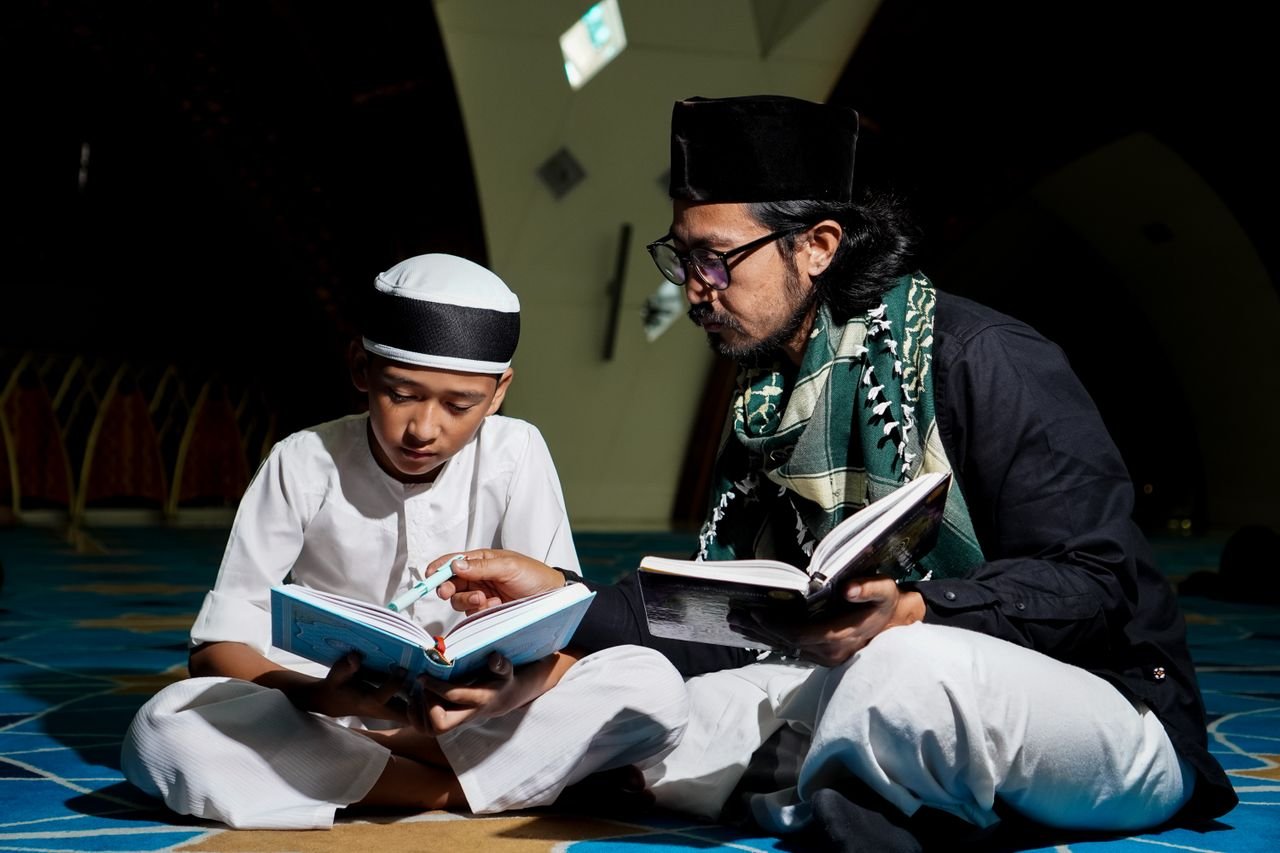
8. Connect Verses to Real Life
Children stay more engaged when they understand how the Quran relates to their everyday experiences. Explaining the meaning behind a verse, even in simple terms, helps a child see the Quran as a source of guidance rather than just a memorization task.
For example, when teaching a verse about kindness to parents, a parent can discuss specific examples of how the child can show kindness at home. This bridges the gap between memorization and practical application, making the learning experience meaningful rather than abstract.
9. Celebrate Milestones as a Family
Completing a surah, finishing a juz, or reaching the halfway point of the Quran are significant achievements that deserve recognition. Hosting a small family celebration, inviting grandparents to witness a recitation, or simply praising the child in front of relatives reinforces the value of their hard work.
Public acknowledgment, even on a small scale, satisfies a child’s natural desire for recognition and encourages them to keep pushing toward the next goal.
10. Use Multisensory Learning Techniques
Children learn differently, and combining visual, auditory, and kinesthetic methods increases retention for a wider range of learning styles. Visual learners benefit from colorful Quran charts and flashcards. Auditory learners thrive with repeated listening to recitation audio. Kinesthetic learners often retain better when they trace Arabic letters by hand or use physical objects like memorization beads to count repetitions.
Combining these methods within a single lesson keeps children engaged and caters to their individual strengths rather than relying on a one-size-fits-all teaching style.
11. Avoid Pressure and Comparison
One of the most common mistakes parents make is comparing their child’s progress to siblings, cousins, or classmates. This comparison often backfires, creating anxiety and resentment toward Quran learning rather than motivation. Each child has a unique pace, and pushing them to match someone else’s speed can damage their confidence and create a negative association with the entire process.
Instead, focus on each child’s individual growth. Praise effort and consistency rather than speed, and remind them that learning the Quran is a personal journey between them and Allah, not a competition.
12. Make Dua and Spiritual Connection Part of the Process
Beyond practical techniques, nurturing a spiritual bond with the Quran matters deeply. Encourage children to make dua before and after their lessons, asking Allah to make the Quran easy for them to learn and to benefit from its guidance. Sharing hadith about the rewards of learning and teaching the Quran, in age-appropriate language, helps children understand the deeper purpose behind their effort.
This spiritual framing transforms Quran learning from an academic task into an act of worship, which is ultimately the most powerful and lasting source of motivation.
Common Challenges Parents Face and How to Overcome Them
Even with the best strategies, parents often encounter obstacles along the way. Recognizing these challenges early helps prevent frustration from derailing progress.
Short attention spans: Younger children often struggle to sit still for long sessions. Shortening lessons to fifteen or twenty minutes with frequent breaks keeps focus sharp without causing burnout.
Inconsistent schedules: Busy family routines can disrupt regular practice. Setting a fixed time each day, even if brief, builds a habit that becomes easier to maintain over time.
Lack of qualified guidance: Not every parent feels equipped to teach Tajweed or proper pronunciation. Enrolling children with a certified Quran tutor, whether locally or through an online Quran academy, ensures they receive accurate instruction from the start.
Loss of interest over time: Motivation naturally fluctuates. Revisiting why the family values Quran learning, introducing new teaching methods, or taking a short, planned break can reignite enthusiasm without abandoning the goal altogether.
The Long-Term Benefits of a Motivated Quran Learner
When children develop genuine motivation to learn the Quran, the benefits extend far beyond memorization. They build strong moral character, improve concentration and discipline, strengthen their Arabic language skills, and develop a personal relationship with their faith that often deepens with age. Many adults who recall their own Quran learning experience with fondness, rather than resentment, point to the encouragement and patience their parents or teachers showed during childhood.
Investing time in making Quran learning enjoyable today shapes the spiritual foundation a child carries for the rest of their life.
Final Thoughts
Motivating children to learn the Quran is not about finding one perfect method but about combining patience, creativity, consistency, and genuine love for the subject. Whether through storytelling, technology, family rituals, or thoughtful encouragement, the goal remains the same: helping children see the Quran not as an obligation, but as a lifelong source of guidance, comfort, and connection with their faith.
Every small step a child takes toward memorizing and understanding the Quran is a meaningful achievement worth celebrating. With the right support system at home, children are far more likely to carry their love for the Quran into adulthood and pass that same motivation on to the next generation.
FAQs
At what age should children start learning the Quran?
Most scholars and educators recommend introducing basic Quranic concepts, such as short surahs and simple Arabic letters, around the age of four or five. Formal memorization and Tajweed lessons typically begin once a child can read independently, usually between ages six and eight.
How can I keep my child motivated if they lose interest in Quran lessons?
Reintroduce variety into the lessons, such as new recitation games, storytelling sessions, or a change in tutor or learning format. Short breaks combined with renewed encouragement often restore enthusiasm without disrupting long-term progress.
Is online Quran learning effective for children?
Yes, online Quran classes can be highly effective when led by qualified tutors who use interactive, child-friendly teaching methods. Many children respond well to the flexibility and personalized attention available through one-on-one online sessions.
How long should a daily Quran lesson be for a young child?
For children under eight, fifteen to twenty minutes per session is generally sufficient to maintain focus. Older children can gradually extend sessions to thirty or forty minutes as their attention span and reading ability develop.
Should I use rewards to motivate my child to learn the Quran?
Small, thoughtful rewards can be effective, especially for younger children, as long as they are paired with genuine praise and a gradual shift toward intrinsic motivation. The goal is for children to eventually value the Quran for its own sake rather than for external incentives.
What is the best way to teach Tajweed to children?
Interactive methods such as call-and-response recitation, audio repetition with qualified reciters, and color-coded Tajweed charts make learning pronunciation rules more engaging and easier to retain for young learners.
If you wish to learn the Quran online or enroll in one of our Quran courses, click below and start your learning journey today.
Explore Our Courses →
