What Is Al-Qantarah in Islam? The Final Bridge Before Paradise
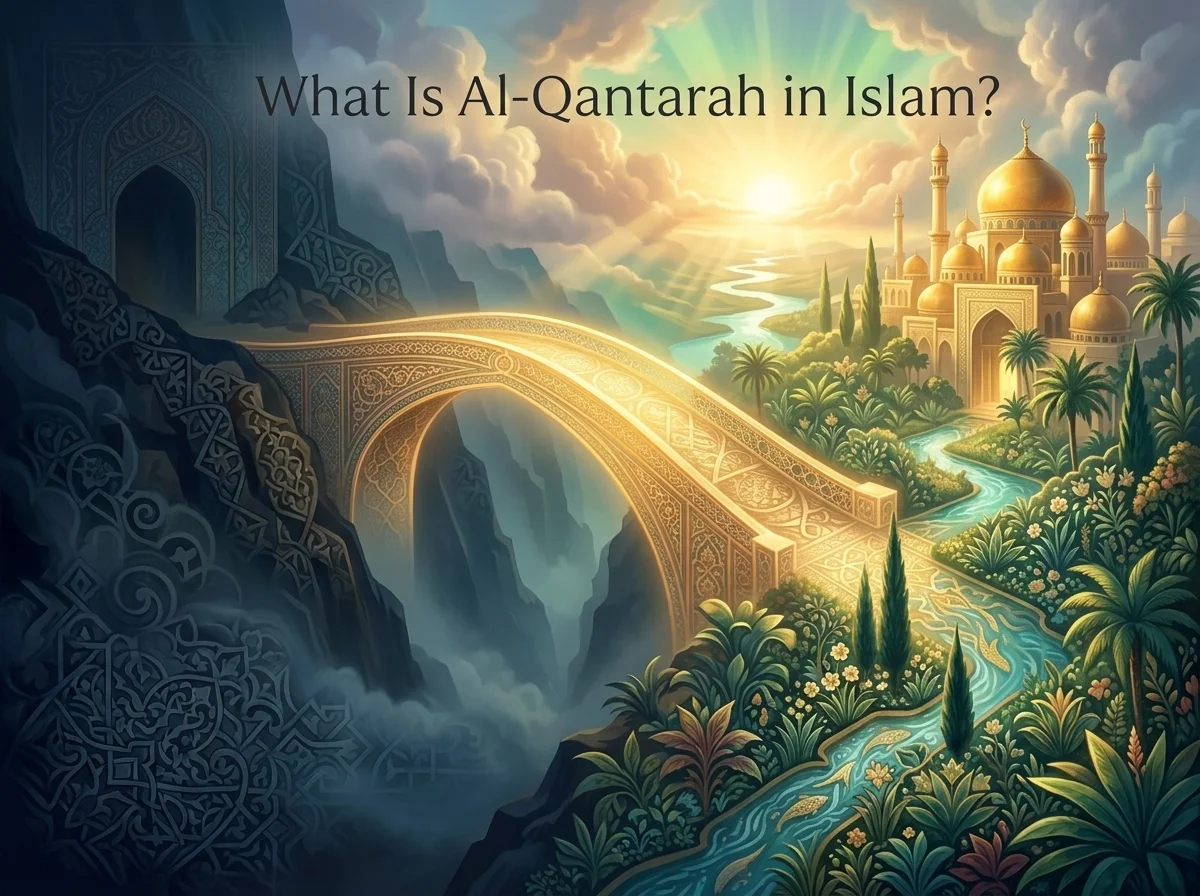
What Is Al-Qantarah in Islam?
Imagine Crossing Hell, Only to Be Stopped One Last Time
You have survived the Sirat, the razor-thin bridge over Hellfire. Paradise is finally in sight. And then, right at its gates, you are stopped again.
This is Al-Qantarah. It is one of the most fascinating yet lesser-known stages of the Day of Judgment, and understanding it can genuinely change how you treat people today.
Al-Qantarah is a smaller bridge, located between Hell and Paradise, where believers who have already crossed the Sirat are held back one final time. Here, Allah settles every unresolved wrong between them before anyone is allowed to enter Jannah.
This article breaks down what Al-Qantarah is, what happens there, how it differs from the Sirat, and why this concept matters for how Muslims live their daily lives.
What Does Al-Qantarah Mean?
The word Qantarah is Arabic for “bridge” or “arched bridge.” Unlike the Sirat, which is described as a bridge stretched directly over the Hellfire, Al-Qantarah is understood to be a separate, smaller bridge positioned between Hellfire and the gates of Paradise.
It is sometimes described as an extension of the Sirat and sometimes as a distinct crossing point. Scholars differ on the exact geography, but they agree on its purpose: final accountability between believers before they enter Paradise.
The Hadith That Describes Al-Qantarah
The primary source for Al-Qantarah comes from a hadith narrated by Abu Sa’id al-Khudri, recorded in Sahih al-Bukhari. The Prophet Muhammad (peace be upon him) explained that once believers are saved from the Fire, they will be held at this bridge between Paradise and Hell.
There, mutual retaliation will take place for the wrongs they committed against one another during their worldly life. Only after they are purified and cleansed of these disputes will they be granted permission to enter Paradise.
The hadith adds a striking detail: once purified, each believer will recognize the way to his home in Paradise better than he knew the way to his own house in this world.
What Actually Happens at Al-Qantarah?
Al-Qantarah functions as a court of mutual accountability among believers. It is not about major sins or disbelief. Those matters are already settled before the Sirat is even crossed. This stage deals specifically with the smaller, everyday wrongs people commit against each other.
At this bridge, Allah reconciles believers by transferring good deeds and, if necessary, sins between them until every account is balanced.
Key aspects of this process include:
- Retribution for wrongs: Anyone who oppressed, insulted, backbited, or wronged another believer will face a settling of accounts.
- Exchange of deeds: If the wrongdoer has no good deeds left to give, the sins of the wronged party may be transferred onto him instead.
- Purification before entry: Only once every dispute is resolved are believers “cleansed” and permitted to pass into Jannah.
- No injustice carried into Paradise: Since Paradise is a place free of resentment and grudges, nothing unsettled can be carried through its gates.
How Is Al-Qantarah Different from the Sirat?
Many people confuse the two bridges, so it helps to separate their roles clearly.
The Sirat is the bridge over Hellfire itself. It tests a person’s deeds and faith, and its difficulty depends on how a person lived. Some cross it in the blink of an eye, others crawl, and some fall into the Fire.
Al-Qantarah comes after the Sirat has already been crossed successfully. It is not a test of faith or deeds in general. It is specifically a settlement of interpersonal disputes among people who have already been saved from Hell.
A simple way to remember the sequence:
- Judgment (Hisab) takes place first.
- Believers cross the Sirat over Hellfire.
- Those who survive are stopped at Al-Qantarah to settle mutual wrongs.
- Once purified, they enter Paradise permanently.
Why Does Al-Qantarah Come After the Sirat, Not Before?
This ordering is not random, and classical scholars have offered meaningful explanations for it.
Softened hearts. After witnessing the terror of Hellfire and the relief of being saved from it, a believer’s heart becomes humbled and grateful. This makes forgiving others far easier than it would have been earlier.
True willingness to forgive. If accountability happened before the Sirat, a person might refuse to forgive out of pride or persisting anger, missing the reward that comes from sincere forgiveness. After witnessing the Fire up close, that reluctance tends to disappear.
Protecting good deeds until the end. If a wronged party were compensated with sins transferred to them too early, and the sinner later needed those same deeds to survive the Sirat itself, the timing could unfairly cost him his safety. Delaying the settlement until after the Sirat protects the fairness of the entire process.
A dignified entry into Paradise. Paradise is described in the Quran as a place free of resentment, where believers’ hearts are cleansed of any ill feeling toward one another. Al-Qantarah is the mechanism that makes this possible before anyone actually steps inside.
Also Read: Why Was Surah Kafirun Revealed? The Story Behind Islam’s Declaration of Faith

Why Al-Qantarah Matters for Muslims Today
This is not just a piece of eschatological trivia. It carries a direct, practical message for how Muslims are expected to treat one another in daily life.
Every wrong is recorded. Backbiting, cheating, oppression, and broken trusts do not simply disappear. If they are not resolved in this world, they will be settled at Al-Qantarah using the currency of good deeds.
Good deeds are the real currency. A person can build a mountain of prayers, charity, and fasting, only to see it transferred away because of unresolved injustice toward another person.
Forgiveness in this life is a gift to yourself. Letting go of a grudge now, or seeking forgiveness from someone you wronged, can spare you a costly reckoning later.
Reconciliation is encouraged, not optional. Scholars point to hadith narrations where Allah personally reconciles sincere believers who choose to forgive one another, rewarding that forgiveness with immense blessings in Paradise.
Practical Takeaways
- Settle disputes now. Apologize, forgive, or make amends while you still can, rather than leaving it for the Hereafter.
- Guard your tongue and your dealings. Backbiting, cheating in business, and mistreating others are exactly the kinds of wrongs addressed at Al-Qantarah.
- Value forgiveness as worship. Choosing to forgive someone is itself a means of drawing closer to Allah and earning reward.
- Do not underestimate small wrongs. Even minor injustices between people are taken seriously in this accounting.
A Final Reflection
Al-Qantarah is a powerful reminder that Islam does not separate faith from character. Belief in Allah and good deeds toward Him are not enough on their own; how you treat other people matters just as much.
The image of believers, already saved from Hellfire, still being held back one last time to make peace with one another, says something profound about the weight Islam places on human relationships. It is worth carrying that lesson back into ordinary, everyday life, long before the Day of Judgment ever arrives.
Sources and Official References
- Sahih al-Bukhari, Hadith 6535 (Sunnah.com): https://sunnah.com/bukhari:6535
- Sunnah.com Hadith Search, “bridge”: https://sunnah.com/search?q=bridge
- Daily Hadith Online by Abu Aminah Elias (commentary on Sahih al-Bukhari 6535): https://www.abuaminaelias.com/dailyhadithonline/2021/12/05/purified-by-justice/
- Quran, Surah Al-A’raf 7:46-47 (Quran.com): https://quran.com/al-araf/46-47
Frequently Asked Questions
1. What is Al-Qantarah in Islam?
Al-Qantarah is a bridge located between Hell and Paradise where believers who have already crossed the Sirat are held back so that unresolved wrongs between them can be settled before they enter Jannah.
2. Is Al-Qantarah the same as the Sirat?
No. The Sirat is the bridge stretched over Hellfire itself, while Al-Qantarah comes afterward, dealing specifically with disputes between believers rather than testing faith or deeds.
3. What happens if someone has no good deeds left to give at Al-Qantarah?
According to hadith explanations, if a wrongdoer has no good deeds remaining to compensate the person he wronged, the sins of the wronged party may be transferred onto him instead.
4. Why does Al-Qantarah happen after the Sirat instead of before?
Scholars explain that crossing the Sirat first softens believers’ hearts, making genuine forgiveness easier, and it protects the fairness of using good deeds that may still be needed to survive the Sirat itself.
5. What is the main lesson Muslims should take from Al-Qantarah?
The key lesson is to resolve conflicts, seek forgiveness, and avoid wronging others in this life, since unresolved injustice can cost a person their good deeds on the Day of Judgment.
If you wish to learn the Quran online or enroll in one of our Quran courses, click below and start your learning journey today.
Explore Our Courses →
