Which Salah Can Be Combined? A Complete Guide to Jam’ Between Prayers

Which Salah Can Be Combined?
Ever Wondered If You Can Pray Zuhr and Asr Together?
Life gets busy. Between work meetings, long journeys, and unexpected emergencies, finding time for five separate prayers can feel overwhelming.
This is exactly why Islam offers a practical solution called Jam’ bayn as-Salatayn, or combining prayers. But which Salah can be combined is a question many Muslims ask, and the answer requires understanding specific rules laid out by the Quran and Sunnah.
This guide breaks down everything you need to know, from which prayers qualify for combination to the exact conditions that make it permissible.
What Does “Combining Prayers” Actually Mean?
Combining prayers means performing two obligatory prayers within the time slot of one of them. This is different from shortening prayers (Qasr), though the two often happen together during travel.
There are two main methods of combining:
- Jam’ Taqdeem: Praying the later prayer earlier, during the time of the first prayer.
- Jam’ Ta’kheer: Delaying the earlier prayer and praying it during the time of the second prayer.
Both methods are valid, and the choice often depends on convenience and circumstance.
Which Salah Can Be Combined?
Only specific prayers can be joined together. Understanding this pairing system is essential.
Zuhr and Asr Can Be Combined
Zuhr and Asr are the two afternoon prayers that scholars agree can be combined. You can either:
- Pray Asr early, right after Zuhr, during Zuhr’s time (Jam’ Taqdeem)
- Delay Zuhr and pray both together during Asr’s time (Jam’ Ta’kheer)
This pairing makes sense because both prayers share a natural connection in timing and are often affected by the same daytime activities like travel or work.
Maghrib and Isha Can Be Combined
The second valid pairing is Maghrib and Isha. Just like the Zuhr-Asr combination, you have two options:
- Pray Isha early during Maghrib’s time
- Delay Maghrib and pray it along with Isha during Isha’s time
This combination is especially common among travelers who want to settle in for the night without worrying about a separate late prayer.
Fajr Cannot Be Combined With Any Prayer
Fajr stands alone. It cannot be joined with Isha before it or Zuhr after it. Fajr has its own distinct time window bounded by dawn and sunrise, and no scholarly opinion permits merging it with another prayer.
This is an important detail that many people overlook. No matter the circumstance, whether travel, illness, or weather, Fajr always remains a standalone obligation.
Why Only These Pairings?
The logic behind these specific pairings comes directly from the practice of the Prophet Muhammad (peace be upon him). Multiple authentic hadiths confirm that he combined Zuhr with Asr and Maghrib with Isha during travel and other valid circumstances.
Scholars note that these particular prayers share close time boundaries, which makes combining them practical without disrupting the overall rhythm of the five daily prayers. Fajr, on the other hand, has a unique and isolated time slot that doesn’t naturally connect to either Isha or Zuhr.
Valid Reasons for Combining Prayers
Combining Salah isn’t meant for everyday convenience. It’s a concession (rukhsah) granted under specific circumstances.
1. Travel (Safar)
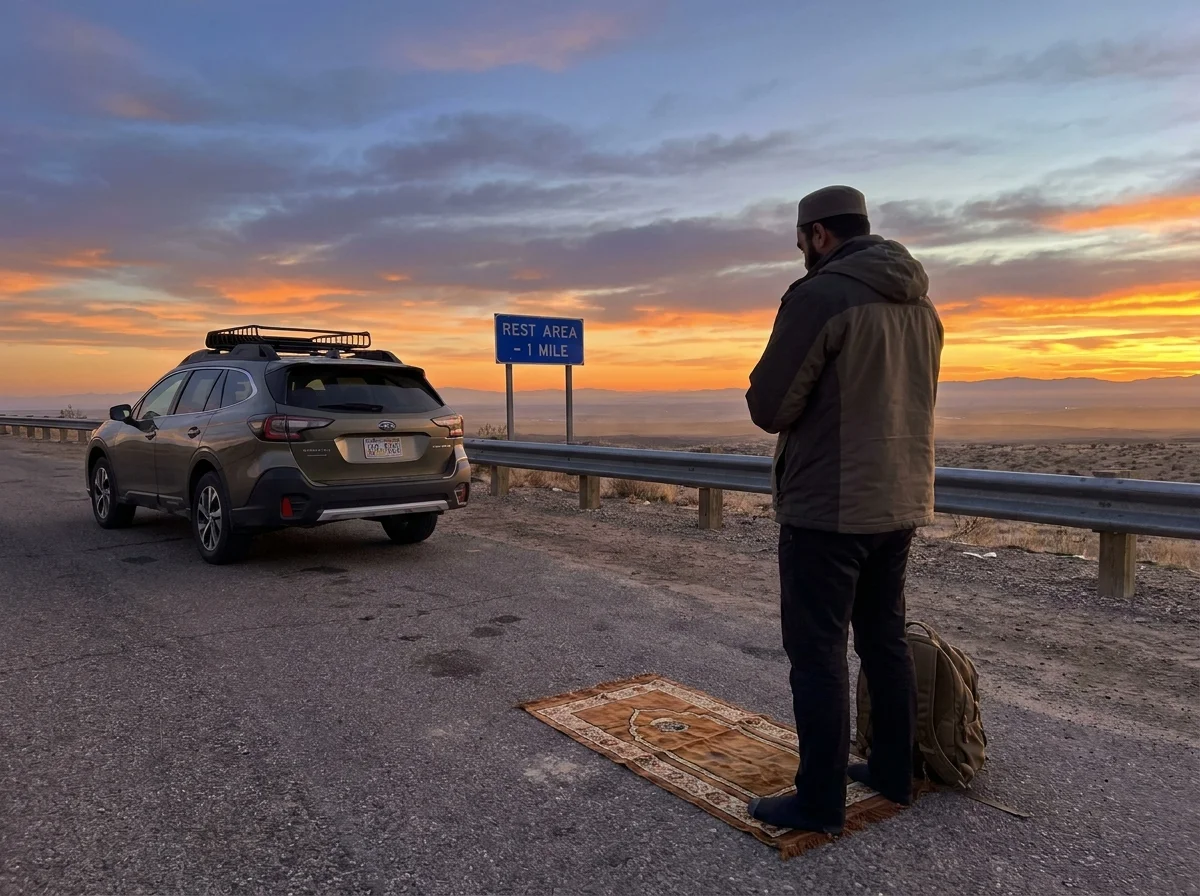
This is the most widely accepted reason for combining prayers. If you’re traveling a recognized distance (scholars differ on the exact measurement, but generally around 48 miles or more), you’re permitted to combine Zuhr with Asr and Maghrib with Isha.
Many contemporary scholars extend this to include:
- Long car journeys
- Flights
- Business trips
- Any travel that takes you outside your home city with intention to return
2. Illness or Medical Difficulty
If a person is genuinely sick and finds it difficult to perform each prayer separately at its designated time, many scholars, particularly within the Hanbali school, allow combining prayers as a mercy.
This applies to situations like:
- Post-surgery recovery
- Chronic pain conditions
- Situations requiring heavy medication that affects alertness
3. Rain or Severe Weather
Historically, combining Maghrib and Isha (and sometimes Zuhr and Asr) due to heavy rain was practiced during the time of the Prophet (peace be upon him) and his companions, especially for those attending congregational prayers at the mosque.
This concession primarily applies to:
- Heavy rainfall making it difficult to reach the mosque
- Storms, snow, or extreme weather conditions
- Situations where walking to prayer poses genuine hardship
4. Fear or Danger
In situations involving genuine danger, such as conflict zones, natural disasters, or threats to personal safety, combining prayers is permitted to ensure that worship isn’t missed entirely.
5. Hajj: Arafah and Muzdalifah
During Hajj, combining prayers is a well-established Sunnah at two specific points:
- Arafah: Zuhr and Asr are combined and shortened, prayed together at the time of Zuhr.
- Muzdalifah: Maghrib and Isha are combined, prayed together at the time of Isha.
This is one of the clearest and most agreed-upon examples of prayer combination in Islamic practice.
Also Read: What Is Al-Qantarah in Islam? The Final Bridge Before Paradise
Combining Prayers vs Shortening Prayers: Know the Difference
It’s easy to confuse these two concepts, but they aren’t the same thing.
| Aspect | Combining (Jam’) | Shortening (Qasr) |
|---|---|---|
| What it does | Merges two prayers into one time slot | Reduces 4-rakah prayers to 2 rakahs |
| Applies to | Zuhr-Asr, Maghrib-Isha | Zuhr, Asr, Isha only |
| Can be used together | Yes, often combined with Qasr while traveling | Yes |
| Applies to Fajr/Maghrib | No | No (these already have fixed rakahs) |
You can shorten a prayer without combining it, and you can combine prayers without shortening them. During travel, however, Muslims often do both simultaneously for convenience.
How to Actually Combine Prayers: Step by Step
If you find yourself in a valid situation to combine prayers, here’s the practical approach:
For Jam’ Taqdeem (combining early):
- Make the intention (niyyah) to combine before starting the first prayer.
- Pray the first prayer completely (e.g., Zuhr).
- Immediately follow with the second prayer (e.g., Asr) without a long gap.
- No additional dua or ritual is required between the two prayers.
For Jam’ Ta’kheer (combining late):
- Intend to delay the first prayer before its time expires.
- Wait until the time of the second prayer begins.
- Pray the first prayer, followed directly by the second.
Key tip: The intention to combine should ideally be made before or during the first prayer, not as an afterthought once you’ve already missed the window.
Common Mistakes People Make When Combining Prayers
Understanding which Salah can be combined also means avoiding a few frequent errors:
- Combining Fajr with Isha or Zuhr: This is never valid under any school of thought.
- Combining out of pure laziness: The concession is meant for genuine hardship, not habitual convenience.
- Forgetting the order: Zuhr must come before Asr, and Maghrib before Isha. You cannot reverse the sequence.
- Delaying without a valid excuse: If the reason for combining (such as travel) ends before the prayer time is over, it’s better to pray each prayer separately.
- Skipping the Sunnah prayers unnecessarily: While combining focuses on obligatory prayers, some voluntary prayers can still be maintained depending on the situation.
Different Scholarly Views Worth Knowing
Islamic scholars across schools of thought (madhabs) generally agree on the core pairings of Zuhr-Asr and Maghrib-Isha, but they differ slightly on the scope of valid reasons.
- The Hanafi school is generally more restrictive, primarily limiting combination to the specific case of Hajj at Arafah and Muzdalifah.
- The Shafi’i, Maliki, and Hanbali schools are more flexible, permitting combination for travel, rain, illness, and genuine necessity.
This is why practices can vary slightly depending on which school of thought a person follows. When in doubt, consulting a knowledgeable local scholar for your specific situation is always the safest approach.
Key Takeaways
- Only Zuhr and Asr, and Maghrib and Isha, can be combined.
- Fajr can never be combined with any other prayer.
- Valid reasons include travel, illness, severe weather, danger, and Hajj rituals.
- Combining is a concession, not a default practice for daily convenience.
- The order of prayers must always be maintained; you cannot pray Asr before Zuhr.
Final Thoughts
Understanding which Salah can be combined offers real relief during difficult or demanding circumstances, without compromising the obligation of prayer itself. Islam’s flexibility here reflects its broader principle of ease within structure.
Whether you’re traveling, unwell, or facing extreme weather, knowing these rules ensures you can maintain your connection to prayer without unnecessary hardship. As always, when specific situations feel unclear, seeking guidance from a qualified scholar will help you apply these rulings correctly and with confidence.
Sources and Official References
- Sahih al-Bukhari — https://sunnah.com/bukhari
- Sahih Muslim — https://sunnah.com/muslim
- Sunan Abu Dawood — https://sunnah.com/abudawud
- Sunan al-Tirmidhi — https://sunnah.com/tirmidhi
- Fiqh us-Sunnah (Sayyid Sabiq) — https://archive.org/details/FiqhAsSunnahTheBookOfHajjSayyidSabiq
- Al-Mughni (Ibn Qudamah) — https://archive.org/details/AlMughniByIbnQudamahVolume2PrayerEnglishTranslation
FAQs
1. Which Salah can be combined in Islam?
Only Zuhr with Asr, and Maghrib with Isha, can be combined. Fajr cannot be combined with any other prayer under any circumstance.
2. Can Fajr be combined with Isha?
No. Fajr always remains a separate, standalone prayer and cannot be joined with Isha, Zuhr, or any other prayer.
3. Is combining prayers only allowed while traveling?
Travel is the most common reason, but scholars also permit combining prayers due to illness, heavy rain, danger, and during specific Hajj rituals at Arafah and Muzdalifah.
4. What is the difference between combining and shortening prayers?
Combining (Jam’) merges two prayers into one time slot, while shortening (Qasr) reduces a four-rakah prayer to two rakahs. They can be practiced together or separately.
5. Can I combine prayers just for convenience without a valid reason?
No. Combining prayers is a concession meant for genuine hardship such as travel, illness, or severe weather, not a routine practice for everyday convenience.
If you wish to learn the Quran online or enroll in one of our Quran courses, click below and start your learning journey today.
Explore Our Courses →
