Read Quran Online With Tajweed: The Complete Beginner to Advanced Guide
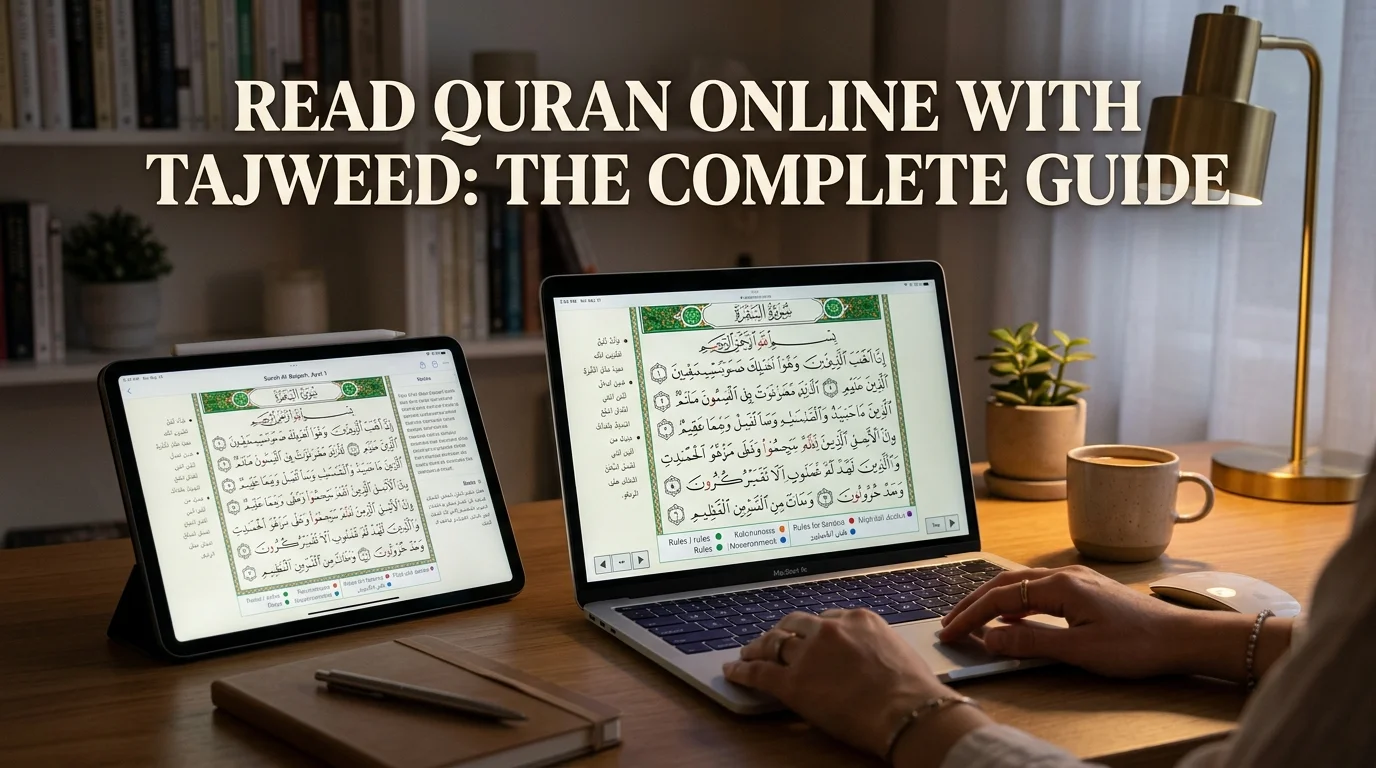
Why More Muslims Are Learning Recitation Through a Screen Instead of a Book
Ten years ago, learning correct pronunciation meant sitting physically in front of a teacher, page by page, for months. Today, thousands of people search daily for ways to read Quran online with tajweed, and the shift has genuinely changed how accessible proper recitation training has become.
I started paying close attention to this shift while helping a family member choose a platform to relearn recitation after years away from regular practice. What surprised me was how much variation exists between tools that claim to teach tajweed, and how important it is to understand what actual tajweed correction requires before picking one.
This guide walks through what it really means to read Quran online with tajweed, how to evaluate the right method for your level, and the mistakes most beginners make when starting out.
What Does It Mean to Read Quran Online With Tajweed?
To read Quran online with tajweed means using a digital platform, app, or live tutor connection to recite the Quran while applying the correct Arabic pronunciation rules, articulation points, and elongation rules. This typically combines color coded tajweed text, audio playback from certified reciters, and often live correction from a qualified teacher.
What Exactly Is Tajweed and Why Does It Matter?
Tajweed is the set of rules governing how Arabic letters are pronounced correctly when reciting the Quran, including articulation points (makharij), elongation rules (madd), and letter characteristics (sifat). There are traditionally 17 primary articulation points in the Arabic language, according to classical phonetics scholarship documented by Islamic linguistic academies.
Getting these rules wrong does not just affect accent; in some cases it can change the actual meaning of a word. This is one reason scholars insist tajweed correction should never be entirely self taught, even when using high quality digital tools.
Why Can’t I Just Learn Tajweed From an App Alone?
Apps and websites are excellent for repetition, color coded guidance, and initial exposure to the rules, but they cannot fully replace human ear correction. A live teacher, whether in person or over video call, can catch subtle articulation errors that automated tools frequently miss, especially with letters like “dhad,” “qaf,” and “ayn” that do not exist in English.
How Can I Read Quran Online With Tajweed as a Complete Beginner?
If you are starting from zero, trying to read Quran online with tajweed without any foundation usually leads to frustration. The most reliable path follows a specific order.
- Start with Arabic letter recognition. Before tajweed rules matter, you need to recognize all 28 Arabic letters and their different forms (beginning, middle, end, isolated).
- Move to Noorani Qaida or an equivalent beginner text. This traditional starting text introduces basic pronunciation before jumping into full surahs.
- Use color coded tajweed mushafs for visual reinforcement. Platforms like (cite index=”0-0″>Quran.com, a widely used digital Quran platform, which provides verse by verse audio from multiple certified reciters alongside searchable translations</cite>, allow beginners to follow along with word by word audio highlighting.
- Add a certified live tutor once basics are stable. This is the step most self taught learners skip, and it is usually where correction actually happens.
How Long Does It Take to Learn Tajweed Online?
Most structured programs estimate 6 to 12 months for a complete beginner to reach basic tajweed fluency with consistent practice of 20 to 30 minutes daily. Learners who already read Arabic script fluently often progress faster, sometimes reaching intermediate fluency within 3 to 4 months.
What Features Should I Look for When I Read Quran Online With Tajweed?
Not every platform offering to help you read Quran online with tajweed provides the same depth of correction. Based on comparing several tools during my own research process, a few features consistently separate genuinely useful platforms from surface level ones.
- Word by word audio highlighting. This lets you hear exact pronunciation synced to the specific word on screen, rather than only full verse playback.
- Color coded tajweed rules. Standard tajweed mushafs use consistent colors for rules like ikhfa, idgham, and qalqalah, making pattern recognition much faster.
- Live video correction with a certified teacher. This is the single most important feature for actual skill development, not just exposure.
- Recitation recording and playback comparison. Being able to record yourself and compare it against a certified reciter accelerates self correction significantly.
- Progress tracking across sessions. Structured programs that log which surahs and rules you have covered prevent gaps in your learning path.
Which Tajweed Rules Should Beginners Focus on First?
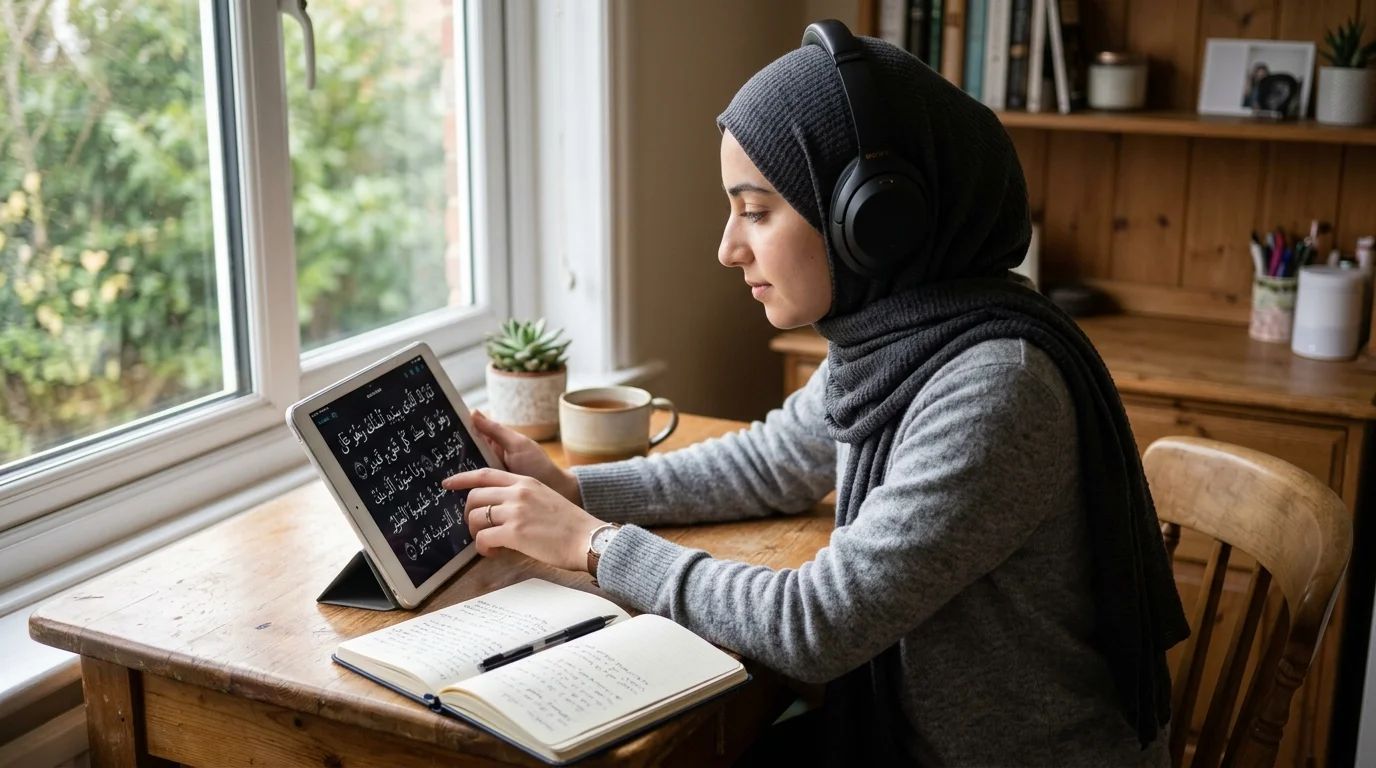
When people first try to read Quran online with tajweed, the sheer number of rules can feel overwhelming. In practice, a small set of foundational rules covers the majority of recitation.
What Is the Rule of Noon Sakinah and Tanween?
This rule governs how the letter “noon” with no vowel (sakinah) or the tanween sound is pronounced depending on the letter that follows it. It has four sub categories: idhar (clear pronunciation), idgham (merging), iqlab (conversion), and ikhfa (concealment), and it appears constantly throughout Quranic text.
What Is Qalqalah and Why Is It Important?
Qalqalah refers to a slight bouncing or echoing sound applied to five specific letters (qaf, tta, ba, jeem, dal) when they appear with a sukoon (no vowel). Mispronouncing qalqalah letters is one of the most common beginner errors, since the natural instinct is to pronounce them flatly without the bounce.
What Is Madd and How Long Should Elongation Last?
Madd refers to elongation rules applied to specific vowel letters, measured in units called “harakat” (roughly equivalent to a rhythmic beat). Natural madd typically lasts 2 counts, while certain rule based madd types can extend to 4 or 6 counts, depending on the specific letter combination and context.
The Historical Weight Behind Learning Tajweed Correctly
According to hadith literature preserved on (cite index=”0-1″>Sunnah.com, a widely referenced repository of authenticated hadith texts used by Islamic researchers and students</cite>, the Prophet Muhammad instructed his companions to recite the Quran with precise, measured tone, describing correct recitation as something with real spiritual and practical importance, not just aesthetic value.
This historical emphasis is part of why institutions like (cite index=”0-2″>Al Azhar University, one of the oldest and most authoritative centers of Islamic learning globally</cite>, maintain formal ijazah certification chains for tajweed teachers, tracing authorized teaching lineage back through generations of scholars to the Prophet himself.
Actionable Tips to Read Quran Online With Tajweed More Effectively
These steps come directly from comparing common mistakes across beginner and intermediate learners.
- Practice out loud, never silently. Silent reading does not train your mouth muscles or let you hear your own articulation errors in real time.
- Record every session, even short ones. A five minute recording reviewed later often reveals errors you did not notice while reciting.
- Slow down before speeding up. Rushing through verses before mastering articulation points builds bad habits that are significantly harder to unlearn later.
- Schedule live correction sessions weekly, not occasionally. Consistency matters more than session length; a focused 20 minute weekly session with a teacher outperforms an irregular hour long session.
- Review previously covered rules regularly. Tajweed skills fade without repetition, so revisiting earlier lessons every few weeks prevents regression.
Common Mistakes People Make When They Read Quran Online With Tajweed
A few patterns show up repeatedly among self taught learners relying only on apps or websites.
- Mistake: Relying entirely on visual color coding without audio comparison. Fix: Always pair color coded text with certified reciter audio, never one without the other.
- Mistake: Skipping foundational Arabic letter practice to jump straight into full surahs. Fix: Spend adequate time on isolated letter pronunciation before attempting connected recitation.
- Mistake: Avoiding live correction due to shyness about mistakes. Fix: Errors caught early by a teacher are far easier to correct than habits reinforced over months of unsupervised practice.
Final Thoughts on Reading Quran Online With Tajweed
Learning to read Quran online with tajweed has become genuinely more accessible than it was even a decade ago, but accessibility does not automatically mean effectiveness. The learners who make real progress combine structured digital tools, consistent daily practice, and regular correction from a certified teacher rather than relying on any single method alone.
Whether you are a complete beginner learning the Arabic alphabet for the first time or someone refreshing skills after years away from regular recitation, the fundamentals stay the same: consistency, correct foundational rules, and real human feedback.
Also Read: Surah Naziat: The Powerful Chapter That Describes the Moment of Death
FAQs
1. How do I read Quran online with tajweed as a beginner?
Start with Arabic letter recognition, move to a beginner text like Noorani Qaida, then use color coded tajweed mushafs with word by word audio. Add a certified live tutor once you have the basics stable for real correction.
2. Can I really learn tajweed correctly without a live teacher?
Apps and websites help with exposure and repetition, but they cannot fully replace human ear correction for subtle articulation errors. Most successful learners combine digital tools with at least weekly live sessions with a certified teacher.
3. How long does it take to learn to read Quran online with tajweed?
Most beginners reach basic tajweed fluency in 6 to 12 months with consistent daily practice of 20 to 30 minutes. Learners who already read Arabic script fluently often progress faster, sometimes in 3 to 4 months.
4. What features should a good platform have to read Quran online with tajweed?
Look for word by word audio highlighting, color coded tajweed rules, live video correction, and recitation recording features. Progress tracking across sessions also helps prevent gaps in your learning path.
5. What is the most common mistake beginners make when learning tajweed online?
The most common mistake is relying entirely on visual color coding without pairing it with certified reciter audio for comparison. Skipping foundational Arabic letter practice before attempting full surahs is a close second.
Sources and Official References
Quran.com: https://quran.com
Sunnah.com: https://sunnah.com
Al-Azhar University (Al-Azhar Al-Sharif): https://www.azhar.eg
Disclaimer: This article is provided for educational and informational purposes only and reflects general guidance on learning Quranic recitation and tajweed. It is not a substitute for structured instruction from a certified tajweed teacher or qualified Islamic scholar. For personalized correction and certification, please consult a certified professional in Quranic studies.
