How to Choose an Online Quran Tutor: The Complete 2026 Guide Nobody Told You About
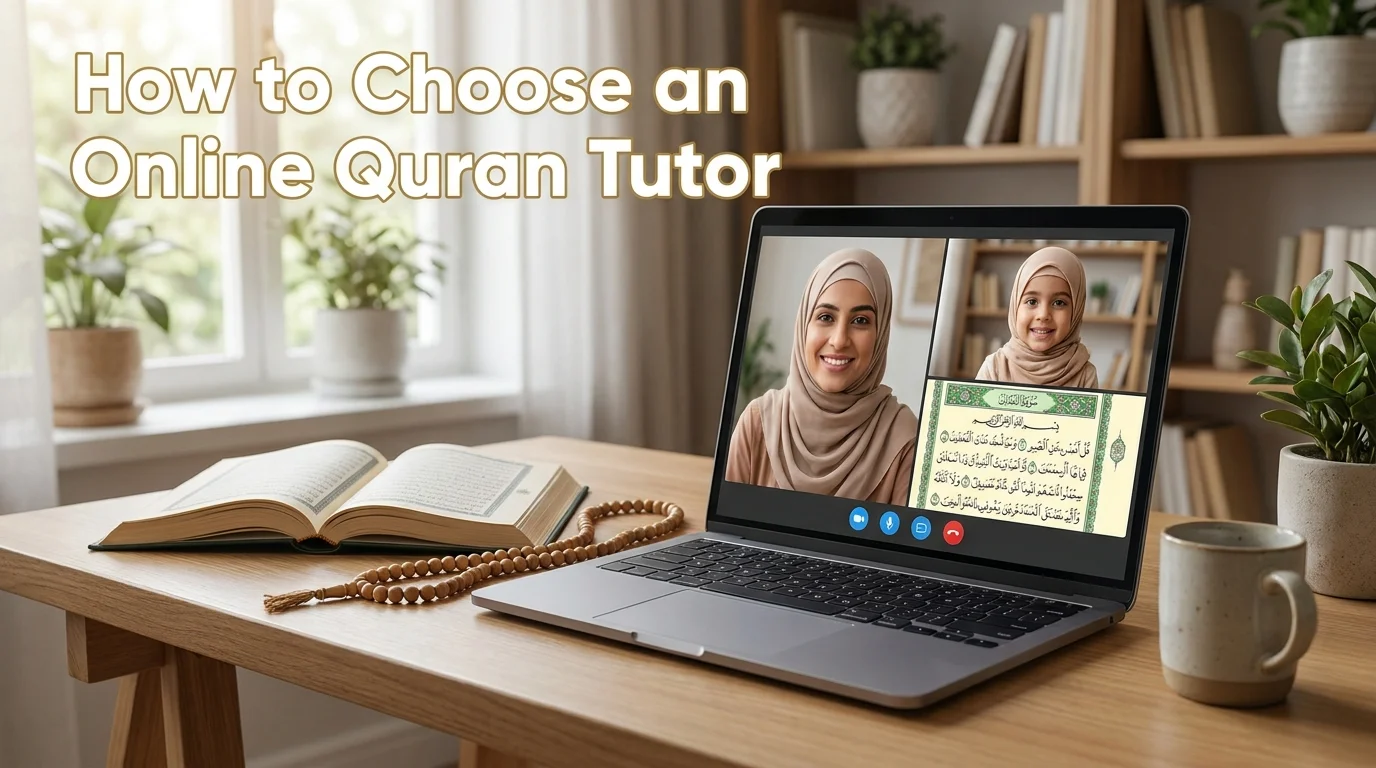
Why Most Families Get This Decision Wrong (And How You Can Get It Right)
If you have typed “how to choose an online quran tutor” into a search bar at 11 PM after your child’s third tutor in six months didn’t work out, you are not alone. I have sat through demo classes where the “certified” teacher couldn’t correctly pronounce Qalqalah letters. I have watched parents sign annual contracts based on a slick website, only to find out the platform outsources lessons to whoever is online that day.
Choosing the right Quran teacher is not like picking a math tutor. You are trusting someone with your child’s relationship to the Quran, their confidence in reciting, and in many cases, their entire spiritual foundation. Get it right, and you get a mentor who shapes decades of practice. Get it wrong, and you get frustration, mispronunciation habits that are hard to unlearn, and a child who dreads class.
This guide breaks down exactly how to choose an online Quran tutor using criteria that actual academic researchers, certified scholars, and experienced parents rely on, not marketing copy.
What Should You Look for When Choosing an Online Quran Tutor?
When choosing an online Quran tutor, prioritize verified Ijazah certification (proof of an unbroken teaching chain, or Sanad), a demonstrated Tajweed proficiency, a trial class before payment, transparent teacher backgrounds, and a curriculum matched to the student’s age and goals. These five factors, more than price or flashy platform design, determine long-term success.
Why Is Choosing the Right Online Quran Tutor So Important?
A 2025 bibliometric analysis published in QURANICA, the International Journal of Quranic Research at Universiti Malaya, found that research into Al-Quran teaching and learning has grown significantly from 1990 through 2025, with education-focused keywords like Religious Education and Islamic Education dominating the field. That growth is not academic trivia. It reflects a real, global shift toward structured, evidence-based Quranic pedagogy, and online tutoring is now a major part of that shift.
A separate 2025 literature review published in the Jurnal Ilmiah Mandala Education examined how effective online Qur’anic learning has been for students, drawing from national and international studies published between 2019 and 2024. The takeaway from this growing body of research is simple: online Quran education works, but only when the teacher, method, and student are properly matched. A mismatch is where most families go wrong.
In my own experience helping families vet tutors, the single biggest predictor of a bad fit was not the platform. It was skipping the verification step entirely and trusting a polished landing page instead of asking direct questions about the teacher’s credentials.
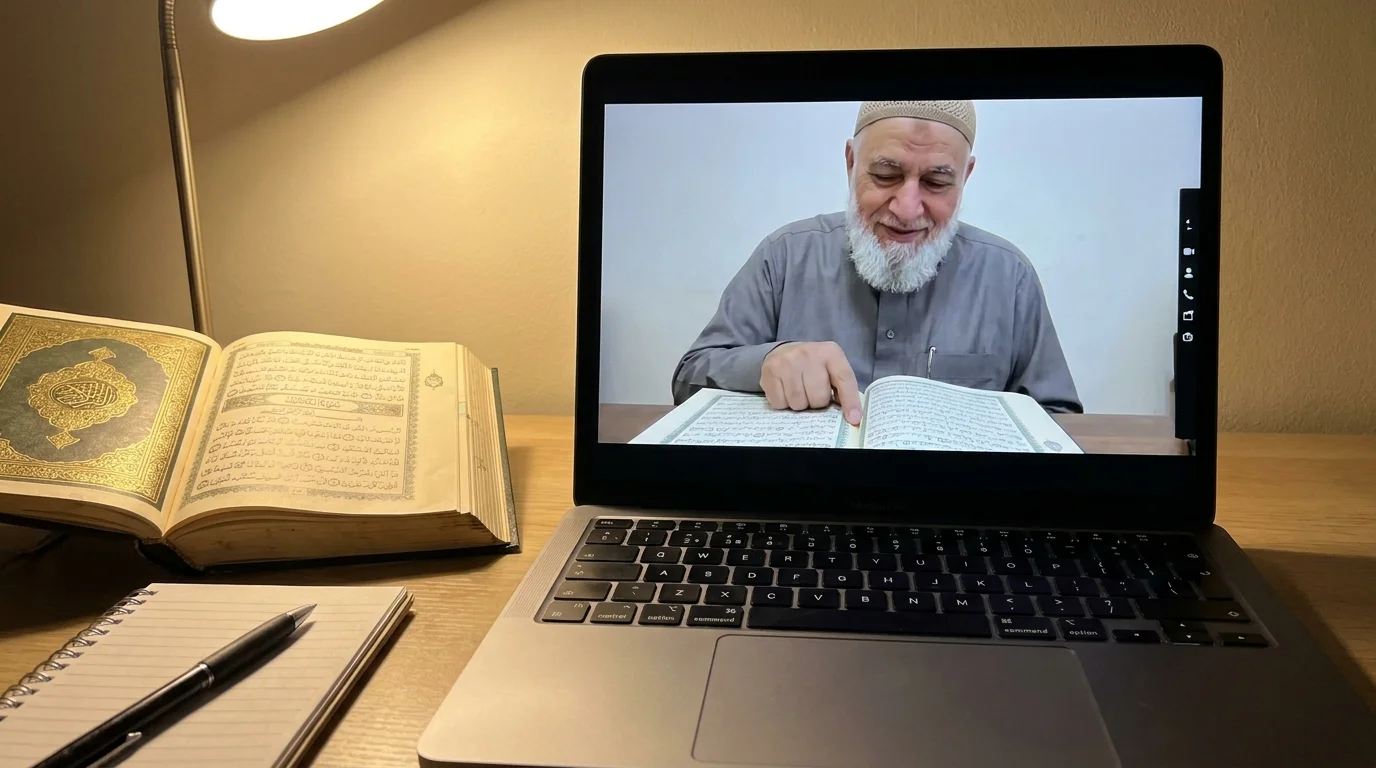
How Do You Verify a Quran Teacher’s Qualifications Online?
This is the step almost everyone skips, and it is the one that matters most.
What Is an Ijazah and Why Does It Matter?
An Ijazah is a formal certification of permission granted by a qualified teacher (often trained through institutions connected to Al-Azhar Al-Sharif in Egypt) confirming that a student has mastered correct recitation with proper Tajweed and is authorized to teach others. It represents an unbroken chain of transmission, known as a Sanad, tracing back through generations of scholars.
When you are learning how to choose an online Quran tutor, ask directly:
- Do you hold an Ijazah, and in which Qiraat (recitation style)?
- Can you name your teaching chain (Sanad)?
- Do you have a diploma in Tajweed or Islamic studies from a recognized institution?
A teacher who hesitates or gives a vague answer is a red flag. A genuinely qualified teacher will answer these questions confidently, usually within seconds.
How Do You Check a Tutor’s Credentials Before Enrolling?
Practical verification steps:
- Ask for the institution name where they earned their Ijazah, then search it independently.
- Request a short recitation sample of a passage you already know well, so you can judge pronunciation and Tajweed accuracy yourself.
- Check platform vetting standards. Reputable academies publish teacher qualifications, years of experience, and specializations (Hifz, Tajweed, Tafsir) on individual profile pages.
- Read verified reviews, not just star ratings. Look specifically for comments mentioning consistency, punctuality, and teaching style with children versus adults.
What Qualities Make a Great Online Quran Teacher?
Beyond certification, teaching skill and personality fit matter enormously, especially for children.
Core qualities to evaluate:
- Patience under repetition. Young learners often need the same ayah corrected five or six times. A good teacher treats the fifth correction with the same warmth as the first.
- Clear Tajweed articulation. The teacher’s own Makharij (articulation points) should be crisp and accurate, since students mimic what they hear.
- Structured lesson planning, not improvised sessions. Ask to see a sample curriculum or weekly plan.
- Bilingual comfort, particularly for non-Arab families, so instructions and corrections are understood clearly.
- Consistent scheduling. A teacher who reschedules frequently disrupts memorization retention, which depends heavily on spaced repetition.
How Much Should You Pay for an Online Quran Tutor?
Pricing varies widely depending on teacher qualifications, session length, and whether lessons are one-on-one or group-based. As a general benchmark across established academies in 2026:
- Group classes typically run lower per-session cost but offer less individual correction time.
- One-on-one sessions cost more per hour but usually produce faster, more accurate recitation progress because errors are caught in real time.
- Ijazah-track courses (for students pursuing formal certification) are priced higher, reflecting the advanced qualifications required of the instructor.
A word of caution from experience: the cheapest option is rarely the best value once you factor in wasted months correcting bad habits picked up from an under-qualified teacher. Price should be your third or fourth filter, never your first.
Should You Choose a Male or Female Quran Tutor?
This depends on family preference, the student’s age, and comfort level. Many platforms allow filtering by gender, which is particularly relevant for:
- Adult female students who may prefer a female tutor for comfort and modesty considerations.
- Young children, where gender often matters less than teaching style and patience.
- Family-based group classes, where a tutor experienced with multiple age groups in one session is valuable.
Reputable academies will let you specify this preference during enrollment without hesitation.
What Curriculum Should an Online Quran Tutor Follow?
A structured curriculum separates a serious academy from an informal arrangement. When evaluating how to choose an online Quran tutor for a specific goal, match the curriculum to the objective:
For Beginners (Noorani Qaida and Basic Tajweed)
Focus should be on Arabic letter recognition, correct articulation points, and foundational Tajweed rules like Ikhfa, Qalqalah, and Idgham before moving to full Surah recitation.
For Hifz (Memorization) Students
The curriculum should include daily new memorization (Sabaq), review of recent lessons (Sabqi), and long-term revision of previously memorized material (Manzil). Without all three components, retention drops significantly over time.
For Ijazah-Seeking Students
This track requires advanced Tajweed drills, study of the Qiraat (recitation variants), and a formal evaluation process (Murajaah) before certification is granted, typically under direct supervision of an Azhar-trained scholar.
For Adult Learners
Adults often need a faster-paced, less repetitive structure that respects their existing reading ability while focusing on Tajweed refinement and understanding (Tafsir) rather than starting from zero.
How Do You Know If an Online Quran Class Is Actually Working?
Track measurable progress, not just attendance. Ask your tutor to provide:
- Weekly progress notes covering pages or ayahs covered and specific Tajweed corrections made.
- Recorded recitation checkpoints every 4 to 6 weeks so you can hear improvement objectively.
- A revision schedule proving previously covered material is being retained, not just new content being added.
If none of these exist after the first month, that is a clear signal to reassess the tutor, regardless of how friendly the sessions feel.
Actionable Tips: Your Step-by-Step Vetting Checklist
Use this checklist every time you evaluate a new tutor or platform:
- Request one free or low-cost trial lesson before any long-term commitment.
- Ask for Ijazah documentation or the name of the certifying scholar and institution.
- Test the platform’s technology (video stability, screen sharing, recording features) during the trial, not after signing a contract.
- Confirm cancellation and rescheduling policies in writing before paying for a package.
- Observe the first three sessions closely for punctuality, patience, and clear correction of mistakes.
- Check for a structured curriculum document, not just “we will see how it goes.”
- Ask other parents or students for references, ideally ones who have completed at least six months with the same teacher.
Also Read: What Age Should a Child Start Learning Quran Online? The Honest Answer Every Parent Needs
Frequently Asked Questions
How do I choose the best online Quran tutor for my child?
Start by verifying the tutor’s Ijazah and Tajweed qualifications, then book a trial lesson to observe patience and teaching style with children specifically. Match the curriculum to your child’s current level, whether that is basic Qaida or advanced memorization, before committing to a long-term package.
How much does an online Quran tutor cost per month?
Costs vary by session length, group size, and teacher qualifications, with one-on-one sessions generally priced higher than group classes. Ijazah-track and advanced Tajweed courses cost more due to the instructor’s specialized certification. Always compare cost against verified qualifications, not price alone.
What is the difference between a Quran certificate and an Ijazah?
A Quran certificate typically confirms course completion or attendance at an academy or institute. An Ijazah is a formal authorization from a qualified scholar confirming mastery of recitation and Tajweed, linked to an unbroken teaching chain (Sanad) that permits the holder to teach others.
How do I know if an online Quran tutor is legitimate?
Ask for the name of the institution where they earned their Ijazah and independently verify it, request a live recitation sample, and read platform reviews mentioning specific outcomes rather than generic praise. Legitimate tutors answer credential questions directly and without hesitation.
Is online Quran learning as effective as in-person classes?
Academic literature reviews on Qur’anic e-learning indicate online instruction can be highly effective when paired with a qualified teacher, structured curriculum, and consistent scheduling. Effectiveness depends far more on teacher quality and lesson structure than on the delivery format itself.
Sources and Official References
Ku Yaacob, K.M.S., Hasbulah, M.H., Noor, A.M., & Sabri, M.A.Z. (2025). Trends and Themes in Al-Quran Teaching and Learning: A Bibliometric Analysis. QURANICA, International Journal of Quranic Research, Universiti Malaya. https://ejournal.um.edu.my/index.php/quranica/article/view/66652
Mutmainah, N.H. (2025). The Effectiveness of Online Qur’anic Learning: Literature Review. Jurnal Ilmiah Mandala Education (JIME), Vol 11, No. 2. https://ejournal.mandalanursa.org/index.php/JIME/article/download/8553/5855
QuranSheikh Academy. What Is Ijazah In Quran? Complete Understanding. https://www.quransheikh.com/ijazah-in-quran
Ulum Al-Azhar Academy. Online Quran Ijazah Sanad Muttasil: Overview and Certification Process. https://ulumalazhar.com/?p=23324
Disclaimer: This article is written for general educational purposes to help families navigate the process of selecting an online Quran tutor. It is not a substitute for direct consultation with certified Islamic scholars or accredited educational institutions. Always verify a teacher’s credentials independently and consult a qualified scholar for matters of religious practice or interpretation.
