Read the Quran the Right Way. Simple Tips for Beginners
How to Read the Quran: A Complete Beginner’s Guide
Learning how to read the Quran is one of the most rewarding journeys a Muslim can take. For many beginners, the process feels overwhelming at first. The Arabic script looks unfamiliar, the pronunciation rules seem complicated, and the meaning of the verses can feel out of reach. The good news is that with the right method and a bit of daily consistency, anyone can learn how to read the Quran, whether they are a child just starting out, a new Muslim, or an adult revisiting their faith after years away from it.
This guide breaks down the process into clear, practical steps. It covers everything from recognizing Arabic letters to understanding Tajweed, using translation and tafsir, and building a sustainable daily habit. Whether you want to read the Quran in Arabic, in translation, or both, this article will walk you through exactly how to get started and how to keep improving.
Why Learning How to Read the Quran Matters
The Quran is the central religious text of Islam, believed by Muslims to be the literal word of Allah revealed to Prophet Muhammad (peace be upon him) through the angel Jibreel. Reading the Quran is not just an academic exercise. It is an act of worship, a source of guidance, and a means of building a personal connection with God.
Many Muslims recite the Quran daily as part of their prayers (salah), but reciting from memory is different from being able to read the Arabic text fluently and understand it. Knowing how to read the Quran properly allows a person to:
- Recite verses correctly during prayer
- Understand the meaning and context of revelations
- Reflect on the guidance found in the text
- Pass on this knowledge to children and family members
- Strengthen their relationship with their faith
Step 1: Start With the Arabic Alphabet
Before diving into full verses, beginners need to learn the Arabic alphabet. Arabic has 28 letters, and unlike English, it is written and read from right to left. Each letter can change shape depending on whether it appears at the beginning, middle, or end of a word.
Most students start with a book called the Noorani Qaida, which is specifically designed to teach beginners how to recognize Arabic letters, understand vowel marks (harakat), and combine letters into words. This is considered the foundation for anyone learning how to read the Quran, especially those with no prior exposure to Arabic.
Key things to focus on at this stage:
- Learning the shape and sound of each letter
- Understanding short vowels (fatha, kasra, damma)
- Recognizing long vowels and how they extend sounds
- Practicing joined letters within simple words
This stage may take a few weeks depending on how much time is dedicated to daily practice, but it is the most important building block.
Step 2: Learn the Rules of Tajweed
Once the alphabet is familiar, the next step is learning Tajweed, the set of rules that govern how the Quran should be pronounced. Tajweed ensures that the Arabic text is recited the way it was revealed, with correct articulation points (makharij), proper elongation, and accurate pauses.
Tajweed rules cover things like:
- Noon and meem rules (idgham, ikhfa, iqlab, izhar)
- Rules of madd (elongation of vowels)
- Qalqalah (echoing sound on certain letters)
- Correct stopping and starting points in a verse
Learning Tajweed can feel technical at first, but it becomes intuitive with practice. Many students find it helpful to learn under a qualified teacher, either in person or through an online Quran class, since pronunciation is difficult to self-correct without feedback.
Step 3: Practice Reading Short Surahs
After grasping the basics of letters and Tajweed, beginners should start applying what they have learned to short surahs (chapters) of the Quran. Surahs like Al-Fatiha, Al-Ikhlas, Al-Falaq, and An-Nas are commonly used as starting points because they are short and frequently recited in daily prayers.
Reading these surahs repeatedly helps build confidence, reinforces letter recognition, and strengthens the connection between what is read and what is heard in daily prayer.
A useful approach is:
- Read one verse slowly, focusing on correct pronunciation
- Listen to a qualified reciter reading the same verse
- Repeat the verse until it sounds accurate
- Move to the next verse only after the previous one feels comfortable
Step 4: Understand the Meaning Through Translation and Tafsir
Reading the Arabic text is only one part of the process. To fully benefit from the Quran, it helps to understand what the verses mean. This is where translation and tafsir (Quranic exegesis) become valuable tools.
A translation provides the literal meaning of the Arabic text in a language the reader understands, such as English or Urdu. Tafsir goes a step further by explaining the historical context, reasons for revelation, and deeper interpretation of the verses.
For beginners, it is often useful to read a verse in Arabic first, then read its translation, and finally check a brief tafsir if the meaning is unclear. This method keeps the reader connected to both the original text and its practical meaning.
Some widely used English translations include those by Abdullah Yusuf Ali, Muhammad Asad, and Saheeh International. Comparing more than one translation can offer a fuller picture of the meaning, since Arabic words often carry layers of meaning that are difficult to capture in a single English word.
Step 5: Build a Consistent Daily Routine
Consistency matters more than speed when learning how to read the Quran. Setting aside even 15 to 20 minutes a day is far more effective than occasional long sessions once a week.
A simple daily routine might look like this:
- Begin with a short recitation of a memorized surah as warm-up
- Spend 10 minutes practicing a new passage with attention to Tajweed
- Read the translation of the passage covered
- Reflect briefly on how the verse applies to daily life
Over time, this steady rhythm builds fluency naturally, without the pressure of trying to master everything at once.
Helpful Tools and Resources
Several tools can support the process of learning how to read the Quran, especially for those studying without a teacher nearby.
- Mobile apps with audio recitation and word-by-word translation
- Online Quran academies offering live one-on-one classes
- Physical Mushafs (Quran copies) with color-coded Tajweed rules
- YouTube channels featuring qualified reciters demonstrating correct pronunciation
For non-Arabic speakers in particular, apps that combine Arabic script with transliteration and audio can bridge the gap while the learner is still building letter recognition skills.
Also Read: Top Benefits of Online Quran Classes: Learn the Quran Anytime, Anywhere
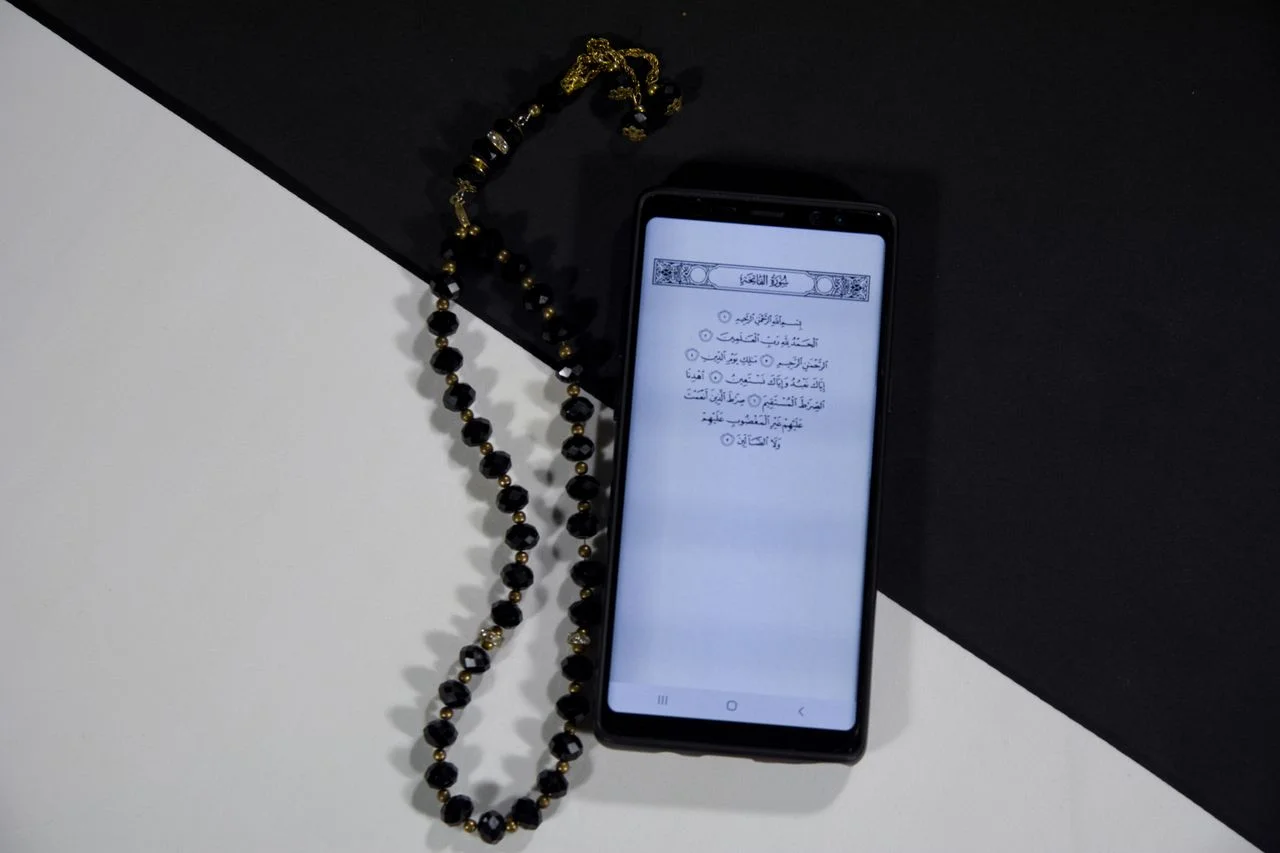
The Etiquette (Adab) of Reading the Quran
Islamic tradition places importance not just on how the Quran is read, but also on the manner and state in which it is approached. Common practices include:
- Performing ablution (wudu) before touching or reciting the Quran
- Sitting in a clean, quiet space free from distractions
- Beginning with the phrase “A’udhu billahi min ash-shaytan ir-rajim” (seeking refuge in Allah from Satan)
- Reciting slowly and reflecting on the meaning rather than rushing through pages
- Handling the physical copy of the Quran with respect
These practices are not obstacles to learning. Rather, they help create the right mindset for approaching a sacred text with focus and sincerity.
Common Mistakes Beginners Should Avoid
Many new learners make similar mistakes when starting out. Being aware of these can save time and frustration:
- Skipping the alphabet stage and jumping straight into full surahs
- Ignoring Tajweed rules and focusing only on speed
- Relying solely on translation without ever attempting the Arabic text
- Studying inconsistently, then trying to catch up with long sessions
- Avoiding correction from a teacher out of hesitation or embarrassment
Progress in reading the Quran is rarely linear. Mistakes are part of the learning process, and correcting them early prevents bad habits from becoming permanent.
Bringing It All Together
Learning how to read the Quran is a gradual process built on small, consistent steps. It starts with recognizing Arabic letters, moves into understanding Tajweed, and eventually leads to reading full surahs with both accuracy and comprehension. Adding translation and tafsir alongside the Arabic text deepens understanding, while a steady daily habit turns the practice into a lasting part of everyday life.
Whether learning independently, through an app, or with the guidance of a teacher, the most important factor is consistency. Anyone committed to a regular practice, even just a few minutes each day, will find that reading the Quran becomes more natural and meaningful over time.
FAQs
What is the correct way to read the Quran?
Read the Quran with proper Tajweed, sincerity, and understanding. Begin with seeking Allah’s protection and recite slowly and respectfully.
How can I start reading the Quran?
Start by learning the Arabic letters, basic Tajweed rules, and reading short Surahs. Practice daily, even if only for a few minutes.
What is the 777 rule in the Quran?
There is no authentic Islamic teaching called the “777 rule” in the Quran. It is not supported by the Quran or reliable Hadith.
What is the 6446 method?
The “6446 method” usually refers to the commonly cited number of Quranic verses (6,446) in some counting traditions. However, the standard count recognized today is about 6,236 verses, depending on the method of counting.
If you wish to learn the Quran online or enroll in one of our Quran courses, click below and start your learning journey today.
Explore Our Courses →
