Online Quran Classes for New Muslims: A Complete Guide to Starting Your Journey with the Quran
Online Quran Classes for New Muslims
You Just Said the Shahada. Now What?
Taking Shahada is one of the most powerful moments in a person’s life. But right after that beautiful moment, a quiet question often creeps in: how do I actually learn the Quran now?
Many new Muslims feel overwhelmed by Arabic letters they have never seen before. Others worry about mispronouncing verses or feeling embarrassed in front of people who grew up reciting since childhood. This is completely normal, and it is exactly why online Quran classes for new Muslims have become such a popular and practical solution.
This guide walks through everything a new Muslim needs to know before starting Quran classes online, what to expect, how to choose the right learning path, and how to build a sustainable relationship with the Quran from day one.
Why Online Quran Classes Work So Well for New Muslims
Learning to read the Quran is different from learning any other book. It involves a script that reads right to left, sounds that do not exist in English, and rules of pronunciation that took scholars centuries to formalize.
For someone who has just embraced Islam, walking into a physical mosque class filled with people who already know Arabic can feel intimidating. Online Quran classes remove that pressure entirely.
Here is why this format is particularly suited to new Muslims:
- Privacy and comfort. Learning from home means no one is watching you struggle with a letter.
- Flexible pacing. New Muslims often balance work, family, or ongoing personal adjustments, and online classes fit around real life.
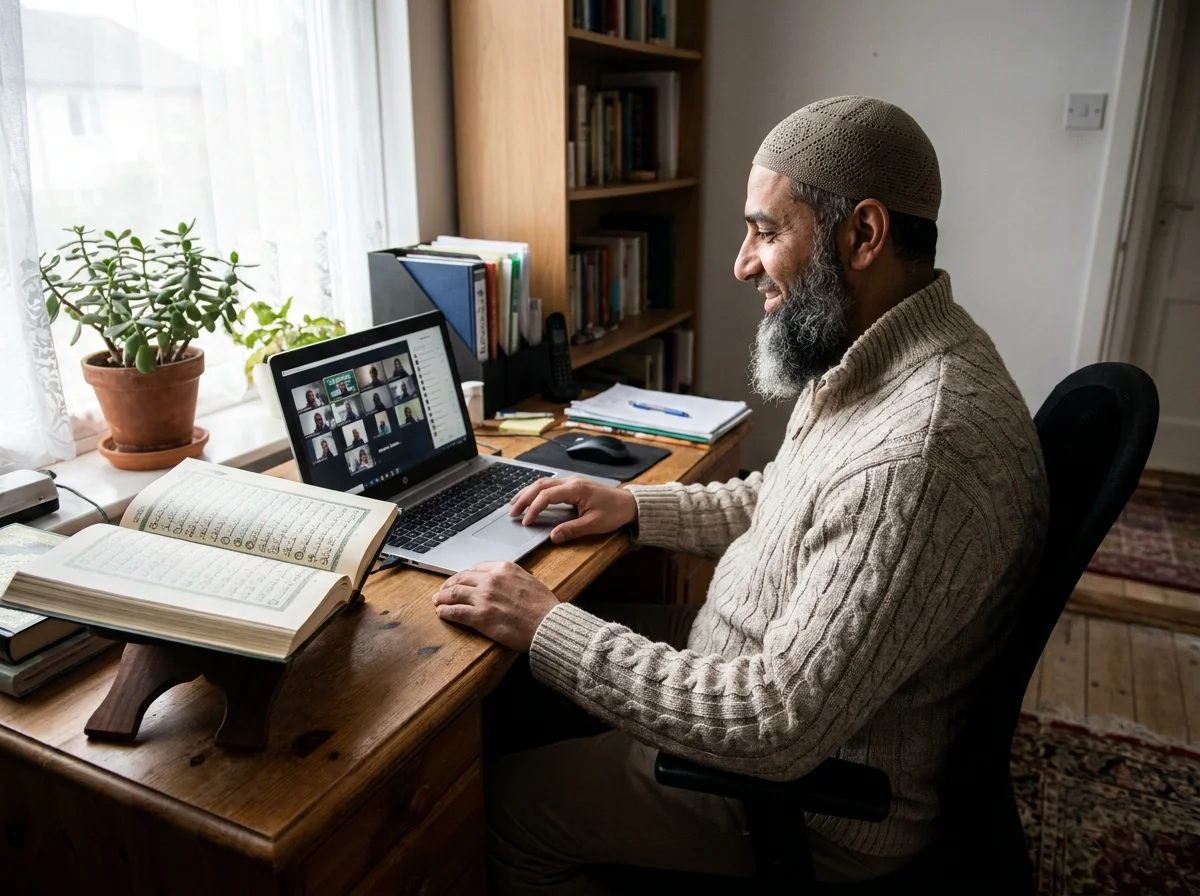
- One-on-one attention. Many programs offer individual sessions rather than group classes, so the entire focus stays on the new learner.
- No geographic limitation. A new Muslim in a small town with no local Islamic center can still access proper instruction.
What New Muslims Should Expect from Their First Quran Classes
Starting with Arabic Letters, Not the Quran Itself
It surprises many new Muslims that the very first lessons do not involve opening the Quran at all. Instead, instruction usually begins with the Arabic alphabet (Huruf), since Quranic Arabic uses a different script and sound system than English or most other languages.
A typical beginner sequence looks like this:
- Recognizing the 28 Arabic letters in isolated form
- Learning how letters change shape at the beginning, middle, and end of a word
- Practicing short vowel sounds (Fatha, Kasra, Damma)
- Reading simple two and three letter combinations
- Moving into short Surahs, usually starting with Surah Al-Fatiha
This step-by-step approach prevents the common mistake of jumping straight into memorization before someone can actually read the script.
Learning the Five Daily Prayers Alongside Recitation
Since prayer (Salah) requires specific Quranic verses, many programs designed for new Muslims combine basic Quran reading with prayer recitation. This is practical because it gives immediate, real-life application to what is being learned rather than treating it as abstract study.
Common early memorization goals include:
- Surah Al-Fatiha
- Short Surahs from the 30th Juz (such as Al-Ikhlas, Al-Falaq, and An-Nas)
- The Tashahhud
- Basic supplications used before and after prayer
Understanding Tajweed at a Beginner Level
Tajweed refers to the correct pronunciation rules of Quranic Arabic. New Muslims do not need to master advanced Tajweed immediately, but even beginner-level instruction helps avoid habits that are hard to correct later.
Basic beginner Tajweed usually covers:
- Correct articulation points (Makharij) of letters
- Distinguishing between similar-sounding letters
- Basic rules of elongation (Madd)
- Simple stopping and pausing rules (Waqf)
How Online Quran Classes Are Structured for Beginners
Most programs built for new Muslims follow a similar general framework, even if the specific curriculum names differ between providers.
Assessment Before Placement
A responsible program will not place a complete beginner into an advanced class. Instead, there is usually a short initial assessment to determine:
- Whether the student has any prior exposure to Arabic script
- Current comfort level with reading right to left
- Any specific goals, such as learning to pray correctly within a set timeframe
Individual Pacing Over Fixed Timelines
New Muslims come from vastly different backgrounds. Some may already read Arabic due to prior study or heritage, while others are seeing the alphabet for the very first time.
Good instruction adapts to this reality rather than forcing everyone through an identical schedule. A student who needs six weeks on letter recognition should not be rushed simply because a textbook chapter says otherwise.
Culturally Sensitive Teaching Approach
New Muslims often bring questions that lifelong Muslims may not think to ask, such as why certain letters have no direct English equivalent or why Arabic has no capital letters. A good instructor treats these questions with patience rather than assuming prior familiarity.
Common Challenges New Muslims Face in Quran Classes (and How to Handle Them)
Feeling Behind Compared to Others
It is common to compare yourself to Muslims who have recited since childhood. This comparison is not fair to yourself. Everyone starts somewhere, and consistent small steps matter far more than speed.
Pronunciation Anxiety
Sounds like the Arabic letters Ain, Qaf, and Ha do not exist in English. Feeling awkward pronouncing them at first is expected, not a sign of failure.
Practical tip: Recording short practice sessions and listening back can help identify areas to improve without the pressure of a live audience.
Difficulty Remembering Verses
Memorization becomes easier with repetition tied to daily prayer, since the same verses are repeated five times a day naturally. Linking memorization to something already built into daily life reduces the mental load significantly.
Uncertainty About Which Areas to Prioritize
New Muslims sometimes feel pulled between learning to read, memorizing for prayer, and understanding meaning. A structured class typically prioritizes in this order:
- Verses needed for valid prayer
- Basic reading fluency
- Short Surah memorization
- Gradual introduction to meaning and Tafsir basics
What to Look for When Choosing Online Quran Classes as a New Muslim
Not every program is designed with new Muslims in mind. Some assume prior Arabic knowledge, which can leave beginners frustrated. Consider the following factors:
- Beginner-specific curriculum, not a generic course meant for children raised in Muslim households
- One-on-one or small group format, allowing personalized correction
- Instructor patience and communication skills, since explaining concepts in simple terms matters more than advanced qualifications alone
- Flexible scheduling, especially important if the new Muslim is still adjusting to a new daily routine involving prayer times
- Clear short-term goals, such as learning enough to pray correctly within the first few weeks
Building a Sustainable Learning Routine
Consistency matters more than intensity when starting out. A new Muslim attending short, regular sessions will typically progress further than someone attempting long, irregular study sessions.
Practical structure that tends to work well:
- 15 to 20 minutes of daily practice, even outside scheduled class time
- Reviewing previous lessons briefly before starting new material
- Pairing recitation practice with existing prayer times, since this creates natural repetition
- Keeping a simple notebook to track new letters, words, or verses learned each week
The Emotional Side of Learning Quran as a New Muslim
Beyond the technical skill of reading Arabic, there is an emotional and spiritual dimension that deserves attention. Many new Muslims describe an overwhelming sense of connection the first time they successfully recite even a short verse correctly.
This emotional investment is valuable, but it can also lead to frustration if progress feels slow. Patience with yourself is part of the learning process, not a sign that something is wrong.
It also helps to remember that the Quran itself was revealed gradually over 23 years, not all at once. Learning it gradually, piece by piece, mirrors that same principle.
Also Read: Online Quran Classes for Working Professionals: How to Balance Career and Faith Without
Key Takeaways for New Muslims Starting Quran Classes Online
- Start with Arabic letters before attempting to read full verses
- Prioritize verses needed for daily prayer early in the learning process
- Choose a program built specifically for beginners, not general audiences
- Practice consistently in short sessions rather than occasional long ones
- Be patient with pronunciation challenges since new sounds take time to master
- Track small wins weekly to stay motivated
Final Thoughts
Learning to read and recite the Quran as a new Muslim is a journey, not a race. Online Quran classes for new Muslims offer a structured, private, and flexible way to begin that journey without the pressure of comparing yourself to others.
Every letter learned, every verse memorized, and every prayer recited correctly for the first time is a meaningful milestone. With patience, consistency, and the right guided instruction, fluency in reading and reciting the Quran becomes an achievable and deeply rewarding goal.
Sources and Official References
- Islamic Educational studies on Quranic Arabic pedagogy: The Study of Quranic Teaching and Learning: United Kingdom Experience, ResearchGate: https://www.researchgate.net/publication/271104786_The_Study_of_Quranic_Teaching_and_Learning_United_Kingdom_Experience
- Traditional Tajweed reference text (Al-Jazariyyah, Matn al-Jazariyyah by Imam Ibn al-Jazari), Arabic text with English translation: http://www.abouttajweed.com/Jazaria.pdf
- General Islamic jurisprudence reference on Salah recitation requirements, IslamWeb Fatwa Center: https://www.islamweb.net/en/fatwa/83389/only-surah-al-faatihah-is-to-be-recited-in-third-and-fourth-rak%E2%80%99ahs-of-prayer
FAQs
1. Do I need to know Arabic before starting online Quran classes as a new Muslim?
No prior Arabic knowledge is required. Beginner-focused online Quran classes for new Muslims start with the Arabic alphabet and basic pronunciation before moving into actual Quranic verses.
2. How long does it take a new Muslim to learn enough Quran to pray correctly?
Most new Muslims can learn the basic verses required for prayer, such as Surah Al-Fatiha and short Surahs, within a few weeks of consistent practice, though pace varies by individual.
3. Are online Quran classes for new Muslims one-on-one or group based?
Many programs offer one-on-one sessions specifically for new Muslims, since individual attention helps with pronunciation correction and personalized pacing.
4. What is the first thing taught in online Quran classes for new Muslims?
Instruction typically begins with recognizing Arabic letters and their different forms, followed by short vowel sounds, before progressing to reading actual Quranic text.
5. Is Tajweed taught to new Muslims from the very beginning?
Basic Tajweed concepts, such as correct pronunciation points, are usually introduced early, while more advanced Tajweed rules are added gradually as reading fluency improves.
If you wish to learn the Quran online or enroll in one of our Quran courses, click below and start your learning journey today.
Explore Our Courses →
