Surah Nasr: The Three Verses That Announced Islam’s Victory and a Prophet’s Farewell
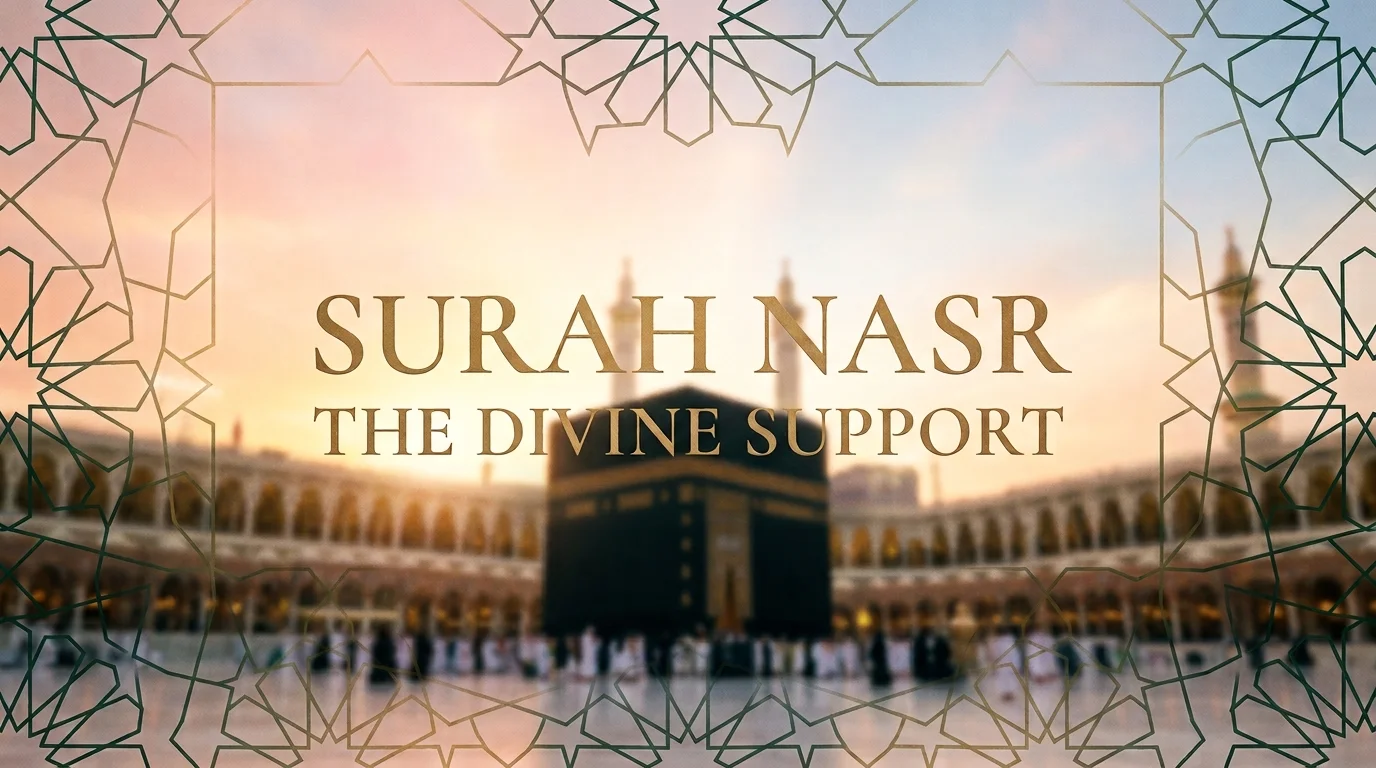
A Chapter So Short You Could Miss What It’s Really Saying
Surah Nasr is only three verses long, yet it carries one of the most emotionally layered messages in the entire Quran. Most people read it as a simple celebration of victory. Companions who sat with the Prophet Muhammad, peace be upon him, read it very differently.
I first came across the deeper meaning of this surah while sitting in on a small weekend tafsir circle, the kind held in someone’s living room with tea going cold on the table. The teacher paused at verse one and asked the group a simple question: “Why would a chapter about victory make the Prophet weep?” That question changed how I read the surah for good.
This guide breaks down what Surah Nasr actually says, when and why it was revealed, what its three verses mean line by line, and why scholars for over 1,400 years have treated it as far more than a victory announcement.
What Is Surah Nasr Best Known For?
Surah Nasr is best known for announcing the conquest of Mecca in 630 CE and the mass entry of Arabian tribes into Islam. Companions including Ibn Abbas understood its three verses as a subtle sign that Prophet Muhammad’s life and mission were nearing completion.
Where Does Surah Nasr Sit in the Quran?
Surah Nasr is the 110th chapter of the Quran, placed in Juz 30 (the final section, also called Juz Amma). It sits between Surah Al-Kafirun (109) and Surah Al-Masad (111), two chapters that also deal directly with the Prophet’s relationship to the disbelievers of Mecca.
At only 19 words, Surah Nasr is one of the shortest complete chapters in the Quran, yet according to a well known narration it carries the spiritual weight of a much larger portion of scripture, a point covered later in this guide.
What Does “An-Nasr” Mean in English?
An-Nasr translates most directly to “Help” or “Divine Support.” Some translations render it as “Victory” or “Succour,” since the help referenced in the opening verse is what secured the Muslims’ victory over Mecca.
The surah also carries two lesser known names among classical scholars: al-Fath (the Opening or Conquest) and al-Tawdi (the Farewell). That second name is a strong clue about how early Muslims actually understood this chapter, and it is worth sitting with before moving on.
Is Surah Nasr Meccan or Medinan?
Surah Nasr is classified as Medinan, meaning it was revealed after the Prophet’s migration (Hijra) to Medina in 622 CE, rather than during his earlier years preaching in Mecca.
Why Do Most Scholars Classify It as Medinan?
Medinan chapters typically address the Muslim community directly on matters of guidance, law, and historical events tied to the growing state in Medina. Since Surah Nasr references the conquest of Mecca, an event that happened years after the Hijra, its content places it firmly in the Medinan period regardless of where the Prophet was physically standing when it was revealed.
When Was Surah Nasr Revealed?
Most scholars date Surah Nasr’s revelation to around the conquest of Mecca in December 629 to January 630 CE (10 to 20 Ramadan, 8 AH), or shortly afterward. The conquest itself was remarkably bloodless, with the Prophet entering the city and granting a general amnesty to former enemies rather than seeking retribution.
Many scholars, based on companion narrations, consider Surah Nasr to be the last complete surah revealed to the Prophet, arriving not long before his death in 632 CE. That timing is central to understanding the rest of this guide.
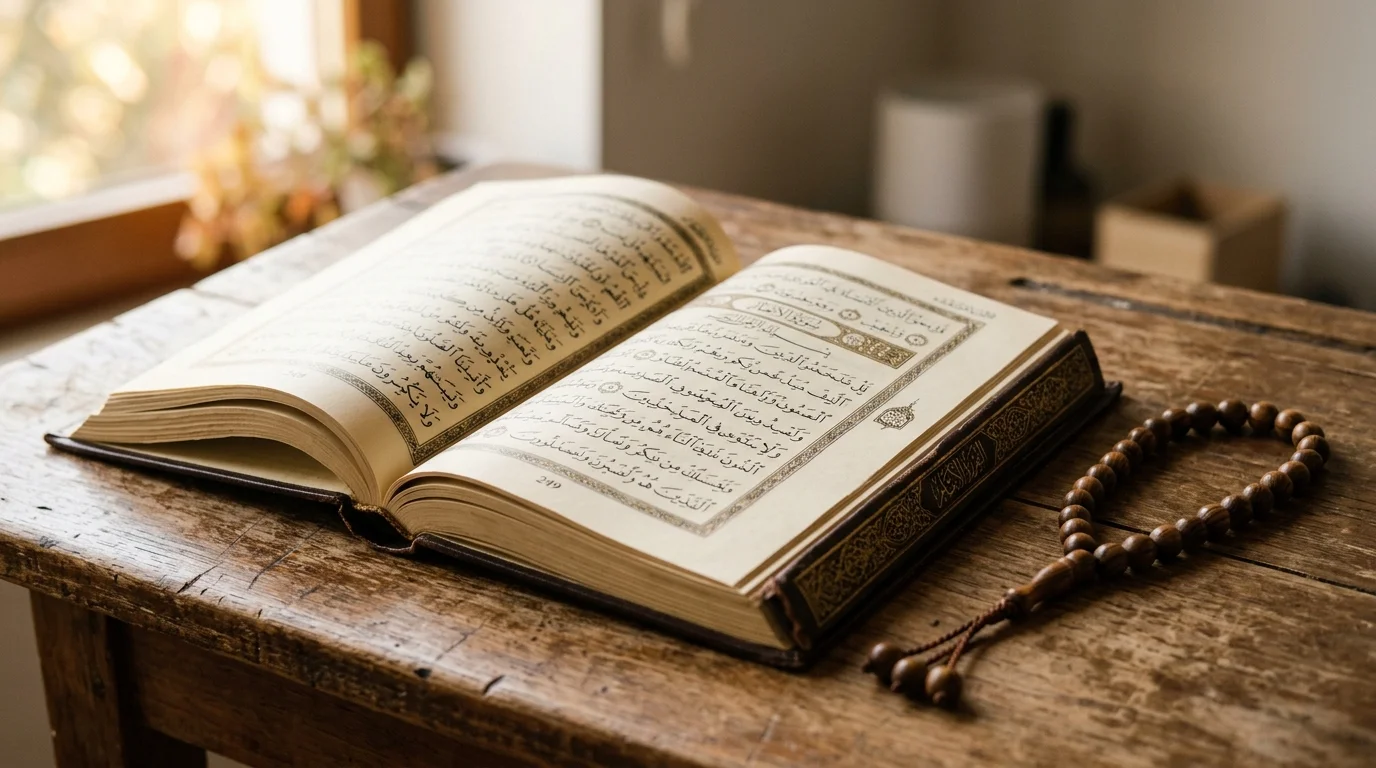
What Do the Three Verses of Surah Nasr Actually Say?
Here is a plain language breakdown of the meaning carried in each verse. For the exact Arabic text and word-for-word translation, Quran.com’s chapter page is a reliable reference.
Verse 1Describes the moment Allah’s help arrives together with victory, a direct reference to the conquest of Mecca after years of persecution and conflict.
Verse 2Describes the Prophet witnessing people entering the religion of Allah in large groups, reflecting the wave of tribal delegations that accepted Islam after Mecca fell.
Verse 3Instructs the Prophet to glorify his Lord with praise and to seek His forgiveness, closing with the reassurance that Allah is ever accepting of repentance.
Notice the structure. Two verses describe outward, visible triumph. The third verse pivots immediately to inward humility and repentance, at the exact moment success is at its peak. That pivot is the entire point of the surah.
Why Did Ibn Abbas Believe Surah Nasr Announced the Prophet’s Death?
According to a hadith recorded in Sahih al-Bukhari (4294), Umar ibn al-Khattab once tested the young companion Ibn Abbas in front of senior veterans of the Battle of Badr. He asked the group to interpret the opening verse of Surah Nasr.
The older companions gave the surface reading: a promise of future conquests. Ibn Abbas offered a different answer. He explained that the verse was a coded announcement of the Prophet’s approaching death, since Allah was effectively telling him that his mission was complete once help, victory, and mass conversion had all arrived.
Umar reportedly replied that he understood the verse no differently than Ibn Abbas did, confirming the interpretation. This reading is why Surah Nasr earned the nickname al-Tawdi, the Farewell chapter, despite never mentioning death directly.
What Are the Key Themes of Surah Nasr?
- Divine help follows hardship. Years of persecution in Mecca ended with a peaceful, decisive victory rather than a violent one.
- Mass acceptance as confirmation of truth. Large scale conversion is presented as visible evidence of a completed mission.
- Gratitude at the peak of success. The command to glorify Allah comes precisely when human pride would normally take over.
- Ongoing repentance, not one time forgiveness. Istighfar (seeking forgiveness) is framed as a constant practice, not a response to failure alone.
- Mortality and closure. Read alongside the hadith tradition, the surah becomes a quiet reminder that every mission, and every life, has an end point.
What Is the Spiritual Virtue of Reciting Surah Nasr?
A narration cited in Ibn Kathir’s tafsir, sourced through An-Nasa’i from Ibn Abbas, describes Surah Nasr as equivalent in weight to one quarter of the entire Quran. You can read this narration directly on Quran.com’s tafsir page for An-Nasr.
This is one reason the surah is recited so frequently in daily prayers, funeral prayers, and moments of personal reflection. Its brevity makes it easy to memorize, while its message covers gratitude, humility, and repentance in a single breath.
How Does Surah Nasr Connect to the Conquest of Mecca?
The conquest of Mecca ended years of open conflict between the early Muslim community and the Quraysh tribe. Historical accounts describe the Prophet entering the city with a large but largely unopposed force, ordering the removal of idols from the Kaaba, and issuing a general amnesty to residents who had once persecuted and exiled his followers.
That act of restraint, choosing forgiveness over revenge at the height of military power, is directly reflected in Surah Nasr’s third verse. Victory is immediately followed by an instruction toward humility rather than triumphalism.
What I Noticed the First Time I Recited Surah Nasr After a Personal Win
I remember finishing a long, stressful project and reciting this surah out of habit during my evening prayer. The instinct after any win is to feel a little proud, to sit in the accomplishment for a moment. Surah Nasr does not give you that space.
By the third verse, you are already being redirected toward praise and forgiveness rather than celebration. It reframes success as a moment to check your intentions, not inflate them. That single shift, from “I did this” to “seek forgiveness now,” is a practical discipline worth borrowing regardless of the size of the win.
How Can You Apply Surah Nasr’s Lessons in Daily Life?
- Pair every success with istighfar. After finishing a goal, project, or exam, say “Astaghfirullah” a few times before celebrating, as a deliberate practice of humility.
- Recite it in daily prayers. Many reciters pair Surah Nasr with Al-Ikhlas or Al-Kafirun in the two rakats after Maghrib or in Witr prayer.
- Use it as a memorization starting point. Its short length and repeated themes make it an accessible first surah for children learning Juz Amma.
- Reflect on closure without fear. Read alongside its farewell interpretation, the surah is a gentle prompt to reflect on mortality rather than a source of anxiety.
- Notice the order of the verses. Outward achievement first, inward humility second. That sequence is the entire practical lesson of the chapter.
Also Read: Surah Maun: The Short Chapter That Redefines What Real Faith Looks Like
Frequently Asked Questions About Surah Nasr
How many verses does Surah Nasr have?
Surah Nasr has exactly 3 verses, made up of 19 words and 80 letters in Arabic. This makes it one of the shortest complete chapters in the entire Quran.
Is Surah Nasr Meccan or Medinan?
Surah Nasr is a Medinan surah. Most scholars date it to around the conquest of Mecca in 630 CE, near the end of the Prophet’s life and mission.
What does An-Nasr mean in English?
An-Nasr means Help, Victory, or Divine Support. It refers to the divine assistance behind the peaceful conquest of Mecca and the wave of conversions that followed.
Why is Surah Nasr called the Farewell Surah?
A hadith in Sahih al-Bukhari records Ibn Abbas interpreting the surah as a sign of the Prophet’s approaching death, which is why it is also known as al-Tawdi, the Farewell.
What is the reward of reciting Surah Nasr?
A narration cited by Ibn Kathir describes Surah Nasr as equivalent in weight to one quarter of the Quran, which is part of why it is recited so frequently in daily prayer.
Sources and Official References
Quran.com, Surah An-Nasr, Chapter 110
Quran.com, Tafsir Ibn Kathir on Surah An-Nasr
Sunnah.com, Sahih al-Bukhari 4294
Wikipedia, An-Nasr (overview and verse statistics)
Disclaimer: This article is provided for general educational and informational purposes only and does not constitute a religious ruling (fatwa) or scholarly verdict. Interpretations of Quranic verses and hadith can vary between schools of thought. For guidance on religious practice, worship, or specific personal matters, please consult a qualified Islamic scholar or imam.
