Tahajjud Prayer: A Complete Guide to the Night Prayer
Tahajjud Prayer: A Complete Guide to the Night Prayer in Islam
Tahajjud Prayer holds a special place among the voluntary acts of worship in Islam. Unlike the five obligatory prayers, Tahajjud is offered during the last part of the night, a time when most people are deep in sleep. This quiet hour is considered one of the most blessed periods for a Muslim to stand before Allah, seek forgiveness, and ask for guidance. In this article, we will explore the meaning, timing, method, benefits, and rulings related to Tahajjud Prayer, along with answers to some of the most commonly asked questions.
What is Tahajjud Prayer?
The word Tahajjud comes from the Arabic root “hajada,” which means to stay awake at night or to abandon sleep for the sake of worship. Tahajjud Prayer refers to the voluntary night prayer that a Muslim performs after waking up from sleep, usually in the last third of the night, before the time of Fajr begins.
This prayer is mentioned directly in the Quran. Allah says in Surah Al Isra, verse 79: “And from part of the night, pray with it as additional prayer for you; it is expected that your Lord will raise you to a praised station.” This verse highlights the elevated status that regular performance of Tahajjud can bring to a believer.
Although Tahajjud is not compulsory like the five daily prayers, it was highly emphasized by the Prophet Muhammad, peace be upon him, who rarely missed it throughout his life. Many scholars describe it as one of the most rewarding acts of voluntary worship a Muslim can perform.
The Correct Time for Tahajjud Prayer
Timing plays a central role in the virtue of Tahajjud Prayer. The night is generally divided into three parts for the purpose of this prayer, and the last third holds the greatest reward. If someone calculates the hours between sunset and Fajr, the final third of that period is considered the most virtuous time to perform Tahajjud.
For example, if the night begins at 8 PM and Fajr starts at 5 AM, the total night length is nine hours. The last third would begin around 2 AM and continue until Fajr. Waking up during this window and offering prayer is considered extremely rewarding because it is described in hadith as the time when Allah descends to the lowest heaven and responds to the calls of His servants.
It is also acceptable to pray Tahajjud any time after Isha prayer and before Fajr, though the reward increases as the night progresses closer to dawn. Many Muslims choose to combine Tahajjud with the pre dawn meal during Ramadan, making it easier to maintain consistency.
How Many Rakats are in Tahajjud Prayer?
There is no fixed number of rakats required for Tahajjud Prayer, which gives flexibility to worshippers based on their capacity and available time. The Prophet Muhammad, peace be upon him, is reported to have prayed eight rakats regularly, sometimes concluding with Witr prayer, making a total of eleven rakats.
However, scholars agree that even two rakats fulfill the sunnah of Tahajjud. A person can pray as many sets of two rakats as they wish, and it is recommended to keep the recitation long and reflective rather than rushed. The quality of concentration and sincerity matters more than the quantity of rakats performed.
Step by Step Method of Tahajjud Prayer
Performing Tahajjud Prayer follows a similar structure to other voluntary prayers in Islam, with a few distinguishing elements related to timing and intention.
- Wake up during the last third of the night, or at least after a portion of sleep.
- Perform wudu, the ritual ablution, ensuring cleanliness before standing in prayer.
- Make the intention, or niyyah, silently in the heart to perform Tahajjud.
- Begin with two rakats, reciting Surah Al Fatiha followed by any other surah in each rakat.
- Complete the prayer with the standard postures of ruku, sujood, and tashahhud.
- Repeat in sets of two rakats as desired.
- Conclude with Witr prayer if it has not already been prayed after Isha.
- Spend time in dua, supplication, asking Allah for forgiveness and any personal needs.
Many worshippers extend their prayer with longer recitation of Quranic verses during this time, since the night offers fewer distractions and a calmer environment for reflection.
Also Read: Hifz Revision Guide for Strong Quran Retention
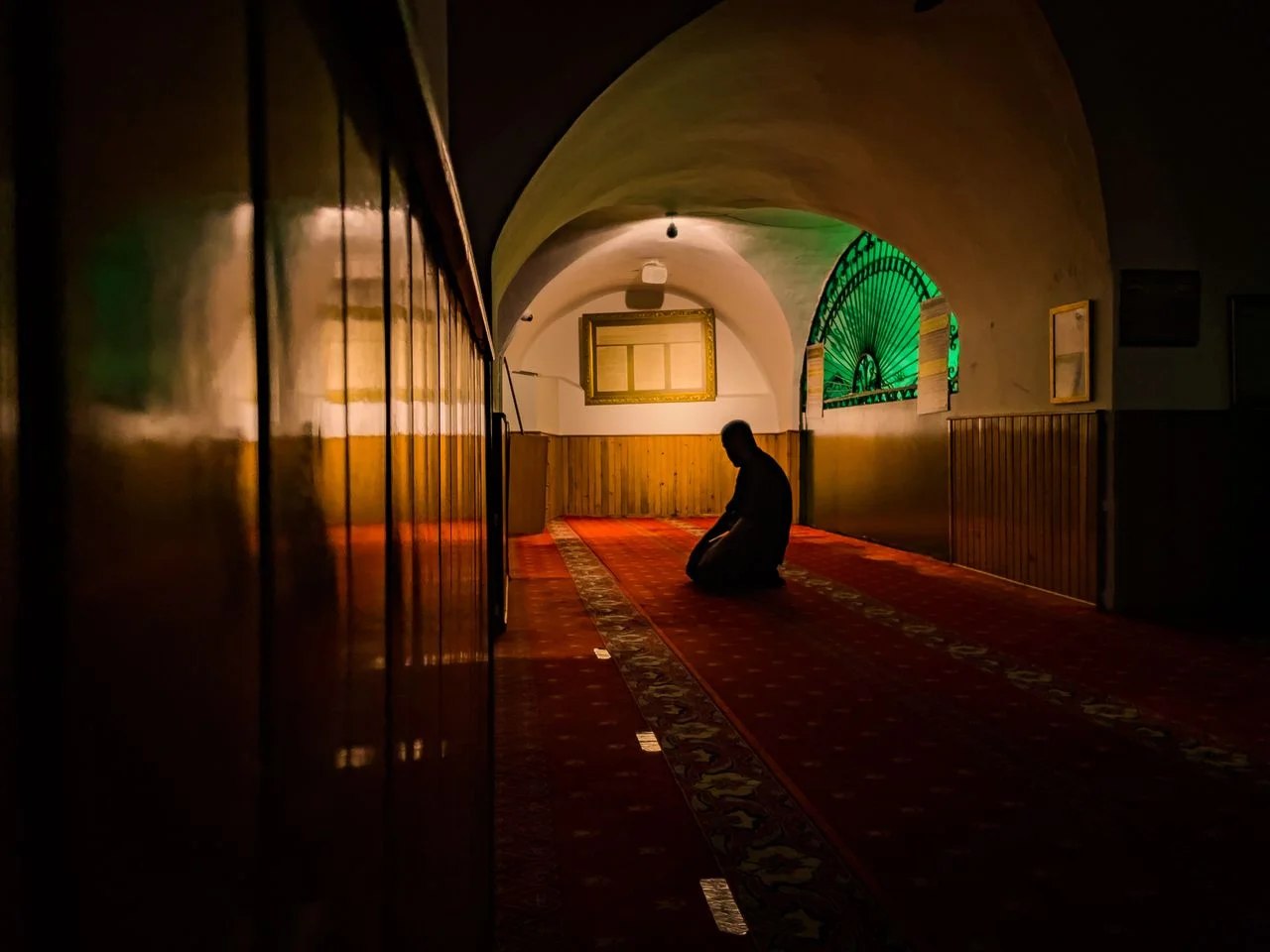
Spiritual Benefits of Tahajjud Prayer
The benefits of Tahajjud Prayer extend beyond spiritual reward and touch on emotional and mental wellbeing as well. Below are some of the recognized benefits associated with this practice.
Closeness to Allah
Praying during the quiet hours of the night allows a person to focus entirely on their connection with Allah, away from the noise and distractions of daily life. This solitude often leads to a deeper sense of humility and sincerity in worship.
Answered Supplications
According to hadith, the last third of the night is a time when supplications are more likely to be accepted. This makes Tahajjud an ideal time to ask for forgiveness, guidance, and any personal requests.
Forgiveness of Sins
The Prophet Muhammad, peace be upon him, encouraged believers to seek forgiveness during this time, as it is described as a period when Allah calls out to His servants, offering mercy to those who turn to Him.
Discipline and Self Control
Waking up voluntarily during sleep hours requires discipline. Over time, this habit strengthens a person’s willpower and ability to prioritize spiritual goals over physical comfort.
Mental Clarity and Peace
Many people who regularly perform Tahajjud describe a sense of calm and clarity that carries into their day. The quiet environment of the night, free from distractions, often allows for deeper reflection and emotional release.
Tahajjud Prayer and the Sunnah of the Prophet
The Prophet Muhammad, peace be upon him, was known to perform Tahajjud consistently, even to the point where his feet would swell from prolonged standing in prayer. When asked why he exerted himself so much despite being forgiven of all sins, he replied that he wished to be a grateful servant of Allah. This example set the standard for the companions and generations of Muslims who followed, many of whom made Tahajjud a permanent part of their nightly routine.
Several companions of the Prophet, including Abu Hurairah and Aisha, narrated detailed accounts of how the Prophet performed this prayer, including the specific supplications he recited upon waking and the manner in which he began his prayer with a short opening dua before moving into the recitation.
Common Mistakes to Avoid
While Tahajjud is a flexible and personal act of worship, there are a few common mistakes worth avoiding.
- Overburdening oneself by setting unrealistic goals, such as praying for hours every night without building up gradually.
- Neglecting sleep entirely, which can affect health and productivity during the day.
- Praying without focus or rushing through the recitation just to complete a set number of rakats.
- Missing the prayer entirely out of guilt after waking up late, instead of praying the remaining time before Fajr.
Consistency, even with a small number of rakats, is far more valuable than occasional long sessions followed by long gaps.
Tips for Maintaining Regular Tahajjud Prayer
Building a habit of Tahajjud Prayer takes patience and gradual adjustment. Setting an alarm for the last third of the night, sleeping early to allow enough rest, and starting with just two rakats can make the habit sustainable. Some people find it helpful to make dua before sleeping, asking Allah to help them wake up for this prayer. Reducing screen time before bed and maintaining a consistent sleep schedule throughout the week also supports better waking patterns for night prayer.
Conclusion
Tahajjud Prayer is a deeply personal and rewarding form of worship that connects a believer to Allah during the quietest hours of the night. While it is not obligatory, its emphasis in the Quran and the consistent practice of the Prophet Muhammad, peace be upon him, highlight its immense spiritual value. Whether performed with two rakats or eleven, what matters most is sincerity, consistency, and the intention to draw closer to Allah. Starting small and building the habit gradually can help any Muslim experience the peace and spiritual benefit that comes from this special prayer.
FAQs
How do you perform Tahajjud prayer?
Perform Tahajjud after sleeping for part of the night and before the Fajr prayer. Make the intention (niyyah), pray in sets of two rakats, recite any portions of the Quran after Surah Al-Fatihah, and end with sincere dua. You may conclude with Witr if you have not prayed it earlier.
How many rakats are in Tahajjud?
There is no fixed number of rakats for Tahajjud. The minimum is two rakats, while many people pray four, six, or eight. Pray as many as you are able, in sets of two, according to your time and ability.
Can I pray Tahajjud at 3:45 am?
Yes. If 3:45 am falls after the Isha prayer and before the Fajr prayer, you can pray Tahajjud at that time. The last third of the night is considered the most virtuous time for offering Tahajjud.
Which surahs to recite in Tahajjud?
You can recite any surahs during Tahajjud. Common choices include Surah Al-Ikhlas, Surah Al-Falaq, Surah An-Nas, Surah Al-Mulk, Surah Yasin, or longer passages if you have memorized them. The best recitation is what you can read with sincerity, understanding, and humility.
If you wish to learn the Quran online or enroll in one of our Quran courses, click below and start your learning journey today.
Explore Our Courses →
