The Tasbih of Fatimah: Meaning, Method, and Spiritual Rewards Explained
The Tasbih of Fatimah
Meta Title: The Tasbih of Fatimah: Full Guide to Meaning & Method (58 chars)
Meta Description: Learn the words, method, and virtues of the Tasbih of Fatimah, a daily dhikr taught by the Prophet ﷺ to his daughter. (140 chars)
Why a Simple Habit Before Sleep Changed the Way Fatimah (RA) Managed Her Days
Imagine grinding grain by hand, carrying water, and running an entire household with no modern conveniences, all while raising young children. This was the daily reality of Fatimah bint Muhammad (RA), the beloved daughter of the Prophet Muhammad ﷺ.
She once asked her father for a servant to help ease her workload. Instead, he gave her something far more valuable: a set of words to recite every night before sleep.
That gift became known as the Tasbih of Fatimah, and it remains one of the most beloved and widely practiced forms of dhikr in the Muslim world today. This article explains its origin, exact wording, method, and the deep spiritual and practical wisdom behind it.
What Is the Tasbih of Fatimah?
The Tasbih of Fatimah is a specific combination of three phrases of remembrance (dhikr) that the Prophet Muhammad ﷺ taught to his daughter Fatimah (RA). It consists of:
- Subhanallah (Glory be to Allah) recited 33 times
- Alhamdulillah (All praise is due to Allah) recited 33 times
- Allahu Akbar (Allah is the Greatest) recited 34 times
This totals 100 repetitions, traditionally recited after each of the five daily prayers or before going to sleep at night.
Key point: It is not a single phrase repeated 100 times. It is three distinct phrases, each with its own count, recited in sequence.
The Story Behind the Tasbih of Fatimah
Fatimah’s Request for Help
Fatimah (RA) was married to Ali ibn Abi Talib (RA). Her hands became calloused from grinding grain with a hand mill, and she carried water long distances for the household.
When she heard that prisoners of war had been brought to Madinah and some were given as servants to ease people’s burdens, she went to her father to ask for help. She did not find him at home and left her request with his wife.
The Prophet’s Response
When the Prophet ﷺ learned of her request, he visited Ali and Fatimah (RA) at night. Rather than granting a servant, he offered something he described as better than a servant.
He taught them to say Subhanallah 33 times, Alhamdulillah 33 times, and Allahu Akbar 34 times before sleeping. This narration is recorded in Sahih al-Bukhari and Sahih Muslim, making it one of the most authentically documented practices in Islamic tradition.
Ali (RA) is reported to have said he never left this practice since the day the Prophet ﷺ taught it to him, a testament to how deeply it became woven into their daily life.
Why Did the Prophet ﷺ Choose Dhikr Over a Servant?
This moment carries meaning far beyond household chores. A few reasons stand out:
- Spiritual strength over material comfort. The Prophet ﷺ prioritized connection with Allah as a source of real relief, not just physical assistance.
- Accessibility for everyone. A servant was a limited resource available to few. This dhikr is free and available to every believer, regardless of wealth or status.
- Long-term benefit. Physical help eases work for a day. Spiritual remembrance strengthens the heart for a lifetime.
This teaches an important principle: relief from hardship often comes through remembrance of Allah, not only through external solutions.
The Exact Wording of the Tasbih of Fatimah
For those wanting to practice it correctly, here is the breakdown in Arabic transliteration and English:
| Phrase | Arabic Transliteration | Meaning | Count |
|---|---|---|---|
| 1 | Subhanallah | Glory be to Allah | 33 times |
| 2 | Alhamdulillah | All praise is due to Allah | 33 times |
| 3 | Allahu Akbar | Allah is the Greatest | 34 times |
Some narrations mention a variation where all three phrases are recited 33 times each, followed by a single closing statement of Tahleel (La ilaha illallah) to complete 100. Both versions are supported by different hadith and are considered acceptable.
When Should the Tasbih of Fatimah Be Recited?
Before Sleep
The most well-known narration places this dhikr right before sleeping at night, as a way to close the day with remembrance of Allah.
After the Five Daily Prayers
Many scholars and practicing Muslims also recite it after each of the five obligatory prayers, based on separate hadith that mention similar tasbih counts following salah.
Practical tip: If you struggle to remember it at night due to tiredness, try attaching it to a prayer you already perform consistently, such as after Maghrib or Isha.
How to Practice the Tasbih of Fatimah Correctly
Step-by-Step Method
- Find a quiet moment, ideally right before sleep or immediately after a prayer.
- Say Subhanallah 33 times.
- Say Alhamdulillah 33 times.
- Say Allahu Akbar 34 times.
- Reflect briefly on the meaning of each phrase as you say it.
Using Your Fingers to Count
The Prophet ﷺ encouraged using the fingers to count dhikr, as this practice will testify on the Day of Judgment. Many people use the joints of their right hand fingers to track the count without needing prayer beads.
Using a Tasbih (Prayer Beads)
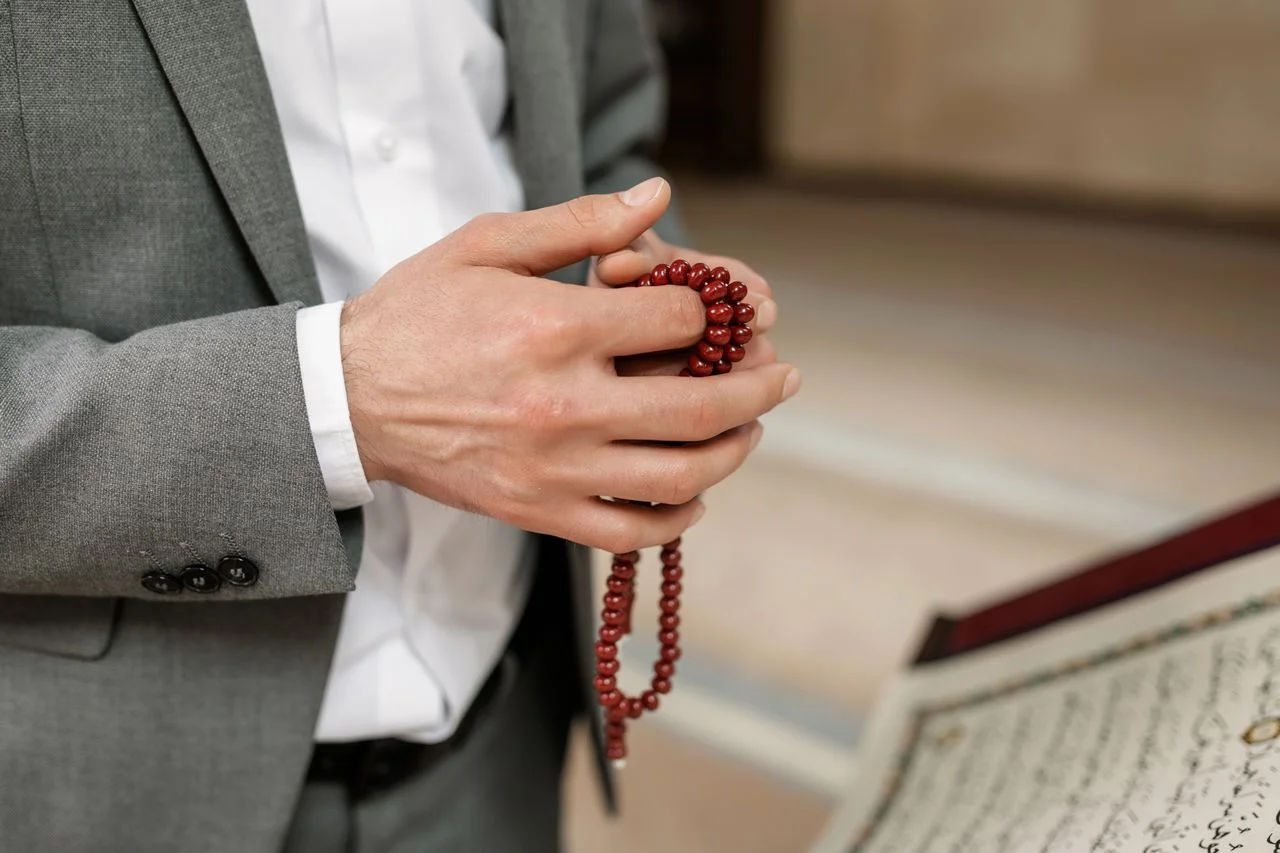
A physical tasbih with 33 or 100 beads is a common tool used across the Muslim world to keep count without losing focus during recitation.
The Spiritual Benefits of the Tasbih of Fatimah
1. A Source of Inner Strength
The Prophet ﷺ told Fatimah and Ali (RA) that this dhikr was better than a servant, indicating that spiritual remembrance provides strength that outlasts any physical assistance.
2. Sins Forgiven Like Foam on the Sea
In another hadith, the Prophet ﷺ mentioned that whoever recites these phrases regularly will have their sins forgiven, even if they are as abundant as the foam on the surface of the sea. This highlights the immense mercy attached to consistent dhikr.
3. A Habit That Builds Discipline
Because it requires counting and consistency, this practice naturally builds a disciplined daily habit of remembering Allah, something that carries benefits well beyond the moments of recitation.
4. Comfort During Difficult Times
Many practicing Muslims describe turning to this tasbih during periods of stress, fatigue, or heavy responsibility, much like Fatimah (RA) did during a physically demanding season of her life.
Also Read: Riba (Interest) in Islam: Why It’s Forbidden and What Muslims Should Know
Common Questions About Counting and Method
What if I lose count?
It is generally recommended to restart the specific phrase you lost count on rather than the entire set, though some scholars advise simply continuing with a reasonable estimate rather than becoming anxious over precision.
Can it be recited silently?
Yes. The dhikr can be recited silently, in a low voice, or slightly audible. What matters most is sincerity and presence of heart, not volume.
Is it necessary to use a tasbih (prayer beads)?
No. Prayer beads are simply a tool. Finger counting, as practiced by the Prophet ﷺ himself, is equally valid and was actually his preferred method according to several hadith.
Practical Tips for Making This a Consistent Habit
- Pair it with an existing routine, such as right after Isha prayer or right before turning off the lights.
- Keep a tasbih by your bedside as a visual reminder.
- Start with intention, not perfection. Missing a night occasionally does not erase the value of consistent practice overall.
- Teach it to children as an easy, memorable introduction to daily dhikr.
- Reflect on the meaning, not just the count, to deepen the spiritual impact of each phrase.
Key Takeaways
- The Tasbih of Fatimah consists of Subhanallah (33), Alhamdulillah (33), and Allahu Akbar (34), totaling 100.
- It was taught by the Prophet Muhammad ﷺ to his daughter Fatimah (RA) and her husband Ali (RA) in place of a servant.
- It is authentically recorded in Sahih al-Bukhari and Sahih Muslim.
- It can be recited before sleep or after the five daily prayers.
- Its rewards include forgiveness of sins and spiritual strength that surpasses material help.
Final Thoughts
The Tasbih of Fatimah is more than a set of words to repeat. It reflects a timeless lesson passed from a father to his daughter: that true ease in life often comes from turning to Allah in remembrance, not only from external help.
For anyone looking for a simple, authentic, and deeply rewarding daily practice, reciting the Tasbih of Fatimah consistently, whether after prayer or before sleep, offers both spiritual closeness to Allah and a practical anchor for a busy day.
Sources and Official References
- Sahih al-Bukhari, Hadith 5362 (Book of Supporting the Family) – https://sunnah.com/bukhari:5362
- Sahih Muslim, Hadith 2727a (Book of Dhikr, Supplication, Repentance and Seeking Forgiveness) – https://sunnah.com/muslim:2727a
- Riyad as-Salihin, Hadith 1459 (The Book of the Remembrance of Allah) – https://sunnah.com/riyadussalihin:1459
- Sunnah.com Hadith Database (primary English/Arabic hadith reference) – https://sunnah.com
FAQs
1. What is the Tasbih of Fatimah?
The Tasbih of Fatimah is a dhikr taught by the Prophet Muhammad ﷺ to his daughter Fatimah (RA), consisting of Subhanallah 33 times, Alhamdulillah 33 times, and Allahu Akbar 34 times, totaling 100 recitations.
2. Why did the Prophet ﷺ give this dhikr instead of a servant?
When Fatimah (RA) asked for help with household chores, the Prophet ﷺ taught her this tasbih instead, saying it was better than a servant because of its lasting spiritual value.
3. When is the best time to recite the Tasbih of Fatimah?
It is most commonly recited before sleeping at night, though many Muslims also recite it after each of the five daily prayers.
4. Is the Tasbih of Fatimah mentioned in authentic hadith?
Yes, it is recorded in Sahih al-Bukhari and Sahih Muslim, two of the most authentic hadith collections in Islam.
5. Do I need prayer beads to recite the Tasbih of Fatimah?
No, prayer beads are optional. The Prophet ﷺ encouraged counting dhikr on the fingers, which is considered an equally valid and even preferred method.
If you wish to learn the Quran online or enroll in one of our Quran courses, click below and start your learning journey today.
Explore Our Courses →
