What to Wear for Umrah: The Complete Ihram and Packing Guide Every Pilgrim Needs
Standing at the Miqat With the Wrong Bag: A Lesson Every Pilgrim Learns the Hard Way
The first time I helped a family member prepare for Umrah, we packed the night before a 4 a.m. flight and nearly left the ihram cloths in a checked bag headed straight to cargo. That single mistake almost meant crossing the Miqat, the boundary where the pilgrim must already be dressed and in the sacred state, without the right clothing at all.
What to wear for Umrah is not a minor detail. It is one of the first rulings a pilgrim must get right, because clothing marks the literal entry point into the rites. Get it wrong and you may need to pay a compensation (fidyah) or repeat part of the ritual. Get it right and the rest of the journey feels lighter, calmer, and far more focused on worship.
This guide walks through exactly what to wear for Umrah for both men and women, the rules behind the clothing, common mistakes, and practical tips drawn from real pilgrim experience so you can pack with confidence.
What Should You Wear for Umrah? (Quick Answer)
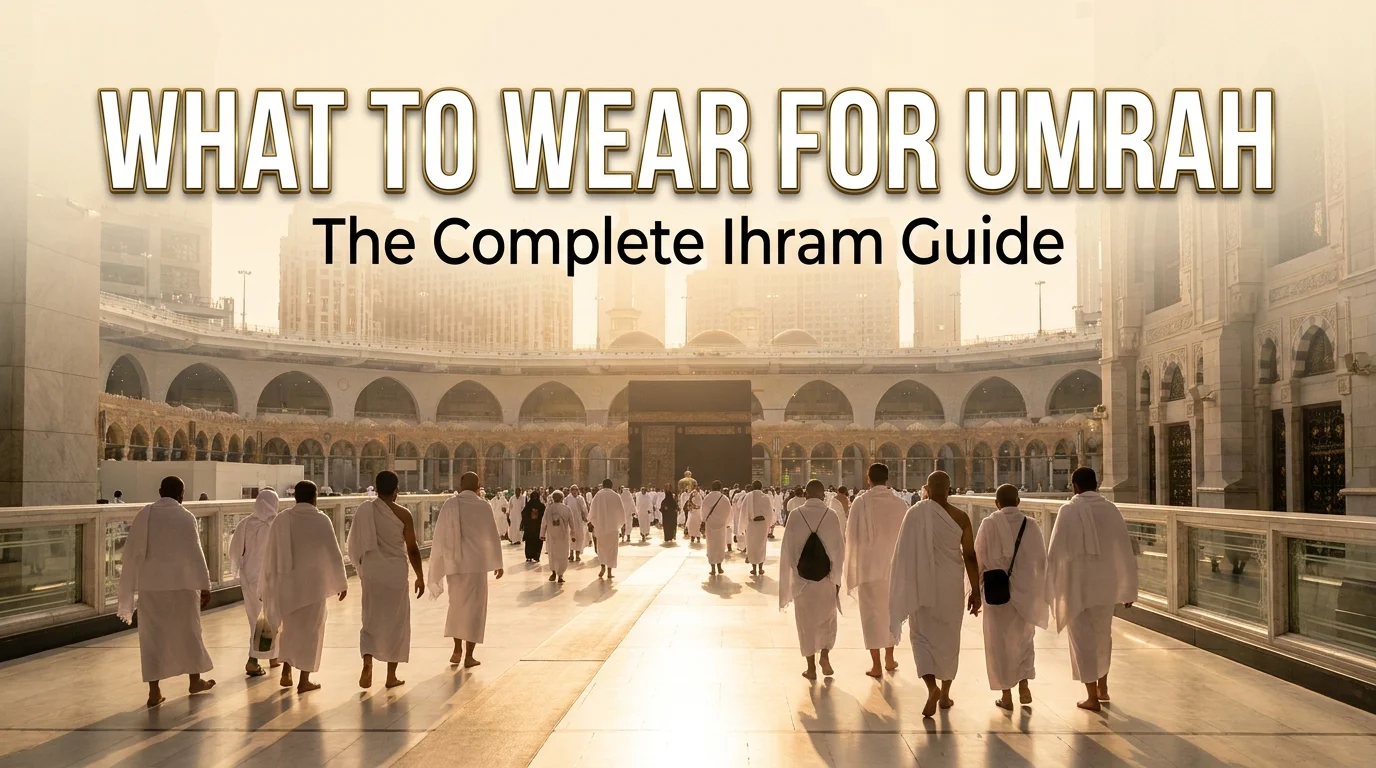
For Umrah, men wear ihram: two plain, unstitched white cloths called the izar (lower wrap) and rida (upper drape), paired with open sandals that expose the ankle and toes. Women wear loose, non-transparent, modest clothing that covers the entire body except the face and hands, usually an abaya with a headscarf, in any color. No specific ihram garment is required for women.
That is the short version. The details, exceptions, and real-world logistics matter just as much, so let’s break it down properly.
What Is Ihram and Why Does the Dress Code Exist?
Ihram refers to both a physical set of garments and a spiritual state a pilgrim enters before performing the rites of Umrah. According to a step by step guide prepared by Imam Mohamed Baianonie of the Islamic Center of Raleigh, ihram clothing is required (waajib) for Umrah, and the requirements differ between men and women.
The symbolism is simple but powerful. When millions of pilgrims wear the same plain white cloth, wealth, nationality, and status disappear. A CEO and a farmer stand in identical garments before the Kaaba. That leveling effect is the entire point of the dress code, not just a formality.
How Many Muslims Actually Wear This Dress Code Each Year?
Scale matters here. Saudi Arabia’s Ministry of Hajj and Umrah has reported expecting around 10 million Muslims from around the world to perform Umrah at the Grand Mosque in Mecca during a single season. That is roughly 10 million people, from more than 180 countries, all dressed by the same set of rules, on the same holy ground, in the same few square kilometers around the Grand Mosque.
What to Wear for Umrah as a Man
Men’s ihram clothing is intentionally minimal. It consists of exactly two pieces:
- Izar: the lower cloth, wrapped around the waist like a sarong and tucked or tied at the side.
- Rida: the upper cloth, draped over the shoulders like a shawl, left loose enough to adjust during prayer and Tawaf.
Both pieces must be plain, white, unstitched, and free of seams shaped to the body. Men also need open sandals that leave the ankle and the top of the foot uncovered.
Can Men Wear Anything Under the Ihram?
This is one of the most common questions from first time pilgrims. The ihram itself has no stitched layer underneath it. Men should not wear underwear or any stitched item beneath the two cloths, since wearing any stitched item, including underwear, breaks the rules of ihram. A simple money pouch or belt worn around the waist is generally permitted since it does not shape the garment to the body.
What Are Men Not Allowed to Wear or Do in Ihram?
Once a man enters ihram at the Miqat, several restrictions apply:
- No stitched clothing of any kind (shirts, trousers, underwear)
- No head covering, including caps, turbans, or hoods
- No closed shoes or footwear that covers the ankle or the top of the foot
- No perfume or scented products on the body or garments
- No cutting of hair or nails until the rites are complete
Sun protection is allowed through the ihram cloth itself, and men may pull part of the rida over the head for shade as long as it does not fully enclose the head against the skin, though scholars differ slightly on the exact method.
What to Wear for Umrah as a Woman
Women’s clothing rules are far more flexible than most first time pilgrims expect, and this is where a lot of confusion happens. Women do not wear a special white ihram uniform. Instead, according to Saudi Arabia’s Ministry of Hajj and Umrah, female pilgrims are entitled to wear the attire they like during the rituals, as long as the clothing is wide and loosely fitted, not adorned with decorative elements, and covers the entire body.
That means:
- Any modest, loose-fitting dress or abaya in any color (not only black)
- Full body coverage except the face and hands
- A headscarf (hijab) that covers the hair completely
- No niqab or face veil while performing the actual rites, since the face must remain uncovered
- No gloves, since the hands must also remain visible
An Islamic ruling from Darul Ifta Birmingham confirms this directly: although men have a prescribed dress code for Hajj that consists of two pieces of unstitched cloth, there are no similar specific garments for a woman, and any type of garment can be worn in Ihram by women, but the face has to be uncovered.
Does a Woman Have to Wear a Black Abaya for Umrah?
No. This is a widespread myth. Black abayas are simply the cultural norm in Saudi Arabia and among many pilgrims, but they are not a religious requirement. A loose trench coat, a long tunic with wide trousers, or a plain dress that meets the coverage requirements is equally valid, as long as it does not cling to the body or draw attention.
What Colors and Fabrics Work Best for Women’s Ihram Clothing?
Neutral, non-transparent, breathable fabrics work best. Cotton blends handle the Saudi heat, which regularly exceeds 40°C (104°F) during peak Umrah season, far better than polyester or synthetic velvet abayas that trap heat.
What Should You Wear Before and After Ihram?
Ihram is only worn during the actual rites: Tawaf, Sa’i, and the period leading up to the hair trimming or shaving that ends the pilgrim’s state of ihram. For the rest of the trip, including flights, hotel stays, and general time in Makkah and Madinah, normal modest clothing applies.
For men, a comfortable thobe in a light, breathable fabric is the standard choice for daily wear and prayer once ihram has been removed. For women, the same abaya and hijab combination used during the rites usually continues to be worn in public throughout the trip, since Saudi public spaces still expect modest dress.
How Do You Know When to Put on Ihram? (Understanding the Miqat)
The Miqat is the geographic boundary set for pilgrims coming from outside the Haram zone. You must already be wearing ihram, or at minimum have made the intention and be ready to wear it, before crossing this point. For most international travelers flying into Jeddah, cabin crew typically make an announcement shortly before the flight crosses the Miqat boundary in the sky, which is why experienced travel agencies recommend changing into ihram before boarding, not during the flight.
Missing this window is one of the most common mistakes among first time pilgrims and can require a fidyah (compensatory offering) to correct, according to multiple Hajj and Umrah guides referencing classical fiqh rulings on ihram violations.
Actionable Packing Tips for What to Wear for Umrah
Based on common issues first time pilgrims run into, here is a practical checklist:
- Pack two sets of ihram cloths for men. Fabric tears or gets soiled, and having a backup avoids a stressful last minute purchase in Makkah.
- Choose breathable, unbleached cotton ihram over thin polyester. Cheaper synthetic sets are more likely to become see-through when wet with sweat, which is a modesty concern during long hours of Tawaf.
- Keep ihram clothing in your carry-on, never checked luggage. This single habit prevents the exact mistake many pilgrims make of losing access to their ihram before the Miqat.
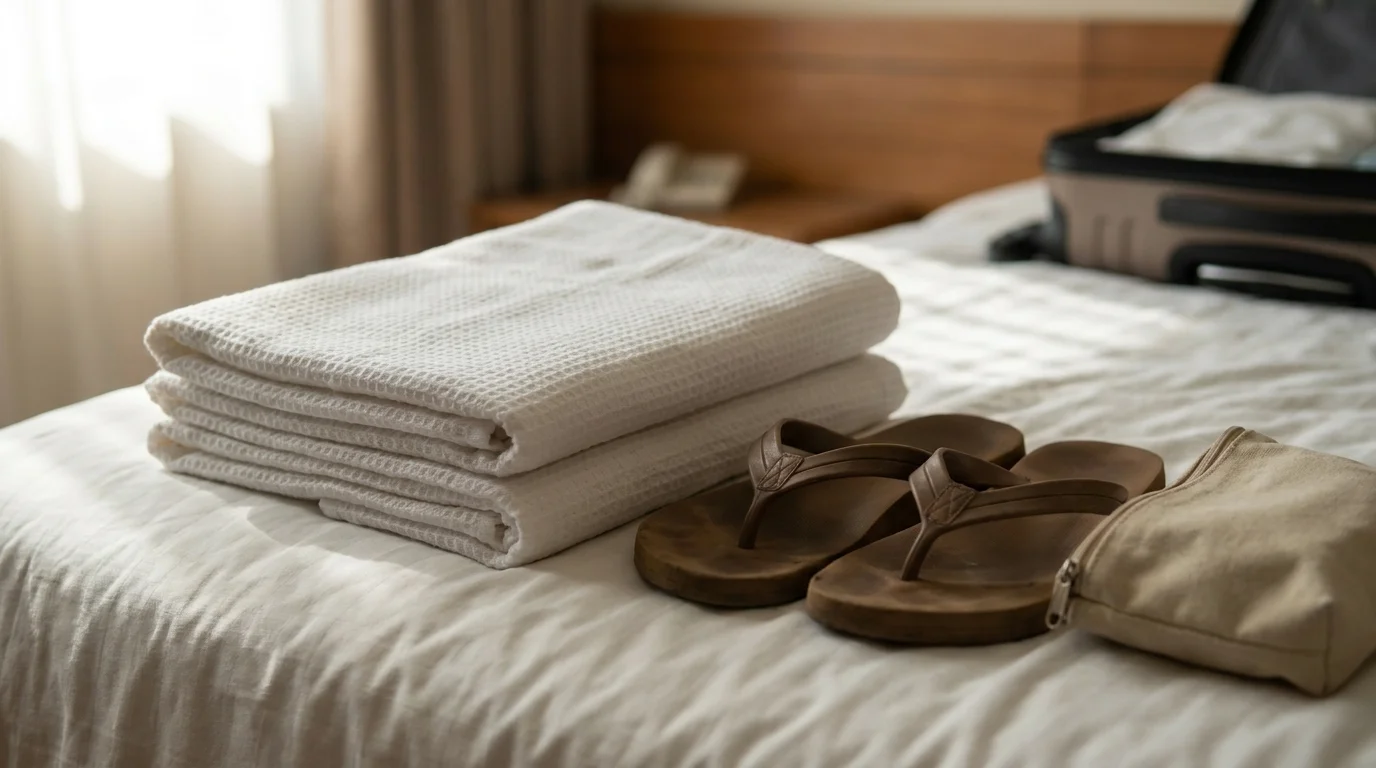
- Bring a small ihram belt or money pouch since the garments have no pockets.
- Women should pack at least two abayas in case one gets stained or worn during the trip, plus a spare headscarf.
- Choose sandals over shoes for men, ideally the flat rubber kind sold specifically for ihram, since they slip on and off quickly for wudu (ablution).
- Avoid dyed or printed ihram cloth. Scholars generally require plain white for men, and colored or striped sets, while sold commercially, are not the preferred choice.
- Test your ihram fit at home before travel. Practicing how to wrap the izar securely prevents it from slipping during Tawaf, which involves walking roughly 1.4 kilometers around the Kaaba per circuit, seven circuits total.
What to Wear for Umrah: Common Mistakes to Avoid
- Wearing underwear or stitched garments under the men’s ihram
- Assuming women must wear black or must cover their face
- Wearing closed trainers instead of ankle-exposing sandals for men
- Applying perfume or scented lotion after entering ihram (forbidden for both men and women)
- Packing ihram cloth in checked luggage instead of carry-on
- Wearing tight leggings or fitted abayas that outline the body shape for women
Also Read: Which Salah Can Be Combined? A Complete Guide to Jam’ Between Prayers
Frequently Asked Questions About What to Wear for Umrah
How much does an ihram set cost?
A basic men’s ihram set typically costs between 20 and 60 US dollars depending on fabric quality, and can also be purchased on arrival in Jeddah, Makkah, or Madinah. Women generally use their own abaya and hijab, so there is no separate “ihram cost” beyond normal modest clothing they may already own.
Can I wear a colored ihram instead of white for Umrah?
Men are expected to wear plain white, unstitched cloth, as this is the widely followed and recommended practice tied to purity and equality among pilgrims. Colored or patterned ihram sets exist commercially but are not the preferred or traditional choice according to most scholars.
Do women need to wear a special ihram outfit for Umrah?
No, women do not have a prescribed ihram garment. They wear any loose, modest, non-transparent clothing that covers the body except the face and hands, commonly an abaya with a hijab.
What shoes should I wear for Umrah?
Men must wear open sandals that expose the ankle and the top of the foot, never closed shoes, while in ihram. Women can wear any comfortable, modest closed or open shoe, since footwear rules only restrict men’s ihram state.
What happens if I wear the wrong clothing during Umrah by mistake?
Unintentional or brief violations of the men’s ihram dress code, such as accidentally wearing a stitched item, may require a fidyah (compensatory act such as feeding the poor or fasting), so it is best to consult a scholar or your Umrah group leader as soon as the mistake is noticed.
Sources and Official References
Saudi Arabia’s Ministry of Hajj and Umrah dress code clarification for women, via TBS News: https://www.tbsnews.net/worldbiz/middle-east/saudi-arabia-sets-dress-code-women-performing-umrah-702078
Saudi Arabia’s Ministry of Hajj and Umrah dress code details, via Salaam Gateway: https://salaamgateway.com/story/saudi-arabia-defines-umrah-dress-code-for-females
Umrah Guide prepared by Imam Mohamed Baianonie, Islamic Center of Raleigh: https://raleighmasjid.org/?p=5968
Fatwa on women’s ihram clothing, Darul Ifta Birmingham: https://daruliftabirmingham.co.uk/home/?p=16467
Disclaimer: This article is provided for general educational and informational purposes only and reflects commonly followed guidance on Umrah clothing. It is not a substitute for a formal religious ruling (fatwa). Always consult a certified Islamic scholar, your Umrah group leader, or official Saudi authorities such as the Ministry of Hajj and Umrah for guidance specific to your situation before your pilgrimage.
