If you wish to learn the Quran online or enroll in one of our Quran courses, click below and start your learning journey today.
Explore Our Courses →
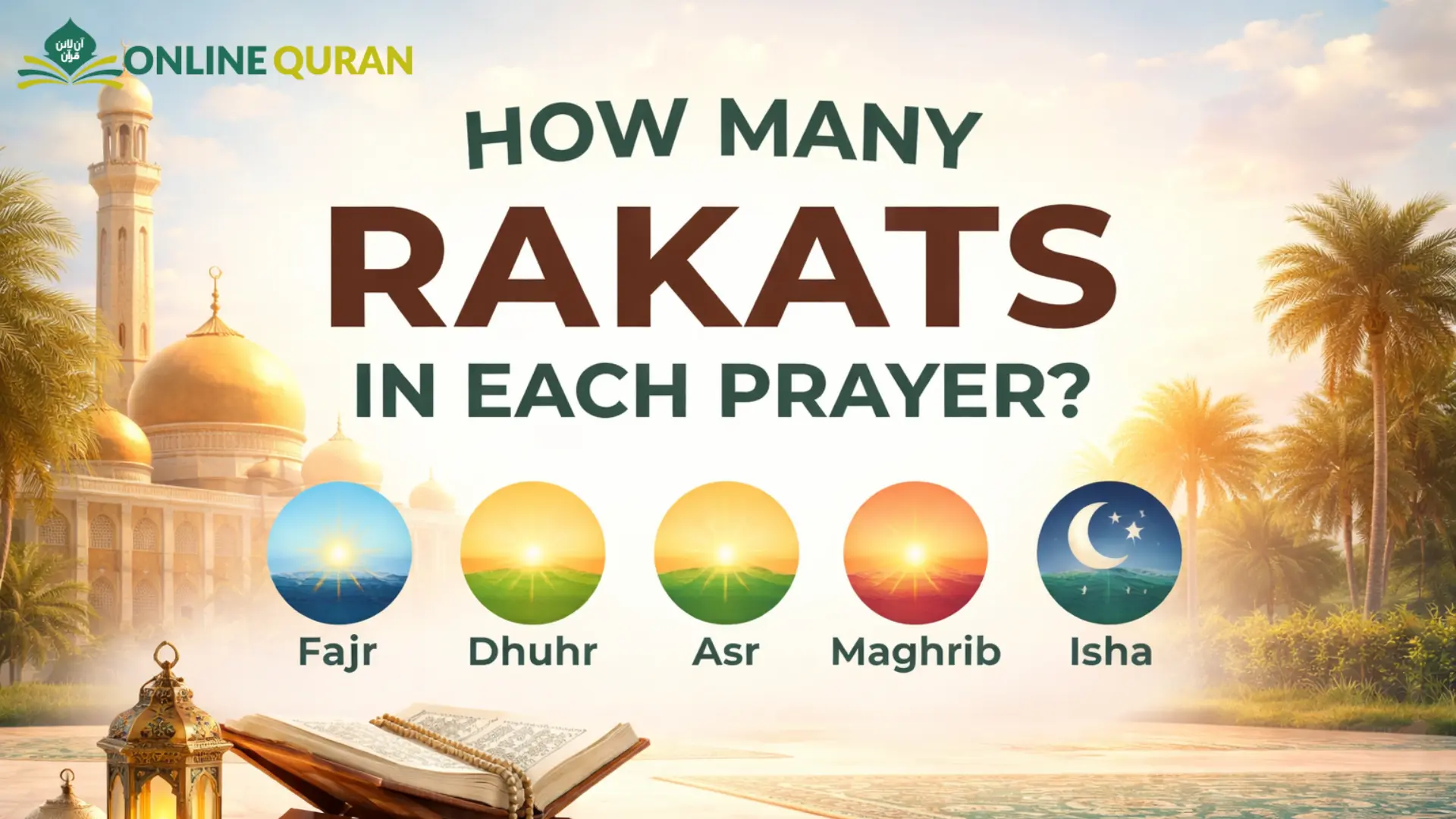
How Many Rakats in Each Prayer? is a common question among Muslims. When I first started learning to pray, the most difficult thing for me was how many rak’ahs are in each prayer. Especially in Zuhr and Asr, I often got confused. With time, when I practiced it repeatedly, it all became very easy. Today I am sharing this simple and easy guide with you so that anyone, especially newbies, can understand it without difficulty.
Prayer is not just a habit. It is a direct relationship with Allah. There is a specific number of rak’ahs in each prayer. When you understand this, prayer becomes much easier and more peaceful.
Let us now understand each prayer one by one.
First of all, it is important to understand what a rak’ah is.
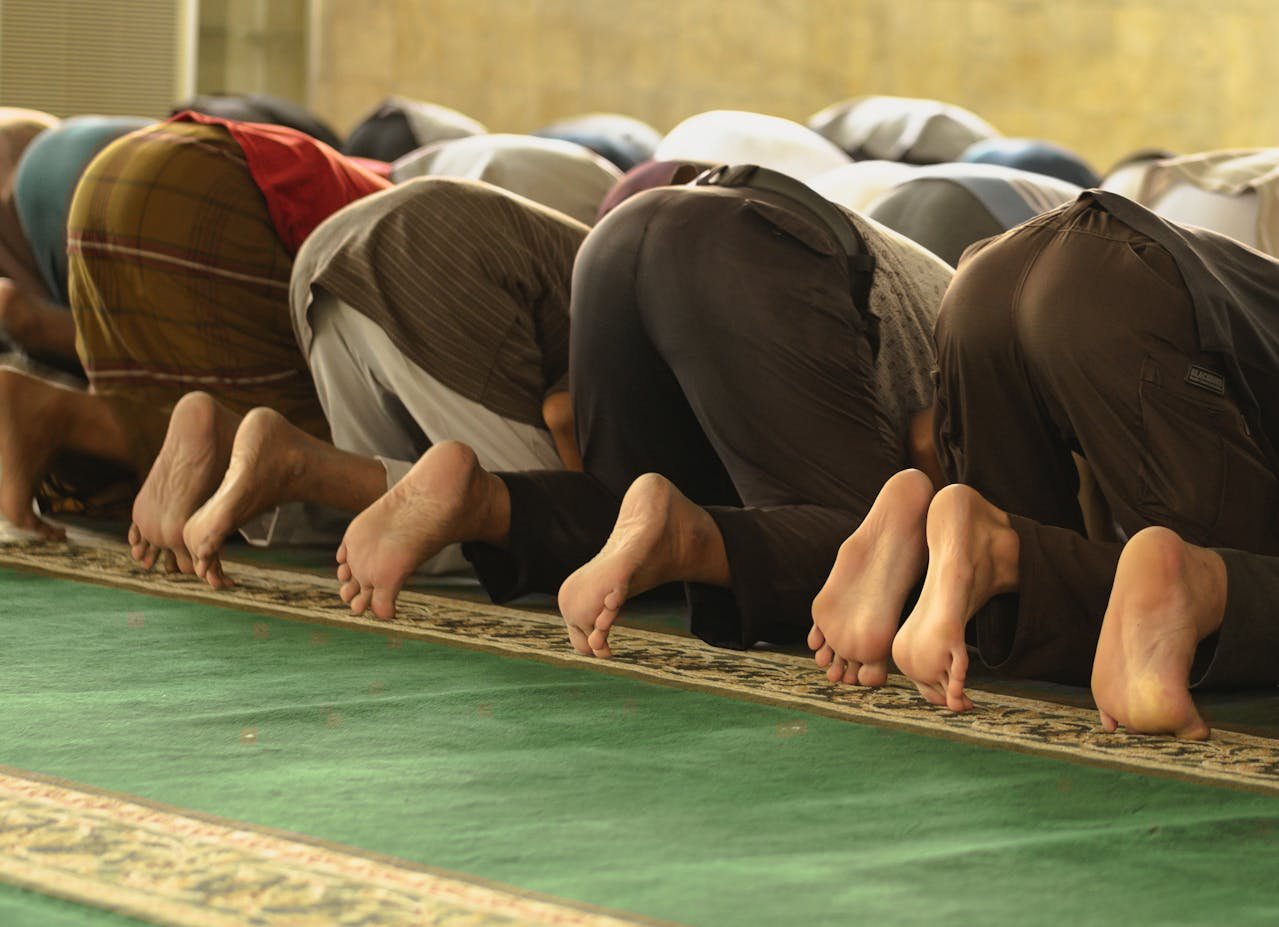
A rak’ah is a complete part of prayer. It includes standing and reciting the Quran, then bowing, and performing two prostrations. When this entire process is completed once, it is called one rak’ah.
That is, if there are two rak’ahs in a prayer, it means that this entire action will be performed twice.
Fajr prayer is the first prayer of the day and it is very special. I still remember that in the morning, when there is silence everywhere, there is a special peace in praying.
The rak’ahs in Fajr prayer are:
2 Sunnah rak’ahs (very important)
2 Fardh rak’ahs (obligatory)
Total rak’ahs: 4
The Sunnah rak’ahs of Fajr are very important and the Holy Prophet (peace and blessings of Allah be upon him) has emphasized them. The Fardh rak’ahs are obligatory and cannot be skipped.
When I started praying Fajr regularly, my entire daily routine changed. A strange peace is found in the morning that is not found anywhere else.
Zuhr prayer is performed in the middle of the day when most people are busy with work or study. This is the prayer that is often missed but it is very important to pray it on time.
The rak’ahs in the Zuhr prayer are:
4 Sunnah rak’ahs (before the obligatory ones)
4 Fardh rak’ahs
2 Sunnah rak’ahs (after the obligatory ones)
Total rak’ahs: 10
Some people also pray Nafl, but this is the basic order.
I myself found this prayer the most difficult because I am busy during the day. But when it became a habit, this prayer began to be a beautiful break in the middle of the day.
The Asr prayer is performed in the afternoon when a person’s energy starts to decrease and the day’s work is about to end.
In the Asr prayer:
4 Sunnah rak’ahs (optional but better)
4 Fardh rak’ahs
Total rak’ahs: 4 Fardh (or 8 if you include Sunnah)
The Sunnah of the Asr is not obligatory but it is better to pray them. The main and obligatory part is the 4 Fardh rak’ahs.
For me, the afternoon prayer is always a reminder to stop and remember Allah before the end of the day.
The Maghrib prayer is performed immediately after sunset. Its time is very short, so it should not be delayed.
In Maghrib prayer:
3 obligatory rak’ahs
2 sunnah rak’ahs (later)
Total rak’ahs: 5
The Maghrib prayer consists of 3 obligatory rak’ahs, which are different from the rest of the prayers. It is a little confusing at first, but it becomes easier later.
I still remember when the sun would set and immediately after that the preparations for Maghrib would begin. The atmosphere at that time seems very special.
The Isha prayer is the last prayer of the day and is performed at night when everything is quiet.
In the Isha prayer:
4 Sunnah rak’ahs (optional)
4 Fardh rak’ahs
2 Sunnah rak’ahs (later)
3 Witr rak’ahs (very important)
Total rak’ahs: 13
The Witr prayer is considered very important and it is strongly recommended to perform it.
The Isha prayer is a beautiful way to end the day. No matter how tiring the day is, this prayer brings peace.
Also Read: Halal Qurbani Guide: Essential Checks Before the Perfect Sacrifice
For easy understanding, the summary is as follows:
Fajr: 2 Fardh + 2 Sunnah = 4 rak’ahs
Zuhr: 4 Sunnah + 4 Fardh + 2 Sunnah = 10 rak’ahs
Asr: 4 Fardh (or with 8 Sunnahs)
Maghrib: 3 Fardh + 2 Sunnah = 5 rak’ahs
Isha: 4 Fardh + Sunnah + 3 Witr = 13 rak’ahs
When I think about my learning, I think that understanding the rak’ahs makes prayer very easy. Then a person does not have to think again and again about what to pray next.
This thing is especially helpful for new people. Most people get confused in prayer just because they do not know the rak’ahs correctly.
When this confusion is gone, prayer starts to be performed easily and from the heart.
Learning the rak’ahs of prayer is the first and very important step in understanding religion. When this thing is remembered, it stays with you for life.
I myself learned that everything becomes easy with repeated practice. It seems difficult at first, but gradually it becomes a habit.
If you are just learning, do not worry. Learn slowly and in a few days you will remember everything.
Prayer is the most beautiful part of life and when we understand it and pray, its peace increases even more.
Fajr: 2 Sunnah + 2 Fard (4 total)
Dhuhr: 4 Sunnah + 4 Fard + 2 Sunnah (10 total)
Asr: 4 Fard (plus optional Sunnah)
Maghrib: 3 Fard + 2 Sunnah (5 total)
Isha: 4 Fard + Sunnah + 3 Witr (13 total)
Not always. Many Muslims try to sleep early to wake up for Fajr prayer, but sleep time depends on lifestyle, work, and routine.
If Fajr is missed, it should be prayed as soon as you remember. In Islam, missed prayers should not be ignored and should be made up (Qada) as soon as possible.
It depends on the prayer. Each prayer has a different number of rakats, usually between 2 and 13 including Sunnah and Witr.
A full rakat is one complete unit of prayer that includes standing, reciting Quran, bowing (ruku), and two prostrations (sujood).
