Learn About Islam in a Fun Way and Discover the Beauty of Faith
Learn About Islam in a Fun Way: A Beginner’s Guide to Understanding the Faith
If you have ever wanted to learn about Islam in a fun way, you are in the right place. Islam is one of the world’s largest religions, with over 1.8 billion followers across every continent. Yet for many people, it remains misunderstood or unfamiliar. This guide breaks down the core beliefs, history, practices, and values of Islam through clear explanations, relatable examples, and an approach that makes learning genuinely enjoyable. Whether you are a student, a curious reader, or someone exploring world religions, this article is your friendly starting point.
What Is Islam? Understanding the Basics
The word “Islam” comes from the Arabic root salama, meaning peace, purity, and submission. In its fullest sense, Islam means the willing submission to the will of Allah (God). A person who follows Islam is called a Muslim, which means “one who submits.”
Islam is an Abrahamic faith, sharing roots with Judaism and Christianity. Muslims believe in one God (monotheism), the prophethood of Muhammad (peace be upon him), the holy scripture known as the Quran, angels, the Day of Judgment, and divine decree (Qadar). These six articles of faith form the intellectual and spiritual backbone of Islamic belief.
Think of Islam as a complete way of life, not just a religion you practice on weekends. It gives guidance on everything from daily prayers and business ethics to family relationships and environmental responsibility.
The Five Pillars of Islam: The Fun Framework
The best way to learn about Islam in a fun way is to start with the Five Pillars of Islam. These are the five essential acts of worship that every Muslim practices. They are simple, purposeful, and deeply meaningful.
1. Shahada (Declaration of Faith)
Saying “There is no god but Allah, and Muhammad is His messenger.” This is the entry point into Islam.
2. Salah (Prayer)
Muslims pray five times a day. Each prayer is a short but powerful connection between the worshiper and Allah.
3. Zakat (Charity)
Muslims give 2.5% of their annual savings to those in need. It is a built-in economic justice system.
4. Sawm (Fasting)
During the holy month of Ramadan, Muslims fast from dawn to sunset to build self-discipline and gratitude.
5. Hajj (Pilgrimage)
Once in a lifetime (if able), Muslims travel to Mecca, Saudi Arabia, to perform the sacred pilgrimage.
The Quran: Islam’s Sacred Scripture
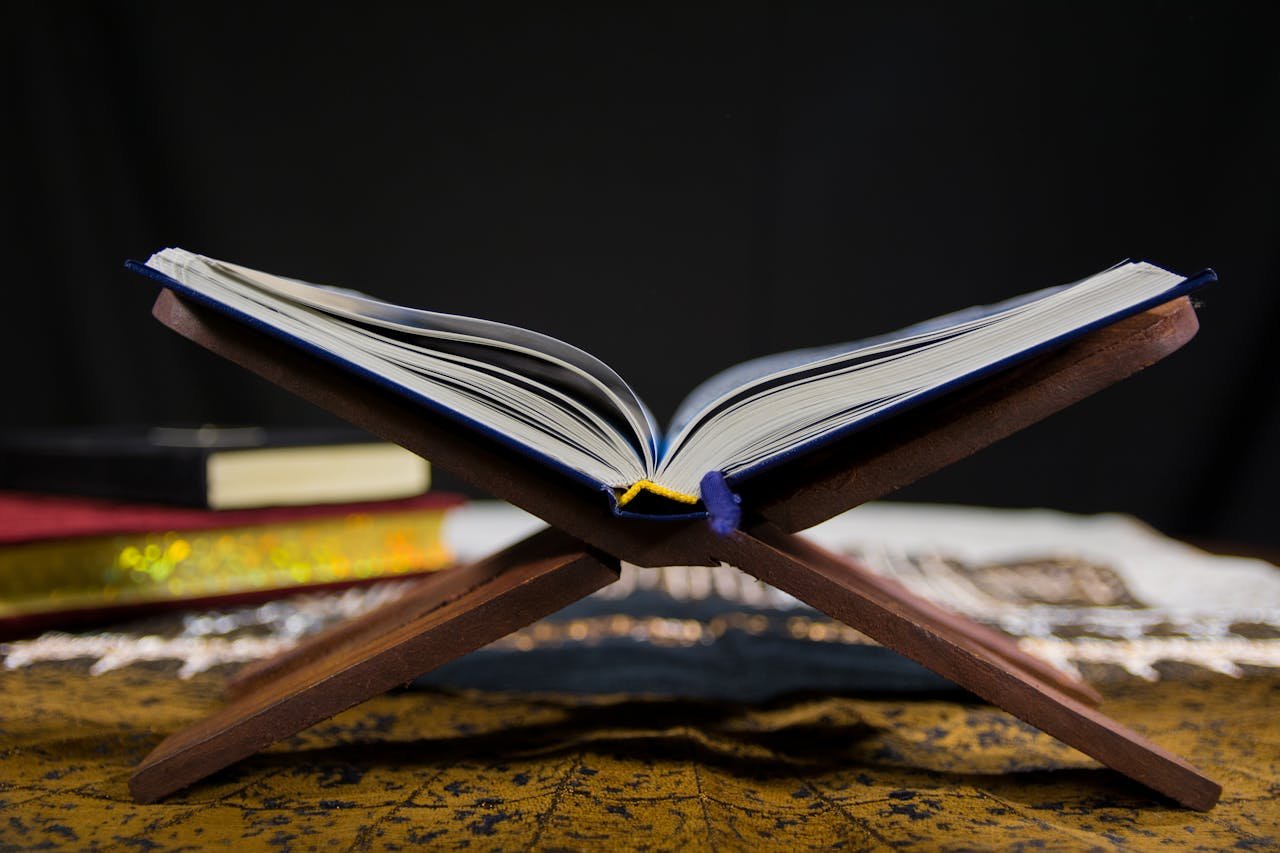
The Quran is the central religious text of Islam. Muslims believe it is the literal word of Allah as revealed to the Prophet Muhammad (peace be upon him) through the angel Jibreel (Gabriel) over a period of 23 years. It is written in classical Arabic and is divided into 114 chapters called Surahs.
What makes the Quran unique? It has been memorized word for word by millions of people across centuries. A person who has memorized the entire Quran is called a Hafiz. The Quran covers topics ranging from theology, law, and morality to stories of previous prophets like Ibrahim (Abraham), Musa (Moses), Isa (Jesus), and others. It is considered both a guide for life and a profound work of literary beauty.
Reading the Quran even in translation is a fascinating way to learn about Islam in a fun way, because its stories and wisdom are immediately accessible and thought-provoking.
Also Read: Hajj Meaning and the Powerful Journey of Faith
Prophet Muhammad: The Last Messenger
Prophet Muhammad (peace be upon him) was born in Mecca, in present-day Saudi Arabia, around 570 CE. Muslims regard him as the final prophet in a long line of messengers that began with Adam and included Noah, Abraham, Moses, and Jesus. He is called the Seal of the Prophets.
His life story (known as the Seerah) is one of the most documented in history. From his early days as an honest merchant nicknamed “Al-Amin” (the trustworthy), to receiving the first revelation in the Cave of Hira at age 40, to building a just and diverse community in Madinah, his biography is full of lessons in leadership, compassion, and resilience.
His sayings and actions are preserved in collections called Hadith, which serve as a practical guide alongside the Quran for Muslims worldwide.
A Quick Islamic History Timeline
Islamic Golden Age: When Muslims Lit Up the World
One of the most exciting parts of learning about Islam is discovering the Islamic Golden Age (roughly 8th to 13th century). During a time when much of Europe was in the Dark Ages, Muslim scholars were making breakthroughs that shaped the modern world.
Scholars like Ibn Sina (Avicenna) wrote the Canon of Medicine, which was used in European universities for centuries. Al-Khwarizmi invented algebra (the word “algebra” comes from his book). Al-Biruni calculated the radius of the Earth with remarkable accuracy. And Ibn Battuta traveled over 75,000 miles across Africa, Asia, and the Middle East, making him the greatest traveler of the medieval world.
These are not just Islamic achievements. They are human achievements, and Islam’s emphasis on seeking knowledge (the Prophet said “Seek knowledge, even if you must travel to China”) played a direct role in inspiring them.
Islamic Values and Ethics: More Than Rules
Islam places a strong emphasis on moral character. The Arabic term Akhlaq refers to Islamic ethics and virtues. Among the most celebrated values in Islam are honesty (Sidq), patience (Sabr), gratitude (Shukr), humility (Tawadu), and justice (Adl).
The concept of Ummah (the global Muslim community) reflects a spirit of brotherhood and sisterhood that transcends race, nationality, and language. At Hajj, for example, millions of people from every corner of the world stand together in simple white garments, equal before God.
Islam also stresses environmental responsibility, animal rights, and fair treatment of neighbors, principles that feel strikingly modern because they are timeless.
Fun Ways to Learn About Islam at Home
You do not need to enroll in a formal class to learn about Islam in a fun way. Here are practical methods that work for all ages:
Read beginner-friendly books such as “No God but God” by Reza Aslan or “Islam: A Short History” by Karen Armstrong. Both offer balanced and engaging overviews. Watch documentaries like the BBC’s “Islam: Empire of Faith” or the National Geographic specials on Mecca and the hajj pilgrimage. Listen to podcasts such as “The Usul al-Fiqh Podcast” or “Yaqeen Institute” content for spiritually grounded and intellectually stimulating discussions. Explore apps like Muslim Pro or Quran Companion, which make learning Quranic verses, Islamic prayers, and Islamic history interactive and easy to follow. Talk to Muslims in your community. Most Muslims are happy to share their faith in a respectful conversation, and firsthand dialogue is always the richest source of understanding.
Common Misconceptions About Islam
No guide on how to learn about Islam in a fun way would be complete without addressing some widespread misconceptions. Islam does not promote violence. The Quran explicitly states that killing one innocent person is like killing all of humanity (Quran 5:32). Terrorism has no theological foundation in mainstream Islamic scholarship and is condemned by Muslim scholars worldwide.
Islam is also not an Arab-only religion. While Arabic is the language of the Quran, the majority of Muslims live in South Asia, Southeast Asia, Sub-Saharan Africa, and Central Asia. Indonesia is the world’s most populous Muslim-majority country.
Muslim women are not forced to cover. The concept of Hijab relates to modesty and is a personal spiritual choice made by millions of Muslim women who find empowerment and identity in it.
Conclusion: Your Journey to Learn About Islam Starts Here
To learn about Islam in a fun way is to open a door to one of history’s most profound, beautiful, and globally influential traditions. From the Five Pillars and the Quran to the Islamic Golden Age and the ethical framework of Muslim life, there is always something new to discover. Approach it with curiosity, respect, and an open mind, and you will find a world full of wisdom, community, and meaning waiting for you.
FAQs
What is the best way to learn about Islam for beginners?
What are the six articles of faith in Islam?
How many Muslims are there in the world?
What is Ramadan and why do Muslims fast?
Is the Quran available in English?
What is the Islamic Golden Age?
