The Significance of Work-Life Balance: An Islamic and Practical Guide to Living Well
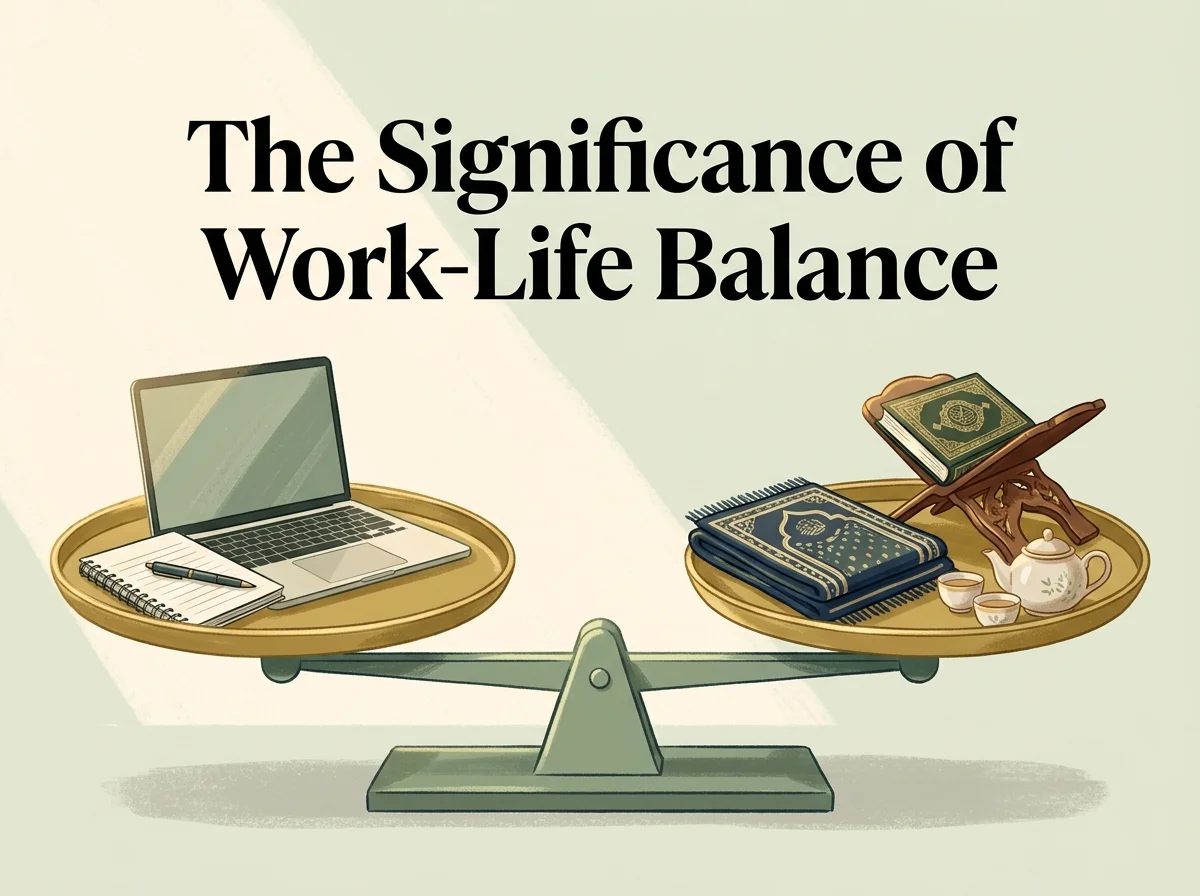
The Significance of Work-Life Balance
What If Your Busiest Year Is Quietly Costing You the Things That Matter Most?
Many of us can name the exact moment we realized something was off. Maybe it was missing a child’s school event for a deadline, or praying Isha half-asleep at the desk because the day never ended.
Work gave us income, status, and a sense of purpose. Yet somewhere along the way, it also began to take more than it gave.
Introduction
The significance of work-life balance goes far beyond a modern wellness trend. It is about giving every part of your life its rightful share, so that no single role swallows the rest.
For a Muslim, this idea is not new. The Quran and the Sunnah describe a life of moderation, where worship, livelihood, family, rest, and community all have their place.
In this guide, we will look at what work-life balance really means, what the Quran and the Prophet’s example teach about it, what research says about overwork, and how to build balance in a realistic way.
What Does Work-Life Balance Actually Mean?
Work-life balance is the ability to meet your professional responsibilities without neglecting your health, faith, relationships, and personal growth.
It does not mean splitting every day into equal halves. Some seasons demand more work, and some demand more family time. Balance is about direction and fairness over time, not a perfect daily formula.
A balanced life usually shows these signs:
- You can switch off from work without constant guilt or anxiety.
- You protect your obligatory prayers and your sleep.
- You have time and energy for your spouse, children, and parents.
- You still have room for rest, hobbies, and community.
- Your work serves your life, rather than your life serving your work.
Why the Significance of Work-Life Balance Matters Today
Modern work has blurred the boundary between office and home. Phones, messages, and remote work make it easy to be reachable at any hour.
The consequences are well documented:
- Burnout: The World Health Organization recognizes burnout in its International Classification of Diseases as an occupational phenomenon caused by chronic, unmanaged workplace stress.
- Physical health: A large 2021 joint study by the WHO and the International Labour Organization found that working 55 or more hours per week was linked to a higher risk of stroke and ischemic heart disease compared with a standard 35 to 40 hour week.
- Mental health: Long hours, poor sleep, and constant pressure are closely associated with anxiety, irritability, and low mood.
- Relationships: Chronic overwork often leaves people physically present but emotionally absent at home.
In my observation of many working families, the damage rarely arrives suddenly. It builds slowly, through small sacrifices that start to feel normal.
The Islamic Foundation of Work-Life Balance
Moderation Is the Default Path
The Quran describes the Muslim community as a balanced nation (Surah Al-Baqarah 2:143). Moderation is not a compromise in Islam. It is a defining feature of the faith.
The Prophet (peace be upon him) also taught that religion is ease, and that no one makes it harder on themselves without being overcome by it (Sahih al-Bukhari). This principle applies to worship, and it equally applies to how we handle work and ambition.
Seek the Hereafter Without Forgetting Your Share of This World
One of the clearest verses on this subject is Surah Al-Qasas 28:77. It tells us to seek the home of the Hereafter through what Allah has given us, and not to forget our share of this world.
This verse gives balance a spiritual shape. Your career, income, and family life are not distractions from faith when handled rightly. They are part of your trial and your worship.
Allah Does Not Burden a Soul Beyond Its Capacity
Surah Al-Baqarah 2:286 reminds us that Allah does not burden a soul beyond what it can bear. This is a powerful reminder for anyone running on empty.
If your schedule is consistently beyond your capacity, it is worth asking whether you are carrying a load that was never meant to be carried alone, or never meant to be carried this way.
Rest Is a Built-In Part of Creation
The Quran speaks about sleep as rest and the night as a covering, while the day is for seeking livelihood (Surah An-Naba 78:9 to 11). Rest and work are placed side by side in the design of daily life.
Treating rest as laziness goes against this natural rhythm. Rest is part of how a believer stays fit to worship, work, and serve others.
Work Has a Place, and So Does Stopping
Surah Al-Jumu’ah 62:10 instructs believers that when the prayer is finished, they may spread through the land and seek Allah’s bounty. Work is encouraged, and it is also framed around worship.
This gives us a practical model: let prayer set the rhythm of the day, and let work fit around it, rather than the other way around.
Also Read: How I Learned the Quran from Home: The Exact Routine That Finally Worked
Lessons From the Prophet’s Example
The Story of Salman and Abu Darda
Salman al-Farisi once visited his brother Abu Darda and found his wife neglected, because Abu Darda was fasting by day and praying through the night. Salman encouraged him to eat and rest.
The Prophet (peace be upon him) confirmed Salman’s words: your Lord has a right over you, your soul has a right over you, and your family has a right over you, so give each one its due (Sahih al-Bukhari).
This is arguably the clearest Islamic statement of work-life balance. Even excessive worship can become imbalance when it harms the rights of others.
The Three Men Who Wanted More
In another well-known narration, a group of men decided to take their devotion to extremes. One would pray all night, another would fast always, and another would avoid marriage.
The Prophet (peace be upon him) said he fasts and breaks his fast, prays and sleeps, and marries, and that whoever turns away from his Sunnah is not from him (Sahih al-Bukhari and Sahih Muslim).
If extreme devotion is discouraged, extreme professional ambition at the cost of faith and family deserves the same reflection.
Consistency Over Intensity
The Prophet (peace be upon him) said that the most beloved deeds to Allah are those done consistently, even if small (Sahih al-Bukhari and Sahih Muslim).
This principle works well for modern life. A steady, sustainable routine beats a burst of overwork followed by collapse.
A Husband and Father Who Served at Home
Aisha (may Allah be pleased with her) reported that the Prophet (peace be upon him) used to help with household work, and when the time for prayer came, he would leave for it (Sahih al-Bukhari).
He also said that the best among you are those who are best to their families (Jami at-Tirmidhi). Being a leader, a teacher, and a statesman did not excuse him from being present at home.
Two Blessings Many People Lose
The Prophet (peace be upon him) warned that many people lose out in two blessings: health and free time (Sahih al-Bukhari).
Work-life balance protects both. When we spend our health to earn money and then spend our money to recover our health, the trade needs a second look.
The Core Areas That Need Balance
Think of your life as having several rights, each deserving attention.
Your Relationship With Allah
- Protect the five daily prayers on time, and plan meetings around them where possible.
- Keep a small, steady daily habit such as Quran recitation, dhikr, or reflection.
- Do not let work become the reason for delaying obligations.
Your Body and Mind
- Sleep enough to function well, since exhaustion harms both worship and judgment.
- Eat properly, move regularly, and attend medical needs.
- Notice early warning signs such as constant fatigue, irritability, or loss of interest.
Your Family
- Give your spouse and children focused, phone-free time each day.
- Fulfill the rights of parents, including regular contact and care.
- Remember that financial provision is one right, but presence is another.
Your Community and Social Ties
- Keep up friendships and family ties, which the Quran and Sunnah strongly emphasize.
- Make time for charity, volunteering, or simply checking on a neighbor.
Your Growth and Joy
- Allow space for learning, healthy hobbies, and lawful recreation.
- Remember that wholesome rest renews your energy for what matters.
Practical Steps to Build Work-Life Balance
Knowing the importance is one thing. Living it is another. Here are realistic steps that work for many people.
1. Define Your Non-Negotiables
Decide what you will protect no matter what. For many Muslims, this includes prayer times, family meals, and sleep.
Write them down. When a new request arrives, check it against that list before saying yes.
2. Set Clear Work Boundaries
- Choose a daily end time and stick to it as often as possible.
- Turn off non-urgent work notifications after hours.
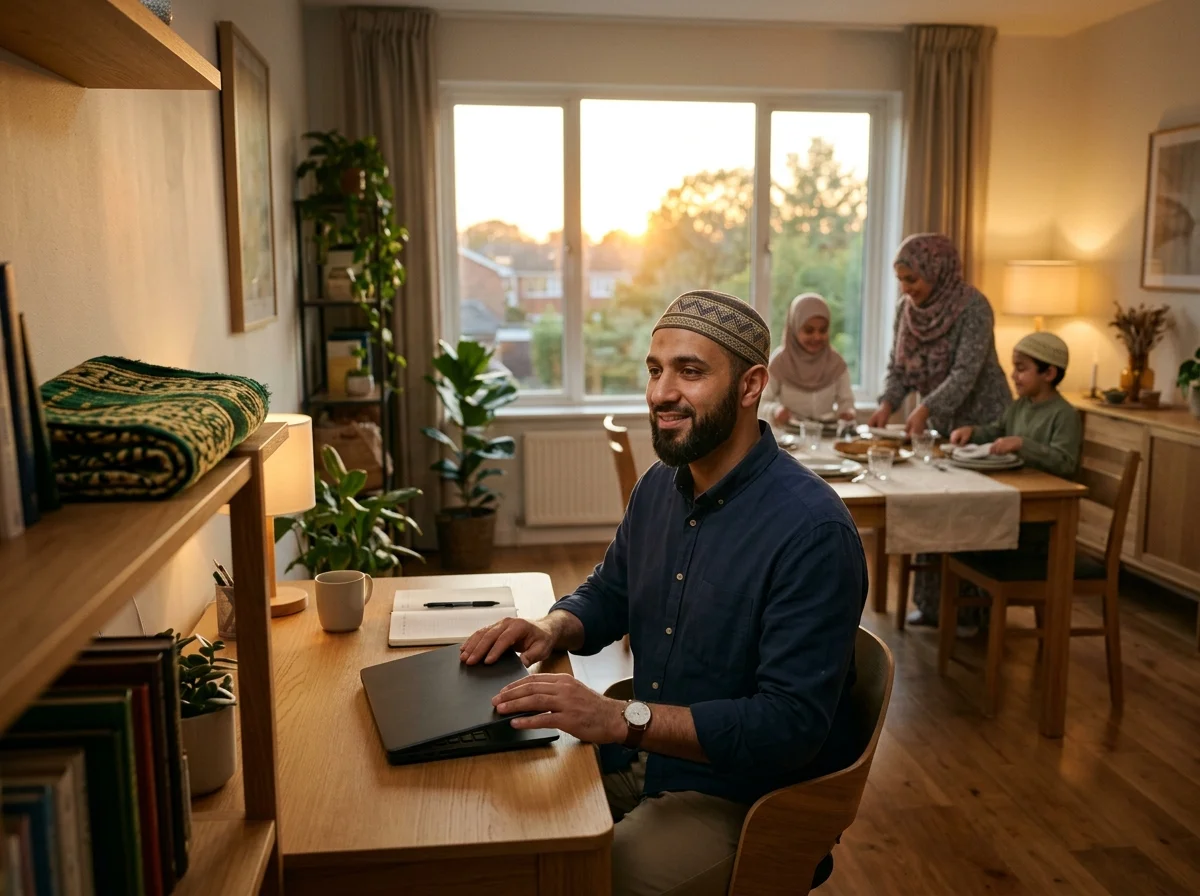
- If you work from home, keep a defined workspace and close it at the end of the day.
3. Use Prayer Times as Natural Breaks
Prayer is a built-in reset. Stepping away from your desk for wudu and salah gives your mind a pause and your body a stretch.
Many people notice they return to work with better focus after a mindful prayer than after scrolling on their phone.
4. Learn to Say No Gracefully
Not every opportunity deserves your yes. Saying no to one thing means saying yes to something that may matter more.
A polite, honest response such as “I cannot take this on right now without affecting my existing commitments” is often respected more than a rushed promise.
5. Plan Your Week, Not Just Your Day
Look at the week ahead and place important personal commitments in your calendar the same way you place meetings.
This simple habit turns family time and rest from leftovers into scheduled priorities.
6. Make Your Rest Real
- Take a short break during the day when possible.
- Protect at least one slower day or half-day per week for family and rest.
- Use annual leave. It exists for a reason.
7. Review and Adjust Regularly
Balance shifts with seasons such as a new baby, a new job, illness, or Ramadan. Review your routine every few weeks and adjust without guilt.
Common Mistakes That Undermine Balance
- Confusing busyness with barakah: A packed schedule is not proof of a blessed one. Blessing often shows in how much gets done well, not how much gets done.
- Treating family time as optional: Bills can be paid with money. Presence cannot be bought later.
- Sacrificing sleep as a habit: Occasional late nights happen, but chronic sleep loss weakens health, patience, and worship.
- Ignoring early burnout signs: Waiting for a breakdown makes recovery harder.
- Going to the opposite extreme: Balance also means not neglecting work. Earning a lawful livelihood is itself an act of responsibility and, with the right intention, an act of worship.
Work-Life Balance for Different Situations
For Employees
Discuss reasonable expectations with your manager. Many workplaces are more flexible than people assume, especially regarding prayer breaks and fixed finishing times.
For Business Owners and the Self-Employed
Because there is no clock-out, you must create one. Set working hours, delegate where you can, and remember that your business should support your family, not replace it.
For Parents
Short, focused time with children matters more than long, distracted hours. Even 20 uninterrupted minutes of genuine attention can shape a child’s sense of security.
For Remote Workers
The home can quietly become an office that never closes. Create physical and mental markers that the workday has ended, such as a short walk or a family activity.
Key Takeaways
- The significance of work-life balance lies in protecting your faith, health, family, and productivity together.
- The Quran urges us to seek the Hereafter without forgetting our share of this world.
- The Prophet (peace be upon him) taught that every right deserves its due: your Lord, your soul, and your family.
- Consistency in small, sustainable habits is better than extreme bursts.
- Research links very long working hours with serious health risks.
- Boundaries, planning, and honest self-review make balance achievable.
Conclusion
The significance of work-life balance is ultimately about living with purpose and fairness. Islam does not ask you to abandon work or to worship it. It asks you to place each part of life where it belongs.
Start small. Protect one prayer, one family meal, or one hour of sleep that you used to give away. Over time, these choices build a life where success and peace are not strangers.
May Allah grant us the wisdom to balance our responsibilities and the sincerity to make all of them acts of worship.
Sources and Official References
- The Holy Quran
- Surah Al-Baqarah 2:143: https://quran.com/2/143
- Surah Al-Baqarah 2:286: https://quran.com/2/286
- Surah Al-Qasas 28:77: https://quran.com/28/77
- Surah An-Naba 78:9 to 11: https://quran.com/78/9-11
- Surah Al-Jumu’ah 62:10: https://quran.com/62/10
- Sahih al-Bukhari: https://sunnah.com/bukhari
- Sahih Muslim: https://sunnah.com/muslim
- Jami at-Tirmidhi: https://sunnah.com/tirmidhi
- World Health Organization, burnout as an occupational phenomenon (ICD-11 announcement): https://www.who.int/news/item/28-05-2019-burn-out-an-occupational-phenomenon-international-classification-of-diseases
- World Health Organization, International Classification of Diseases (ICD-11): https://icd.who.int/en
Frequently Asked Questions
1. What is the significance of work-life balance in Islam?
The significance of work-life balance in Islam is that it helps a believer fulfill the rights of Allah, oneself, and family without neglecting any of them. The Quran and the Prophet’s teachings promote moderation, rest, and fair division of time and energy.
2. Is working long hours against Islamic teachings?
Working hard is encouraged, and earning a lawful living is praiseworthy. However, it becomes a problem when it causes you to neglect prayers, health, or family rights, since the Prophet (peace be upon him) taught that each of these has a right over you.
3. How does poor work-life balance affect health?
Chronic overwork is linked to burnout, sleep problems, anxiety, and cardiovascular risk. WHO and ILO research found that working 55 or more hours weekly is associated with higher risks of stroke and heart disease.
4. How can I maintain work-life balance while fulfilling my daily prayers?
Plan your schedule around prayer times, use prayer as a natural break, and communicate your needs clearly with your employer or team. Treat prayer as the anchor of your day, and arrange work tasks around it.
5. What is the first step to improve work-life balance?
Begin by identifying your non-negotiables, such as prayer, sleep, and family time, and set a clear daily finishing time. Small, consistent changes are more sustainable than a complete overhaul.
Disclaimer: This article is provided for educational and informational purposes only and reflects general Islamic scholarly perspectives on Surah Yaseen. It is not a substitute for guidance from a qualified Islamic scholar or certified religious authority. For matters of hadith authenticity, personal practice, or specific religious rulings, please consult a certified professional in Islamic studies.
