Single Parent Advice in Islam: A Faith-Based Guide to Raising Strong Children Alone
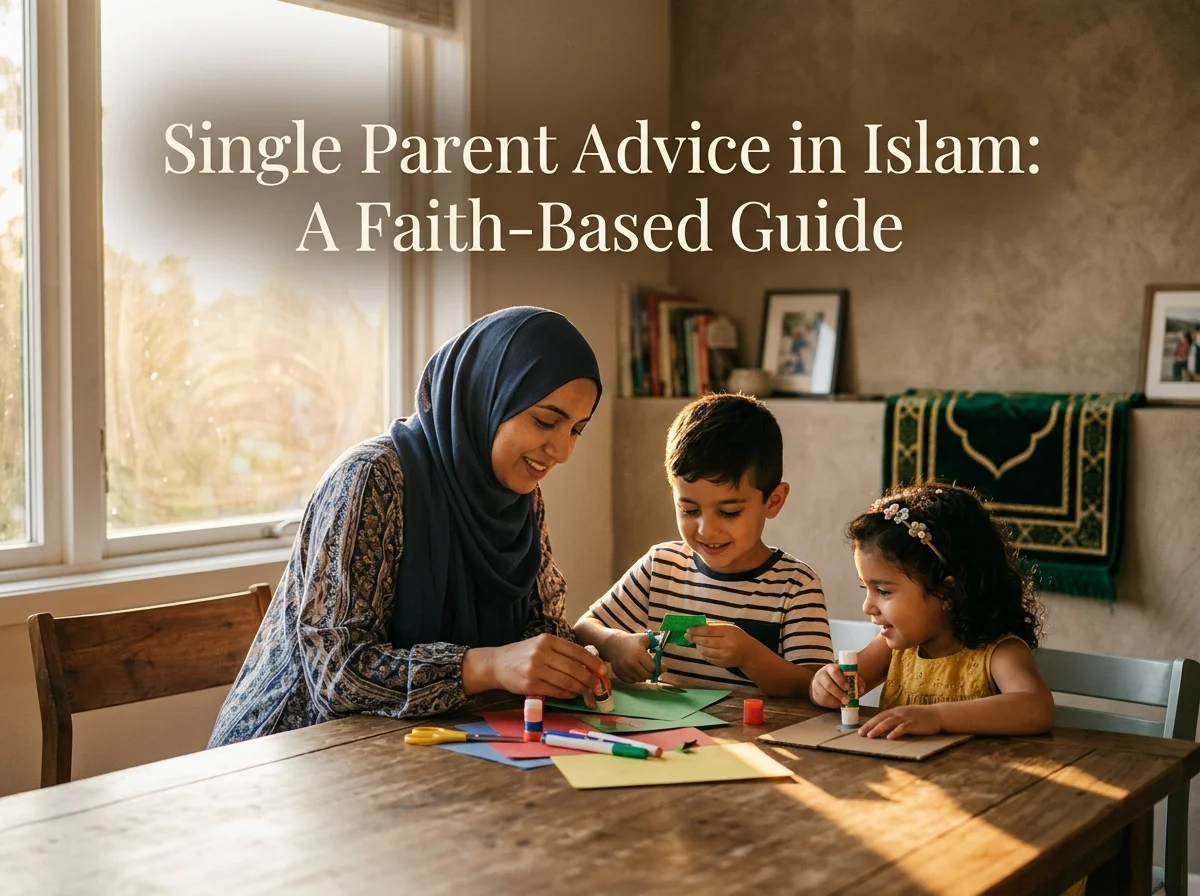
Single Parent Advice in Islam
You Are Not Raising Your Children Alone: Allah Is Your Wali
If you are reading this at the end of a long day, after the school run, the bills, the dishes, and the bedtime negotiations, know this first. Your effort is seen, recorded, and rewarded by Allah. Nothing you do for your children is wasted.
Single parenting can feel like carrying a weight that was designed for two sets of shoulders. Yet the Islamic tradition is full of mothers and fathers who raised righteous children through loss, divorce, migration, and poverty. This guide brings together practical, faith-rooted single parent advice in Islam so you can parent with clarity, confidence, and peace.
Introduction: Why Single Parent Advice in Islam Matters Today
Millions of Muslim households are led by one parent. Some are led by widows or widowers. Others by people who went through divorce, separation, abandonment, imprisonment of a spouse, or long-term illness in the family. Whatever the reason, the daily reality is similar: one person carrying responsibilities that are normally shared.
The search for single parent advice in Islam usually comes from a deeper question. Am I failing my children? Is my family incomplete? Does Allah see my struggle? Islam answers each of these with mercy and honesty.
This article does not offer quick fixes. It offers a framework built on the Quran, the Sunnah, the lives of the Companions, and practical wisdom that families can apply this week. It is educational guidance and not a substitute for a qualified scholar, counselor, or legal professional in your region.
Understanding the Islamic View of Single Parenthood
Islam does not treat a single-parent home as a broken home. It treats it as a home with a different structure and a different set of tests. The measure of a family in Islam is not its shape. It is its taqwa, its mercy, and its sincerity.
The Quran reminds us that responsibility is matched with capacity. Allah says that He does not burden a soul beyond what it can bear (Surah Al-Baqarah 2:286). If you have been given this role, it means Allah has placed within you what is needed to fulfill it.
The Prophetic Household Was Not Always a Two-Parent Household
The Prophet Muhammad ﷺ was born an orphan. His father Abdullah passed away before his birth, and his mother Aminah passed away when he was around six years old. The Quran addresses this directly in Surah Ad-Duha, reminding him that Allah found him an orphan and gave him refuge (93:6).
This matters because it shows that the most beloved human being to Allah grew up without both parents, and still became the best example for humanity. Your children’s circumstances do not cap their potential.
Powerful Examples of Single Parents in Islamic History
The sources of our faith preserve stories that every single parent can draw strength from:
- Hajar (peace be upon her): She was left in a barren valley with her infant son Ismail. Her running between Safa and Marwa is remembered in Hajj and Umrah to this day, a living reminder that a mother’s effort for her child is honored by Allah.
- Maryam (peace be upon her): She raised Isa (peace be upon him) without a husband, under public scrutiny, and the Quran honors her as one of the most righteous women.
- Umm Salama (may Allah be pleased with her): She was widowed with young children after the death of Abu Salama. She turned to the dua taught by the Prophet ﷺ, and Allah replaced her loss with honor and a new family.
- The mothers of great scholars: Imam Ahmad ibn Hanbal, Imam Ash-Shafi’i, and Imam Al-Bukhari are all reported to have lost their fathers early and been raised under the care of their mothers.
The lesson is consistent. A single parent with strong faith and steady effort can raise leaders.
Building Your Foundation: Tawakkul and Sabr
Before schedules and budgets, a single parent needs an anchor. In Islam, that anchor is tawakkul (trust in Allah) combined with action.
The Prophet ﷺ taught that if people relied on Allah as He deserves to be relied upon, He would provide for them as He provides for the birds, who leave in the morning hungry and return full (Tirmidhi). Notice that the birds leave their nests. Tawakkul is not passivity. It is effort with a trusting heart.
Hold On to These Quranic Promises
Write these on a card and keep it where you will see it daily:
- “With hardship comes ease” (Surah Ash-Sharh 94:5 to 6).
- Whoever fears Allah, He will make a way out for them and provide for them from where they do not expect (Surah At-Talaq 65:2 to 3).
- Allah will bring about ease after hardship (Surah At-Talaq 65:7).
Practice Sabr Without Silencing Your Feelings
Sabr does not mean pretending you are fine. The Prophet ﷺ wept at the loss of his son Ibrahim and said the eyes shed tears and the heart grieves, while we say only what pleases our Lord. You are allowed to be tired, sad, and overwhelmed. What Islam asks is that you bring those feelings to Allah rather than away from Him.
A simple routine can help:
- Pray your five daily prayers on time, even if they are short.
- Make dua in sujood, where you are closest to Allah.
- Keep a short morning and evening adhkar habit.
- Say “Hasbunallahu wa ni’mal wakeel” when the pressure peaks.
Practical Parenting Advice for the One-Parent Home
Good intentions need good systems. Here is how to apply the Islamic principle of ihsan (excellence) to everyday parenting.
Be Present Rather Than Perfect
The Prophet ﷺ said that every one of you is a shepherd and is responsible for his flock (Bukhari and Muslim). A shepherd does not have to be flawless. A shepherd has to be attentive, consistent, and caring.
Children in single-parent homes do not need a parent who does everything. They need a parent who is emotionally available for a few focused minutes each day.
Try this:
- Ten minutes of undivided attention, with no phone, every day.
- One shared meal a day where everyone talks.
- A bedtime routine that includes a short dua and a hug.
Create Routines That Reduce Chaos
Structure is mercy for a tired parent. A predictable day lowers conflict and gives children a sense of safety.
- Build the day around the prayer times, which gives your household a natural rhythm.
- Assign age-appropriate chores so children feel like contributors, not burdens.
- Prepare for the next morning the night before: clothes, bags, and breakfast plans.
Discipline With Gentleness and Firmness
Without a second parent to share the roles, it is easy to swing between being too strict and too lenient. The Prophet ﷺ said that gentleness does not enter anything except that it beautifies it (Muslim).
- Set a few clear rules and enforce them calmly.
- Explain the reason behind each rule in simple language.
- Praise effort more than results.
- Apologize when you lose your temper. It teaches humility and repair.
Speak Well About the Other Parent When Possible
In cases of divorce, children often feel torn. Unless there is abuse or real danger, avoid criticizing the other parent in front of them. Children carry half of each parent inside them, and attacks on one can feel like attacks on themselves.
If the other parent is harmful, protect your children through proper channels and seek guidance from a trusted scholar or family counselor. Safety always comes first.
Raising Children With Strong Faith and Identity
A single parent often worries about whether the home is “enough” for a child’s Islamic upbringing. The answer is yes, when the faith is lived and not just taught.
Make Islam Warm, Not Heavy
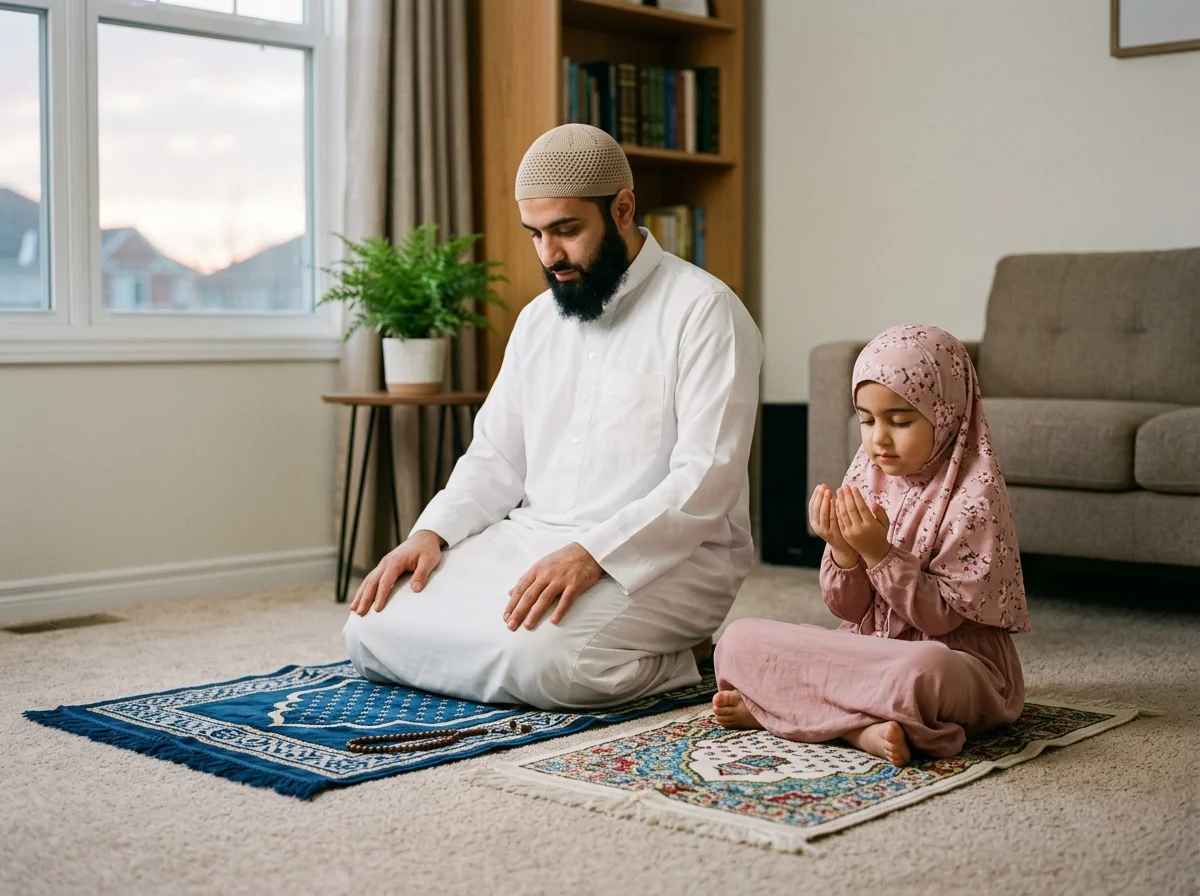
Children absorb what they see. When they watch you pray, make dua, forgive, and give charity, those habits become part of them.
- Pray together whenever you can, even if only one prayer a day.
- Tell stories of the Prophets and the Companions at bedtime.
- Celebrate Eid, Ramadan, and Fridays with small family traditions.
- Let them see you making dua for them by name.
Provide Positive Role Models
A child can benefit from other trustworthy adults. Uncles, grandparents, teachers, and community members can all play a healthy role. The Prophet ﷺ himself was supported by his grandfather Abd al-Muttalib and later his uncle Abu Talib in his early years.
Choose these figures carefully. Look for character, not just credentials. The goal is to give your children a wider circle of good examples without ever replacing your own bond with them.
Talk Openly About the Family Situation
Children know when something is different. Silence tends to create confusion and shame.
- Use age-appropriate honesty.
- Remind them that the situation is not their fault.
- Teach them that every family faces tests, and that Allah is with those who are patient.
Financial Advice for Single Parents in Islam
Money stress is one of the heaviest burdens for a single parent. Islam gives both spiritual and practical guidance here.
Know the Rights Islam Establishes
Islamic law places the financial maintenance (nafaqah) of children on the father, and the Quran speaks about mothers and fathers each fulfilling their duties toward the child in a fair and reasonable way (Surah Al-Baqarah 2:233). In a divorce, this includes agreements about maintenance and custody.
Scholars and legal systems differ on the details of custody and support across schools of thought and countries. Speak to a qualified scholar and a local family law professional to understand your specific situation and rights.
Seek Halal Income and Reduce Avoidable Debt
The Prophet ﷺ taught that no one eats better food than that which he earns by his own labor (Bukhari). Work for your family is a form of worship when done honestly.
Practical steps:
- Create a simple monthly budget and separate needs from wants.
- Build a small emergency fund, even if you start with a very small amount.
- Avoid interest-based borrowing and look for halal alternatives.
- Learn a marketable skill, especially one you can use from home if needed.
Do Not Be Ashamed to Accept Support
Islam honors those who care for widows and the needy. The Prophet ﷺ said that the one who strives to help the widow and the poor is like the one who strives in the path of Allah (Bukhari and Muslim).
Zakat, sadaqah, and community assistance exist for exactly these moments. Receiving help does not diminish your dignity. It gives someone else the chance to earn reward.
Remember the Reward of Caring for Orphans
If you are a widow or widower raising children who lost a parent, remember the honor attached to this. The Prophet ﷺ said that he and the one who cares for an orphan would be together in Paradise like two fingers, and he held his index and middle fingers close together (Bukhari). Raising a child with love and sincerity is a path to Jannah.
Looking After Yourself: The Hidden Need of Every Single Parent
Parents who run on empty cannot pour into others. Islam recognizes that you have rights over yourself. The Prophet ﷺ said that your body has a right over you, and your family has a right over you (Bukhari).
Protect Your Mental and Emotional Health
- Sleep, eat well, and move. Basic care is part of fulfilling your trust.
- Name your feelings. Journaling or speaking with a trusted friend can lighten the load.
- Seek professional help when you notice persistent sadness, anxiety, or burnout. Seeing a counselor is not a lack of faith. It is using the means Allah has provided.
- Make time for small joys. A walk, a quiet cup of tea, or a call with a friend can restore energy.
Build a Support Circle
Isolation makes every burden heavier. Build a small network of people you can rely on.
- Trusted family members and neighbors.
- A local mosque or community group with warm, non-judgmental people.
- Other single parents who understand your reality.
- A mentor or scholar for spiritual guidance.
The Prophet ﷺ said that the believer to another believer is like a building, each part strengthening the other (Bukhari and Muslim). Let the community be that building for you.
Also Read: How I Learned the Quran from Home: The Exact Routine That Finally Worked
Navigating Common Challenges
Guilt About “Not Doing Enough”
Guilt is common, especially in the first year. Replace the question “Am I a perfect parent?” with “Am I sincere and consistent?” Allah judges effort and intention, and He knows your circumstances better than anyone.
Loneliness and the Question of Remarriage
Islam does not forbid remarriage for single parents, and many Companions remarried after loss. The Prophet ﷺ himself married widows and divorced women, including Umm Salama who had children. If you decide to consider remarriage, do it with care, make istikhara, consult trustworthy people, and prioritize your children’s wellbeing and your own safety.
Dealing With Judgment From Others
Some people may say hurtful things. Remember that the Quran honors the patient, and that people’s opinions do not define your standing with Allah. Keep your circle of advice small and trustworthy.
Teenagers and Behavior Challenges
When a child struggles, look at the need behind the behavior. Often it is grief, anger, or a wish for attention. Stay calm, listen first, and involve a trusted mentor or counselor if needed. Keep making dua for their guidance, because hearts are in the hands of Allah.
A Daily Routine for Single Parents Rooted in Sunnah
Here is a realistic, flexible rhythm you can adapt:
- Fajr: Pray, make dua for your children by name, and read a few verses.
- Morning: Prepare the day, share a quick breakfast, and say the morning adhkar.
- Daytime: Work, study, or manage the home with the intention of earning reward.
- After Asr or Maghrib: Have a short family talk or shared meal.
- Isha and bedtime: Pray, recite the bedtime adhkar, and spend a few minutes of one-on-one connection with each child.
- Before sleep: Review your day, ask Allah for forgiveness, and thank Him for what went well.
Key Takeaways: Single Parent Advice in Islam at a Glance
- Lean on Allah through prayer, dua, and tawakkul combined with effort.
- Be present, not perfect. Short moments of real attention matter more than long moments of distraction.
- Build routines around prayer times to bring structure and calm.
- Know your rights and seek qualified guidance on custody and maintenance.
- Accept help with dignity. Community support is part of the Islamic social fabric.
- Care for yourself so you can care for your children.
- Remember the reward. The Quran and Sunnah honor those who raise children with patience.
Conclusion: Your Struggle Is Part of Your Story With Allah
Single parenting is hard, but it is also deeply honored in Islam. The stories of Hajar, Maryam, Umm Salama, and the mothers of great scholars show that one committed parent, supported by faith, can raise children who change the world.
Take the single parent advice in Islam shared here one step at a time. Start with your prayer, then your routine, then your support circle. Allah promises ease with hardship, and He never abandons those who trust Him.
Sources and Official References
- The Holy Quran (Surah Al-Baqarah 2, Ad-Duha 93, Ash-Sharh 94, At-Talaq 65): https://quran.com
- Sahih al-Bukhari: https://sunnah.com/bukhari
- Sahih Muslim: https://sunnah.com/muslim
- Jami at-Tirmidhi: https://sunnah.com/tirmidhi
Frequently Asked Questions About Single Parent Advice in Islam
1. What is the best single parent advice in Islam?
The core advice is to combine tawakkul with consistent effort. Keep your five daily prayers, make regular dua for your children, build simple routines, seek halal income, and accept community support. Prioritize being present and kind over being perfect.
2. Does Islam allow a single parent to remarry?
Yes. Islam permits remarriage for widows, widowers, and divorced individuals. Many Companions remarried after loss. It is recommended to make istikhara, consult trustworthy people, and consider the wellbeing of your children in the decision.
3. Who is responsible for a child’s financial support in Islam?
In Islamic law, the father is generally responsible for the maintenance of his children, as reflected in Surah Al-Baqarah 2:233. Details of custody and support can vary by school of thought and local law, so it is wise to consult a qualified scholar and a family law professional.
4. How can a single parent raise children with strong faith?
Live the faith in front of them. Pray together, share stories of the Prophets and Companions, celebrate Islamic occasions, and make dua for them openly. Add trustworthy role models from the family and community to widen their support.
5. How can a single parent cope with stress and loneliness in Islam?
Turn to prayer, dua, and remembrance of Allah, and also use practical means such as sleep, exercise, counseling, and a trusted support circle. Seeking help is part of Islamic wisdom and not a sign of weak faith.
Disclaimer: This article is provided for educational and informational purposes only and reflects general Islamic scholarly perspectives on Surah Yaseen. It is not a substitute for guidance from a qualified Islamic scholar or certified religious authority. For matters of hadith authenticity, personal practice, or specific religious rulings, please consult a certified professional in Islamic studies.
